


Child molestation lawyer in Branson, MO. A child molestation accusation in the Branson, MO area can put nearly every part of your life at risk before a criminal case has even reached the courtroom.
Sometimes the investigation begins with a phone call from a detective. Sometimes the Children’s Division becomes involved. Sometimes an accusation surfaces during a divorce, custody dispute, school investigation, or family conflict. And sometimes the first sign of trouble is law enforcement arriving with a search warrant or asking you to come to the station to “clear a few things up”.
Whatever brought you here, understand this: an allegation is not a conviction.
At Combs Waterkotte, our Branson, MO sex crimes defense attorneys recognize how much is on the line in a child molestation case. A potential prison sentence is only one concern. The accusation can jeopardize your career, professional license, housing, family relationships, reputation, and potentially expose you to sex offender registration requirements.
That is why our defense does not begin and end with the government’s version of events. We examine how the accusation originated, review police and forensic interviews, investigate witness statements, preserve and analyze digital evidence, reconstruct timelines, and look for inconsistencies or evidence investigators may have overlooked.
If you have been accused or are under investigation for child molestation in Branson, MO, call Combs Waterkotte at (314) 900-HELP or contact us online. Early intervention gives your defense team the opportunity to start protecting your rights before the prosecution’s case takes shape.
-
Protect Your Life
![Image]()
Protect Your Life
A felony can have long-term consequences. Act quickly and carefully to protect your future and your livelihood.
Reach Out Now
-
Know Your Next Steps
![Image]()
Know Your Next Steps
Wondering what happens after your felony arrest? The skilled Combs Waterkotte attorneys have the answers.
Stay Informed
-
Title
![Image]()
Ready to Talk to an Expert?
Contact the experienced Combs Waterkotte felony lawyers now at (314) 900-HELP to get started on your defense.
Get Started


Cases Handled
Over 10,000
Jail Days Saved
Over 1 Million
Google Reviews
500+ Perfect
Legal Experience
100+ Years
Legal Videos
What if the Accusation Is Connected to Child Custody?
What if the Accusation Is Connected to Child Custody? Attorneys Christopher Combs and Joshua Boardman from Combs Waterkotte discuss everything you need to know about Illinois sex crime charges …
How Can a Defense Lawyer Prove an Allegation is False?
How Can a Defense Lawyer Prove an Allegation is False? Combs Waterkotte attorneys Christopher Combs and Joshua Boardman discuss everything you need to know about Illinois sex crime charges …
What if the Accusation is Retaliation or Revenge?
What if the Accusation is Retaliation or Revenge? Attorneys Christopher Combs and Joshua Boardman from Combs Waterkotte discuss everything you need to know about Illinois sex crime charges …
What if the Allegation Comes From a Breakup or Divorce?
What if the Allegation Comes From a Breakup or Divorce? Combs Waterkotte attorneys Christopher Combs and Joshua Boardman discuss everything you need to know about Illinois sex crime charges …
Can Contacting the Accuser Hurt My Case?
Can Contacting the Accuser Hurt My Case? Attorneys Christopher Combs and Joshua Boardman from Combs Waterkotte discuss everything you need to know about Illinois sex crime charges, including sexual …
Can I Lose Professional Licenses Due to Sex Crime Allegations?
Can I Lose Professional Licenses Due to Sex Crime Allegations? Combs Waterkotte attorneys Christopher Combs and Joshua Boardman discuss everything you need to know about Illinois sex crime charges …
What if the Accusation Is Connected to Child Custody?
What if the Accusation Is Connected to Child Custody? Attorneys Christopher Combs and Joshua Boardman from Combs Waterkotte discuss everything you need to know about Illinois sex crime charges …
How Can a Defense Lawyer Prove an Allegation is False?
How Can a Defense Lawyer Prove an Allegation is False? Combs Waterkotte attorneys Christopher Combs and Joshua Boardman discuss everything you need to know about Illinois sex crime charges …
What if the Accusation is Retaliation or Revenge?
What if the Accusation is Retaliation or Revenge? Attorneys Christopher Combs and Joshua Boardman from Combs Waterkotte discuss everything you need to know about Illinois sex crime charges …
What if the Allegation Comes From a Breakup or Divorce?
What if the Allegation Comes From a Breakup or Divorce? Combs Waterkotte attorneys Christopher Combs and Joshua Boardman discuss everything you need to know about Illinois sex crime charges …
Can Contacting the Accuser Hurt My Case?
Can Contacting the Accuser Hurt My Case? Attorneys Christopher Combs and Joshua Boardman from Combs Waterkotte discuss everything you need to know about Illinois sex crime charges, including sexual …
Can I Lose Professional Licenses Due to Sex Crime Allegations?
Can I Lose Professional Licenses Due to Sex Crime Allegations? Combs Waterkotte attorneys Christopher Combs and Joshua Boardman discuss everything you need to know about Illinois sex crime charges …
What You’ll Learn About Child Molestation Charges in Branson, MO
A child molestation accusation can lead to serious criminal penalties and consequences that reach far beyond the courtroom. Knowing how Missouri law applies, what evidence may become important, and how these cases can be challenged can help you better understand what lies ahead. This page covers:
- The differences between first-, second-, third-, and fourth-degree child molestation under Missouri law
- The felony classifications, possible prison terms, and additional consequences associated with a conviction
- What the prosecution is required to prove before you can be convicted
- How police and investigators build child molestation cases in the Branson, MO area
- Why forensic interviews, changing statements, witness credibility, and digital evidence can become critical
- Ways the allegations and prosecution’s evidence may be investigated and challenged
- How a conviction can affect sex offender registration, employment, family relationships, and your future
- What you should and should not do when detectives, Children’s Division, or other investigators become involved
- How getting an experienced Branson, MO child molestation lawyer involved early can give your defense more time to investigate and respond
The Stakes Are High in a Missouri Child Molestation Case
Missouri does not treat “child molestation” as one single offense. Chapter 566 establishes four degrees of child molestation, with the appropriate charge depending on factors such as the child’s age, the age difference between the accused and the child, whether the state alleges an aggravated sexual offense, and whether forcible compulsion is alleged.
As those circumstances change, so can the severity of the charge. Depending on the offense alleged, a child molestation case may involve anything from a Class E felony to the far more serious Class A felony.
But the criminal classification is only one part of what is at stake.
Even before a case reaches trial, an accusation can result in restrictive bond conditions, limits on contact with children, strain on family relationships, employment or licensing problems, and serious damage to your reputation. A conviction may also bring sex offender registration obligations and restrictions that can continue affecting your life after the criminal sentence itself has ended. Missouri’s sex offender registration framework specifically includes child molestation offenses.
You do not need to wait until you are arrested or formally charged to take steps to protect yourself. If you know an investigation is underway, the time to begin addressing it is now.
Taney County Resources
Below are quick links to important websites that may assist you with your legal matters in Taney County and Missouri.
What Is Child Molestation Under Missouri Law?
Under Missouri law, child molestation generally involves allegations of sexual contact with a minor. However, Missouri separates the offense into four degrees, and the elements prosecutors must establish depend on the specific degree being charged.
Those distinctions are important because everyday use of the phrase “child molestation” does not necessarily correspond with the specific criminal offense prosecutors ultimately file.
The four child molestation offenses recognized under Missouri law include:
- Child molestation in the first degree (Missouri Revised Statute § 566.067)
- Child molestation in the second degree (RSMo § 566.068)
- Child molestation in the third degree (RSMo § 566.069)
- Child molestation in the fourth degree (RSMo § 566.071)
Each carries different elements and potential consequences.
Degrees of Child Molestation in Missouri
First-Degree Child Molestation
Under RSMo § 566.067, first-degree child molestation applies when a person subjects someone younger than 14 to sexual contact and the offense qualifies as an aggravated sexual offense.
A conviction for child molestation in the first degree is a Class A felony. When the alleged victim is under 12, the statute imposes an additional restriction: the resulting prison sentence must be served without eligibility for probation, parole, or conditional release.
Missouri’s general sentencing statute authorizes a prison term of 10 to 30 years or life imprisonment for a Class A felony.
Child Molestation in the Second Degree
Under RSMo §566.068, second-degree child molestation can apply when someone:
- Sexual contact with a child who is younger than 12; or
- Is more than four years older than a child younger than 17, subjects the child to sexual contact, and the offense is an aggravated sexual offense.
Missouri classifies child molestation in the second degree as a Class B felony.
Under Missouri’s current general sentencing ranges, a Class B felony can carry 5 to 15 years in prison.
Third-Degree Child Molestation
Under RSMo §566.069, third-degree child molestation involves allegations that a person subjected a child under the age of 14 to sexual contact.
Missouri ordinarily treats third-degree child molestation as a Class C felony. The potential classification becomes more serious if forcible compulsion is alleged, in which case the offense is a Class B felony.
Under Missouri’s current sentencing ranges, a Class C felony can result in 3 to 10 years in prison. If the charge is elevated to a Class B felony, the potential prison term increases to 5 to 15 years.
Child Molestation in the Fourth Degree
RSMo §566.071, fourth-degree child molestation may be charged when the accused is more than four years older than a child under 17 and is alleged to have subjected the child to sexual contact. This offense is classified as a Class E felony.
A Class E felony is currently punishable by up to 4 years in prison.
When Is a Sexual Offense Considered Aggravated in Branson, MO?
An aggravated sexual offense generally involves additional circumstances that make the alleged conduct more serious. These may include situations where:
- The accused allegedly causes serious physical injury to the victim
- A weapon or dangerous instrument allegedly displayed in a threatening way
- Alleged sexual conduct involving a relative
- The victim is subjected to sexual intercourse involving multiple people
- Certain previous sexual offense convictions involving the accused
- A pattern of alleged sexual conduct involving two or more individuals

Missouri Child Molestation Charges and Potential Penalties
Missouri divides child molestation into four degrees, with the potential felony classification and prison sentence varying considerably between them. The chart below offers a general comparison. The specific penalties in any case can depend on the allegations, applicable enhancements, prior criminal history, and other factors.
| Charge | Conduct Covered | Classification | Potential Prison Sentence |
|---|---|---|---|
| First-Degree Child Molestation | Sexual contact with a person under 14 when the conduct constitutes an aggravated sexual offense | Class A felony | 10–30 years or life |
| Second-Degree Child Molestation | Sexual contact with a child under 12, or certain aggravated sexual offenses involving a child under 17 when the accused is more than four years older | Class B felony | 5–15 years |
| Third-Degree Child Molestation | Sexual contact with a child under 14 | Class C felony; elevated to Class B when forcible compulsion is involved | 3–10 years; 5–15 years when classified as Class B |
| Fourth-Degree Child Molestation | Sexual contact with a child under 17 when the accused is more than four years older | Class E felony | Up to 4 years |
The classifications and sentencing ranges above are general examples only. The actual consequences of a child molestation case depend on the charge, facts, enhancements, criminal history, and other applicable provisions of Missouri law. First-degree child molestation carries particularly severe consequences when the alleged victim is younger than 12, including a statutory requirement that the prison sentence be served without eligibility for probation, parole, or conditional release.
What Must Prosecutors Prove in a Branson, MO Child Molestation Case?
An accusation, even an extremely serious one, is not enough by itself to establish guilt.
The state has the burden of proving every element of the charged offense beyond a reasonable doubt. Which elements matter depends on whether prosecutors file first-, second-, third-, or fourth-degree child molestation charges.
Important questions in the prosecution’s case may include:
- How old was the alleged victim at the time of the alleged conduct?
- How old was the defendant?
- Does the age difference satisfy the requirements of the charged offense?
- Can the state prove that sexual contact occurred?
- What evidence establishes the nature and purpose of the alleged contact?
- Does the evidence support an aggravated sexual offense classification?
- Is there sufficient evidence of forcible compulsion, when that is part of the charge?
- Can prosecutors reliably identify the defendant as the person responsible for the alleged conduct?
A defense strategy should begin with those elements, not with the assumption that everything written in a police report is accurate.
Contacted by Police About a Child Molestation Investigation in Branson, MO
A request to “come in and talk” may sound informal, but you should treat it seriously. Do not try to convince investigators of your innocence on your own.
People often assume innocence means there is no danger in answering questions. But investigators may already have conducted interviews and gathered information you have never seen. You do not know what they have been told, what assumptions they have made, or what theory they are testing when they ask a particular question.
This creates risks even for someone who has committed no crime. Investigators can compare every answer you provide against other statements and evidence. An incorrect date, incomplete memory, misunderstood question, or seemingly minor inconsistency can take on far greater significance once it appears in a police report or prosecution file.
You are not required to prove your innocence by submitting to questioning. You have the right to remain silent and the right to consult with an attorney, and invoking those protections is not an admission of wrongdoing.
If Branson, MO-area police or another law enforcement agency wants to question you about suspected child molestation, contact a sex crimes defense lawyer in Branson, MO before agreeing to an interview.
How Child Molestation Cases Are Built by Prosecutors in Branson, MO
Physical or forensic evidence is not present in every child molestation case. Some prosecutions may move forward without DNA, medical findings, or other physical evidence connecting the accused to the alleged conduct.
In these cases, statements can become central to the prosecution. That makes it important for the defense to look beyond a police report and investigate the circumstances surrounding each disclosure, interview, and witness account.
Important issues to examine may include:
- How did the allegation first come to light?
- Who received the first reported statement
- What was actually said during the initial disclosure?
- Whether the account changed over time
- How many adults discussed the allegations with the child before a recorded or forensic interview?
- Whether interviewers used open-ended questions or potentially leading and suggestive techniques
- Whether outside information may have influenced the account
- Whether the account is consistent with physical, digital, or other objective evidence
- Whether dates, locations, and other details support the alleged timeline
- Whether witnesses have biases, motives, conflicting accounts, or other credibility concerns
The point is not to assume that an allegation is false. It is to determine whether the evidence actually proves what prosecutors say it proves.
Facing a child molestation charge in Branson, MO? When you select Combs Waterkotte Branson, MO a child molestation defense lawyer, you’re not simply partnering with an ideal child molestation defense lawyer in Branson, MO and throughout Missouri – you are protecting your rights, your freedom, and your future. In addition to esteemed sex crime defense lawyers, our legal team is available 24/7 and provides expertise in the following areas for residents in Branson, MO:
How Forensic Interviews Can Shape a Child Molestation Case in Branson, MO
A forensic interview can become a central piece of evidence when a child makes an allegation of sexual abuse. What is said during that interview, and the circumstances leading up to it, may significantly influence how investigators and prosecutors evaluate the case.
But evaluating a forensic interview involves more than simply reading what the child reportedly said.
An experienced Branson, MO child molestation defense attorney may investigate how the allegation developed before the interview occurred and carefully review the way the interview itself was conducted.
Questions can arise about whether the child had previously discussed the allegation with parents, relatives, teachers, counselors, police officers, or others; whether details changed between accounts; whether interview questions introduced information; and whether the child’s statements are consistent with other evidence.
The actual recording can be especially important because written reports may leave out context surrounding a question or response. Reviewing the original interview allows the defense to independently assess what occurred instead of depending entirely on a police report or another person’s summary.
Can Someone Be Charged in Branson, MO Without Physical Evidence?
The absence of DNA, medical evidence, or other physical evidence does not automatically prevent prosecutors from filing a child molestation charge.
In those situations, however, the strength and reliability of the remaining evidence can become especially important. A case that depends heavily on statements still needs to withstand careful scrutiny.
When physical evidence is limited or nonexistent, credibility, consistency, timelines, surrounding circumstances, electronic evidence, witness accounts, and the reliability of the investigation may become even more important.
A child molestation defense attorney in Branson, MO can evaluate how all of these pieces fit together. No single category of evidence, or the lack of it, should be considered in isolation when determining the strength of the allegations.
How Child Molestation Charges May Be Defended in Branson, MO
A defense to child molestation charges should never be based on a one-size-fits-all approach. The appropriate strategy depends on the degree charged, how the accusation developed, the credibility of the witnesses, and the physical, digital, and other evidence available.
Issues that may become important to the defense include:
The Allegation Does Not Reflect What Actually Happened
False allegations can occur for many reasons. Family conflict, custody disputes, anger, outside influence, misunderstanding, pressure from another person, or other circumstances may become relevant.
The defense should investigate the origin and development of the allegation instead of simply labeling it false.
The Evidence Does Not Establish Sexual Contact
Prosecutors must prove the specific conduct required by the Missouri child molestation offense charged. Physical contact that is innocent, accidental, ambiguous, or misunderstood does not automatically satisfy the legal requirements for criminal sexual contact.
The defense may therefore scrutinize the nature of the alleged contact, where and when it supposedly occurred, who was present, and whether the available evidence supports the prosecution’s interpretation of the interaction.
Objective Evidence Contradicts the Allegation
Child molestation allegations frequently involve claims about where and when particular events occurred in or around Branson, MO. Independent records may provide a way to test those claims.
Phone and location records, photographs, work schedules, receipts, surveillance video, GPS data, travel records, and witness testimony may show whether the alleged timeline and circumstances are consistent with what actually occurred.
The Allegations Evolved During the Investigation
People do not always describe an event in exactly the same words each time, and minor inconsistencies are not necessarily decisive. However, substantial differences concerning the timing, location, nature, or frequency of the alleged conduct may warrant closer scrutiny.
The defense can compare initial disclosures, forensic interviews, police reports, medical histories, deposition or hearing testimony, and other accounts to determine how the allegations developed.
Evidence Was Obtained Illegally
The seriousness of a child molestation accusation does not allow investigators to disregard the defendant’s constitutional rights.
Police may obtain search warrants for phones, computers, residences, online accounts, or other property. A defense attorney can examine whether searches and seizures complied with constitutional and statutory requirements and, when appropriate, seek suppression of unlawfully obtained evidence.
Prosecutors Cannot Establish Every Element of the Charged Degree
Missouri’s four degrees of child molestation are separate offenses with different statutory elements.
Age, age difference, aggravated-sexual-offense allegations, forcible compulsion, and the nature of the alleged contact can determine which statute applies. Even when prosecutors claim unlawful conduct occurred, they still must establish the elements necessary for the specific degree they charged.
How Sex Offender Registration Can Affect You After a Missouri Child Molestation Conviction
Prison is not the only life-changing consequence that can follow a Missouri child molestation conviction. Depending on the offense, sex offender registration may continue affecting a person’s life long after the criminal case itself is over.
Missouri uses a tier-based sex offender registration system that includes child molestation offenses. The applicable tier, how long registration lasts, how frequently someone must report, and whether relief may eventually be available depend on the specific conviction and individual circumstances.
Registration requirements can create practical challenges involving housing, employment, law enforcement reporting, and other aspects of day-to-day life.
And registration is not necessarily the only collateral consequence.
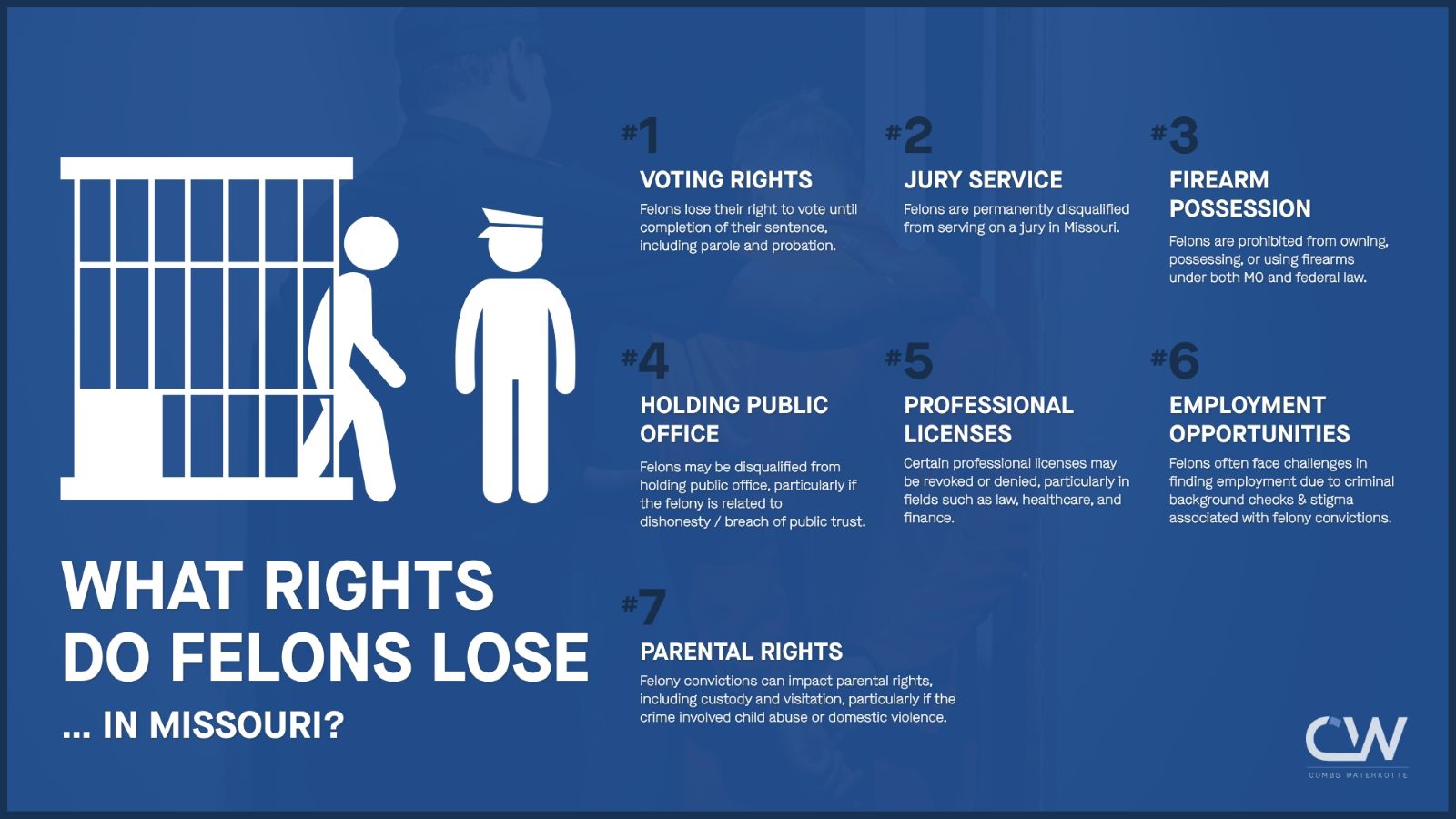
A conviction may also affect:
- Restrictions and difficulties involving employment
- Obtaining or maintaining a professional license
- Housing limitations
- Child custody and visitation issues
- Educational opportunities
- Immigration consequences for noncitizens
- Loss or restriction of firearm rights
- Personal, family, and professional relationships
- Your reputation in the community
For these reasons, evaluating a child molestation case requires looking beyond the potential jail or prison sentence and considering how a conviction could affect nearly every part of your future.
What Should You Do After Being Accused of Child Molestation in Branson, MO?
The days following a child molestation accusation can move quickly. While investigators may already be gathering evidence, decisions you make during this period can either protect your position or make defending the case more difficult.
1. Avoid Answering Investigators’ Questions Without Legal Counsel
Even if you are certain the allegation is false, answering questions without understanding what investigators already know can be risky. Before discussing the allegations in detail, speak with a child molestation lawyer in Branson, MO about how to respond.
2. Do Not Contact the Accuser
Do not confront the child, parent, family member, or other person connected to the allegation. Attempts to “straighten this out” can be misunderstood or potentially create additional allegations.
3. Follow Every Bond or No-Contact Condition
Follow every court-imposed condition exactly as written. If someone covered by a no-contact restriction reaches out to you first, that does not necessarily give you permission to respond.
4. Do Not Delete Potentially Relevant Information
Preserve texts, emails, photographs, social media content, location data, and other records that could relate to the allegations or timeline.
Something that appears insignificant now may become important once your attorney has reviewed the prosecution’s theory and evidence.
5. Stay Off Social Media
Posting your version of events may feel like a way to defend your reputation, but public statements can complicate the criminal case. Avoid discussing the allegations, accuser, witnesses, police, or prosecutors online.
6. Preserve Your Own Recollection of Events
While events are still fresh, document relevant dates, locations, witnesses, conversations, and circumstances for discussion with your lawyer. Do not distribute that account to friends, relatives, coworkers, or potential witnesses.
7. Contact an Experienced Branson, MO Child Molestation Defense Attorney
Early representation gives your defense team more time to preserve evidence, identify and interview witnesses, investigate how the allegation developed, and address law enforcement strategically before the case progresses further.
Why Getting a Defense Attorney Involved Early Can Matter
You do not have to wait until charges are filed to hire a defense attorney in Branson, MO. That can be especially important in child molestation investigations.
Important evidence does not always remain available indefinitely. Surveillance video can be erased, electronic communications can disappear, witnesses can become difficult to find, and memories can become less precise. At the same time, detectives may continue interviewing people, collecting records, and developing their theory of the case.
Early involvement can allow your Branson, MO attorney to:
- Communicate with detectives on your behalf
- Help prevent an unnecessary or damaging interview
- Determine what law enforcement is investigating
- Secure electronic, documentary, and physical evidence before it is lost
- Identify and investigate witnesses who may have relevant information
- Investigate timelines and locations
- Review warrants and searches
- Prepare for the possibility that prosecutors will file charges
- Develop the defense’s version of events before the government’s theory becomes entrenched
The goal is not simply to react to whatever the government does next. It is to start building your defense as early as possible.

A Serious Child Molestation Charge Demands a Serious Defense in Branson, MO
Few criminal allegations carry the stigma and potential consequences of a child molestation charge. Your defense team must be prepared to address the criminal case while understanding the impact the accusation can have on your family, reputation, employment, and future.
At Combs Waterkotte, we understand that being accused of a sex crime can make you feel as though everyone has already reached a verdict.
Our responsibility is to investigate independently, protect your constitutional rights, expose weaknesses or inconsistencies in the state’s evidence, and hold prosecutors to their burden of proving every element of the charge.
Our Branson, MO defense team can:
- • Conduct an independent investigation into the allegations
- • Analyze police reports, interviews, and investigative materials
- • Obtain and analyze forensic interview recordings
- • Examine inconsistencies in witness accounts
- • Preserve and analyze texts, messages, location data, and other digital evidence
- • Review medical and forensic evidence when applicable
- • Trace how the accusation originated and developed
- • Challenge unlawful searches and seizures
- • Determine whether the state can prove every required element of the offense
- • Draw on investigators and qualified experts when additional resources are needed
- • Develop a defense that reflects your circumstances and what you stand to lose
- • Prepare thoroughly for trial when prosecutors will not offer a fair outcome
Being accused does not mean you should be treated as though you have already been convicted. You deserve a defense team willing to investigate the facts, question the government’s conclusions, and make the state prove its case.
Contact a Child Molestation Lawyer in Branson, MO Today
Once a child molestation accusation is made, the investigation can move forward quickly, even while you are still trying to understand what happened and what the allegation could mean for your future.
But the accusation itself is not proof. Prosecutors still have the burden of establishing every element of the offense beyond a reasonable doubt.
Combs Waterkotte takes an active approach to defending serious sex crime allegations. Our attorneys examine how the accusation originated, investigate the alleged timeline and surrounding circumstances, review forensic interviews and electronic evidence, challenge questionable investigative methods, and prepare every available avenue for defending you against the state’s case.
Do not try to navigate a child molestation investigation alone, and do not wait until prosecutors have finished building their case to begin building yours in Branson, MO.
Call Combs Waterkotte at (314) 900-HELP or contact us online today to discuss your situation confidentially with an experienced child molestation lawyer in Branson, MO.

