


Child molestation lawyer in Livingston County, MO. A child molestation accusation in the Livingston County, MO area can put nearly every part of your life at risk before a criminal case has even reached the courtroom.
Sometimes the investigation begins with a phone call from a detective. Sometimes the Children’s Division becomes involved. Sometimes an accusation surfaces during a divorce, custody dispute, school investigation, or family conflict. And sometimes the first sign of trouble is law enforcement arriving with a search warrant or asking you to come to the station to “clear a few things up”.
Whatever brought you here, understand this: an allegation is not a conviction.
At Combs Waterkotte, our Livingston County, MO sex crimes defense attorneys recognize how much is on the line in a child molestation case. A potential prison sentence is only one concern. The accusation can jeopardize your career, professional license, housing, family relationships, reputation, and potentially expose you to sex offender registration requirements.
These cases demand an immediate, thorough investigation. Police reports need to be examined. Interviews need to be reviewed. Digital evidence needs to be preserved. Witness accounts need to be tested. The circumstances surrounding the accusation need to be reconstructed rather than accepted at face value.
If you are being investigated or have been charged with child molestation in Livingston County, MO, call Combs Waterkotte at (314) 900-HELP or contact us online. The sooner our defense team becomes involved, the sooner we can begin protecting you.
-
Protect Your Life
![Image]()
Protect Your Life
A felony can have long-term consequences. Act quickly and carefully to protect your future and your livelihood.
Reach Out Now
-
Know Your Next Steps
![Image]()
Know Your Next Steps
Wondering what happens after your felony arrest? The skilled Combs Waterkotte attorneys have the answers.
Stay Informed
-
Title
![Image]()
Ready to Talk to an Expert?
Contact the experienced Combs Waterkotte felony lawyers now at (314) 900-HELP to get started on your defense.
Get Started


Cases Handled
Over 10,000
Jail Days Saved
Over 1 Million
Google Reviews
500+ Perfect
Legal Experience
100+ Years
Legal Videos
What if the Accusation Is Connected to Child Custody?
What if the Accusation Is Connected to Child Custody? Attorneys Christopher Combs and Joshua Boardman from Combs Waterkotte discuss everything you need to know about Illinois sex crime charges …
How Can a Defense Lawyer Prove an Allegation is False?
How Can a Defense Lawyer Prove an Allegation is False? Combs Waterkotte attorneys Christopher Combs and Joshua Boardman discuss everything you need to know about Illinois sex crime charges …
What if the Accusation is Retaliation or Revenge?
What if the Accusation is Retaliation or Revenge? Attorneys Christopher Combs and Joshua Boardman from Combs Waterkotte discuss everything you need to know about Illinois sex crime charges …
What if the Allegation Comes From a Breakup or Divorce?
What if the Allegation Comes From a Breakup or Divorce? Combs Waterkotte attorneys Christopher Combs and Joshua Boardman discuss everything you need to know about Illinois sex crime charges …
Can Contacting the Accuser Hurt My Case?
Can Contacting the Accuser Hurt My Case? Attorneys Christopher Combs and Joshua Boardman from Combs Waterkotte discuss everything you need to know about Illinois sex crime charges, including sexual …
Can I Lose Professional Licenses Due to Sex Crime Allegations?
Can I Lose Professional Licenses Due to Sex Crime Allegations? Combs Waterkotte attorneys Christopher Combs and Joshua Boardman discuss everything you need to know about Illinois sex crime charges …
What if the Accusation Is Connected to Child Custody?
What if the Accusation Is Connected to Child Custody? Attorneys Christopher Combs and Joshua Boardman from Combs Waterkotte discuss everything you need to know about Illinois sex crime charges …
How Can a Defense Lawyer Prove an Allegation is False?
How Can a Defense Lawyer Prove an Allegation is False? Combs Waterkotte attorneys Christopher Combs and Joshua Boardman discuss everything you need to know about Illinois sex crime charges …
What if the Accusation is Retaliation or Revenge?
What if the Accusation is Retaliation or Revenge? Attorneys Christopher Combs and Joshua Boardman from Combs Waterkotte discuss everything you need to know about Illinois sex crime charges …
What if the Allegation Comes From a Breakup or Divorce?
What if the Allegation Comes From a Breakup or Divorce? Combs Waterkotte attorneys Christopher Combs and Joshua Boardman discuss everything you need to know about Illinois sex crime charges …
Can Contacting the Accuser Hurt My Case?
Can Contacting the Accuser Hurt My Case? Attorneys Christopher Combs and Joshua Boardman from Combs Waterkotte discuss everything you need to know about Illinois sex crime charges, including sexual …
Can I Lose Professional Licenses Due to Sex Crime Allegations?
Can I Lose Professional Licenses Due to Sex Crime Allegations? Combs Waterkotte attorneys Christopher Combs and Joshua Boardman discuss everything you need to know about Illinois sex crime charges …
What You’ll Learn About Child Molestation Charges in Livingston County, MO
If you have been accused of child molestation, understanding the criminal process is critical. Missouri recognizes multiple degrees of child molestation, and the potential consequences can vary significantly depending on the specific allegations. Below, we explain the laws, evidence, penalties, and defense issues that can shape your case, including:
- How Missouri defines child molestation and the four degrees of charges
- The felony classifications, possible prison terms, and additional consequences associated with a conviction
- What the prosecution is required to prove before you can be convicted
- How police and investigators build child molestation cases in the Livingston County, MO area
- How forensic interviews, witness accounts, electronic communications, and other evidence may affect the case
- Ways the allegations and prosecution’s evidence may be investigated and challenged
- The potential impact of a conviction on sex offender registration, your career, family, reputation, and everyday life
- What to do, and what to avoid, if you are accused or under investigation
- Why contacting a Livingston County, MO child molestation lawyer before speaking with investigators can be an important step in protecting your rights
The Stakes Are High in a Missouri Child Molestation Case
Missouri does not treat “child molestation” as one single offense. Chapter 566 establishes four degrees of child molestation, with the appropriate charge depending on factors such as the child’s age, the age difference between the accused and the child, whether the state alleges an aggravated sexual offense, and whether forcible compulsion is alleged.
As those circumstances change, so can the severity of the charge. Depending on the offense alleged, a child molestation case may involve anything from a Class E felony to the far more serious Class A felony.
The possibility of a felony conviction and incarceration is only the beginning of what may be at risk.
A child molestation allegation can trigger consequences before a jury ever hears the case. You may face bond restrictions, limitations on contact with children, family disruption, employment problems, professional consequences, and intense reputational damage. A conviction can create additional sex offender registration obligations and restrictions that may continue long after any criminal sentence has been completed. Missouri’s registration laws specifically incorporate child molestation offenses into the state’s sex-offender framework.
You do not need to wait until you are arrested or formally charged to take steps to protect yourself. If you know an investigation is underway, the time to begin addressing it is now.
Livingston County Resources
Below are quick links to important websites that may assist you with your legal matters in Livingston County and Missouri.
What Is Child Molestation Under Missouri Law?
“Child molestation” is a broad phrase, but Missouri law divides these allegations into several distinct criminal offenses. The statutes generally address allegations of sexual contact involving minors, with different legal requirements applying depending on the child’s age and other circumstances surrounding the alleged conduct.
Those distinctions are important because everyday use of the phrase “child molestation” does not necessarily correspond with the specific criminal offense prosecutors ultimately file.
The four degrees are:
- Child molestation in the first degree (Missouri Revised Statute § 566.067)
- Child molestation in the second degree (RSMo § 566.068)
- Child molestation in the third degree (RSMo § 566.069)
- Child molestation in the fourth degree (RSMo § 566.071)
The differences between these offenses can significantly affect the prosecution’s burden, the felony classification, and the penalties a person may face if convicted.
Missouri Child Molestation Charges by Degree
Child Molestation in the First Degree
Missouri’s most serious child molestation charge is addressed by RSMo § 566.067. The statute applies when a person is alleged to have subjected an individual younger than 14 to sexual contact and the circumstances amount to an aggravated sexual offense.
A conviction for child molestation in the first degree is a Class A felony. When the alleged victim is under 12, the statute imposes an additional restriction: the resulting prison sentence must be served without eligibility for probation, parole, or conditional release.
A Class A felony carries an authorized imprisonment range of 10 to 30 years or life imprisonment under Missouri’s currently effective general felony sentencing statute.
Child Molestation in the Second Degree
Under RSMo §566.068, second-degree child molestation covers allegations involving either:
- Allegedly subjecting a child younger than 12 to sexual contact; or
- Is more than four years older than a child younger than 17, subjects the child to sexual contact, and the offense is an aggravated sexual offense.
Child molestation in the second degree is a Class B felony.
A Class B felony carries a potential prison sentence of 5 to 15 years under Missouri’s current general sentencing ranges.
Third-Degree Child Molestation
A person may face third-degree child molestation charges under RSMo §566.069 when the state alleges sexual contact with a child who is younger than 14.
Third-degree child molestation is ordinarily a Class C felony. If the offense is committed through forcible compulsion, however, it becomes a Class B felony.
That distinction can significantly increase the potential punishment. A Class C felony carries an authorized prison term of 3 to 10 years, compared with 5 to 15 years for a Class B felony.
Fourth-Degree Child Molestation
RSMo §566.071, fourth-degree child molestation may be charged when the accused is more than four years older than a child under 17 and is alleged to have subjected the child to sexual contact. This offense is classified as a Class E felony.
A Class E felony is currently punishable by up to 4 years in prison.
When Is a Sexual Offense Considered Aggravated in Livingston County, MO?
An aggravated sexual offense generally involves additional circumstances that make the alleged conduct more serious. These may include situations where:
- Allegations that the victim suffered serious physical injury
- A weapon or dangerous instrument is displayed or used in a threatening manner
- The alleged conduct involves a relative
- The victim allegedly being subjected to sexual intercourse with more than one person
- Qualifying prior sexual offense convictions
- Allegations that the offense was part of a pattern involving two or more people

How Serious Are the Penalties for Child Molestation in Missouri?
The consequences of a Missouri child molestation conviction depend heavily on which degree prosecutors charge. As shown below, the offenses range from a Class E felony to a Class A felony carrying the possibility of life imprisonment. Other circumstances surrounding the allegation can also affect the penalties a defendant ultimately faces.
| Charge | General Conduct Alleged | Classification | Potential Imprisonment |
|---|---|---|---|
| First-Degree Child Molestation | Sexual contact with a person under 14 involving an aggravated sexual offense | Class A felony | 10–30 years or life |
| Second-Degree Child Molestation | Sexual contact with a child under 12, or qualifying aggravated sexual conduct involving a child under 17 when the accused is more than four years older | Class B felony | 5–15 years |
| Third-Degree Child Molestation | Sexual contact with a child under 14 | Class C felony; elevated to Class B when forcible compulsion is involved | 3–10 years; 5–15 years if Class B |
| Fourth-Degree Child Molestation | Sexual contact with a child younger than 17 when the accused is more than four years older | Class E felony | Up to 4 years |
This chart is intended only as a general summary of Missouri’s statutory penalties and does not predict the outcome or sentence in an individual case. The actual consequences of a child molestation case depend on the charge, facts, enhancements, criminal history, and other applicable provisions of Missouri law. First-degree child molestation carries particularly severe consequences when the alleged victim is younger than 12, including a statutory requirement that the prison sentence be served without eligibility for probation, parole, or conditional release.
What Does the Prosecution Have to Prove in a Child Molestation Case in Livingston County, MO?
The seriousness of a child molestation accusation does not lessen the prosecution’s responsibility to prove its case.
To obtain a conviction, the state must establish every required element of the specific offense beyond a reasonable doubt. Those elements differ depending on whether the defendant is charged with first-, second-, third-, or fourth-degree child molestation.
Depending on the offense, prosecutors may need to establish issues involving:
- The age of the alleged victim
- The defendant’s age
- The alleged age difference between the two
- Whether sexual contact occurred
- The circumstances and purpose surrounding the alleged contact
- Whether an aggravated sexual offense is alleged
- Whether forcible compulsion is alleged
- The defendant’s identity as the person who allegedly committed the act
The defense should test the prosecution’s evidence against each of these requirements. Statements in police reports, investigative conclusions, and allegations from witnesses are evidence to be examined and challenged, not facts that must simply be accepted as true.
Police Want to Talk to Me About Child Molestation in Livingston County, MO. What Should I Do?
Do not attempt to talk your way out of the investigation. This is especially important if you know you did nothing wrong.
People often assume innocence means there is no danger in answering questions. But investigators may already have conducted interviews and gathered information you have never seen. You do not know what they have been told, what assumptions they have made, or what theory they are testing when they ask a particular question.
This creates risks even for someone who has committed no crime. Investigators can compare every answer you provide against other statements and evidence. An incorrect date, incomplete memory, misunderstood question, or seemingly minor inconsistency can take on far greater significance once it appears in a police report or prosecution file.
You have the right to remain silent and the right to an attorney. Using those rights is not an admission of guilt.
Before answering questions from Livingston County, MO-area police or any other agency investigating suspected child molestation, contact a sex crimes defense lawyer in Livingston County, MO and understand your rights and options first.
How Child Molestation Cases Are Built by Prosecutors in Livingston County, MO
Child molestation allegations do not always produce physical evidence. There may be no DNA evidence, definitive medical findings, or other forensic proof that independently establishes what allegedly occurred.
In these cases, statements can become central to the prosecution. That makes it important for the defense to look beyond a police report and investigate the circumstances surrounding each disclosure, interview, and witness account.
A defense investigation may examine:
- When and under what circumstances the allegation was initially disclosed
- Who received the first reported statement
- The exact words reportedly used
- Whether the account changed over time
- Who spoke with or questioned the child before a formal forensic interview
- Whether interviewers used open-ended questions or potentially leading and suggestive techniques
- Whether conversations with family members or others could have influenced later statements
- Do the statements match available records and other objective evidence?
- Whether the alleged timeline is possible
- Are there reasons to question the reliability, motives, or credibility of any witnesses?
A thorough defense does not begin by automatically accepting or rejecting an allegation. It examines how the evidence was developed and whether that evidence is strong enough to support the conclusions prosecutors are asking a judge or jury to reach.
Arrested on a child molestation allegation in Livingston County, MO? When you hire Combs Waterkotte a child molestation lawyer in the Livingston County, MO area, you’re not simply choosing a top-rated child molestation defense attorney in Livingston County, MO and throughout Missouri – you are safeguarding your rights, your freedom, and your future. Along with experienced sex crime defense lawyers, our staff is available 24/7 and offers expertise in the following areas for Livingston County, MO residents:
Why Forensic Interviews Matter in Livingston County, MO Child Molestation Cases
When a child reports suspected sexual abuse, a forensic interview may become one of the most important pieces of evidence in the investigation.
These interviews deserve careful review.
Your Livingston County, MO child molestation defense attorney can review both the child’s statements and the process through which those statements were obtained.
Questions can arise about whether the child had previously discussed the allegation with parents, relatives, teachers, counselors, police officers, or others; whether details changed between accounts; whether interview questions introduced information; and whether the child’s statements are consistent with other evidence.
The actual recording can be especially important because written reports may leave out context surrounding a question or response. Reviewing the original interview allows the defense to independently assess what occurred instead of depending entirely on a police report or another person’s summary.
Does a Livingston County, MO Child Molestation Case Require Physical Evidence?
The absence of DNA, medical evidence, or other physical evidence does not automatically prevent prosecutors from filing a child molestation charge.
That does not make the absence of physical evidence unimportant. It also does not mean allegations based primarily on statements are beyond challenge.
When there is little or no physical evidence, other aspects of the prosecution’s case may take on greater significance. The defense may closely examine the credibility and consistency of statements, the alleged timeline, witness accounts, digital evidence, surrounding circumstances, and the methods investigators used to gather information.
A child molestation defense attorney in Livingston County, MO should examine the entire case rather than assuming that either the presence or absence of one type of evidence decides the outcome.
Defense Strategies for Child Molestation Allegations in Livingston County, MO
A defense to child molestation charges should never be based on a one-size-fits-all approach. The appropriate strategy depends on the degree charged, how the accusation developed, the credibility of the witnesses, and the physical, digital, and other evidence available.
Potential defense issues can include:
The Allegation Is False
Child molestation accusations can sometimes develop amid complicated personal circumstances. Family disagreements, divorce or custody proceedings, misunderstandings, outside influence, anger, or pressure from others may all be relevant when determining how and why an allegation was made.
Rather than simply asserting that an allegation is false, the defense can examine when it originated, how it developed, whether the account changed, and what independent evidence supports or contradicts it.
The State Cannot Prove Sexual Contact Occurred
An allegation involving physical contact is not automatically proof of child molestation. Missouri law requires the state to establish the specific type of conduct required for the offense it has charged.
The circumstances surrounding the alleged interaction can therefore be critical.
Objective Evidence Contradicts the Allegation
An accusation may place the alleged conduct at a specific time, location near Livingston County, MO, event, or series of events. Those details can often be compared against independent evidence.
Phone and location records, photographs, work schedules, receipts, surveillance video, GPS data, travel records, and witness testimony may show whether the alleged timeline and circumstances are consistent with what actually occurred.
The Allegations Evolved During the Investigation
People do not always describe an event in exactly the same words each time, and minor inconsistencies are not necessarily decisive. However, substantial differences concerning the timing, location, nature, or frequency of the alleged conduct may warrant closer scrutiny.
The defense may compare the initial disclosure with forensic interviews, police reports, medical histories, deposition or hearing testimony, and subsequent statements to identify inconsistencies and understand how the accusation evolved throughout the investigation.
Evidence Was Obtained Illegally
Child molestation allegations do not eliminate constitutional protections.
When investigators search phones, computers, homes, online accounts, or other property, the defense can determine whether the government’s searches and seizures complied with the law. When evidence was obtained unlawfully, an attorney may seek to prevent prosecutors from using it against the defendant.
Prosecutors Cannot Establish Every Element of the Charged Degree
Missouri’s four degrees of child molestation are separate offenses with different statutory elements.
Factors such as age, the difference in age between the parties, the nature of the alleged contact, forcible compulsion, and aggravated-sexual-offense allegations can determine which degree applies. The state must prove the requirements of the specific offense charged beyond a reasonable doubt; it cannot substitute a general accusation for proof of those elements.
Sex Offender Registration After a Missouri Child Molestation Conviction
For many people accused of a sex crime, registration is one of the most frightening potential consequences.
Missouri maintains a tiered sex offender registration system, and current law expressly identifies child molestation offenses within the statutory registration framework. The precise tier, duration, reporting requirements, and potential eligibility for relief depend on the offense and individual circumstances.
The effects of registration can extend into everyday life, potentially influencing where you can live and work, your obligations to report information, interactions with law enforcement, and other personal and professional decisions.
Those requirements may also exist alongside significant collateral consequences resulting from the conviction.
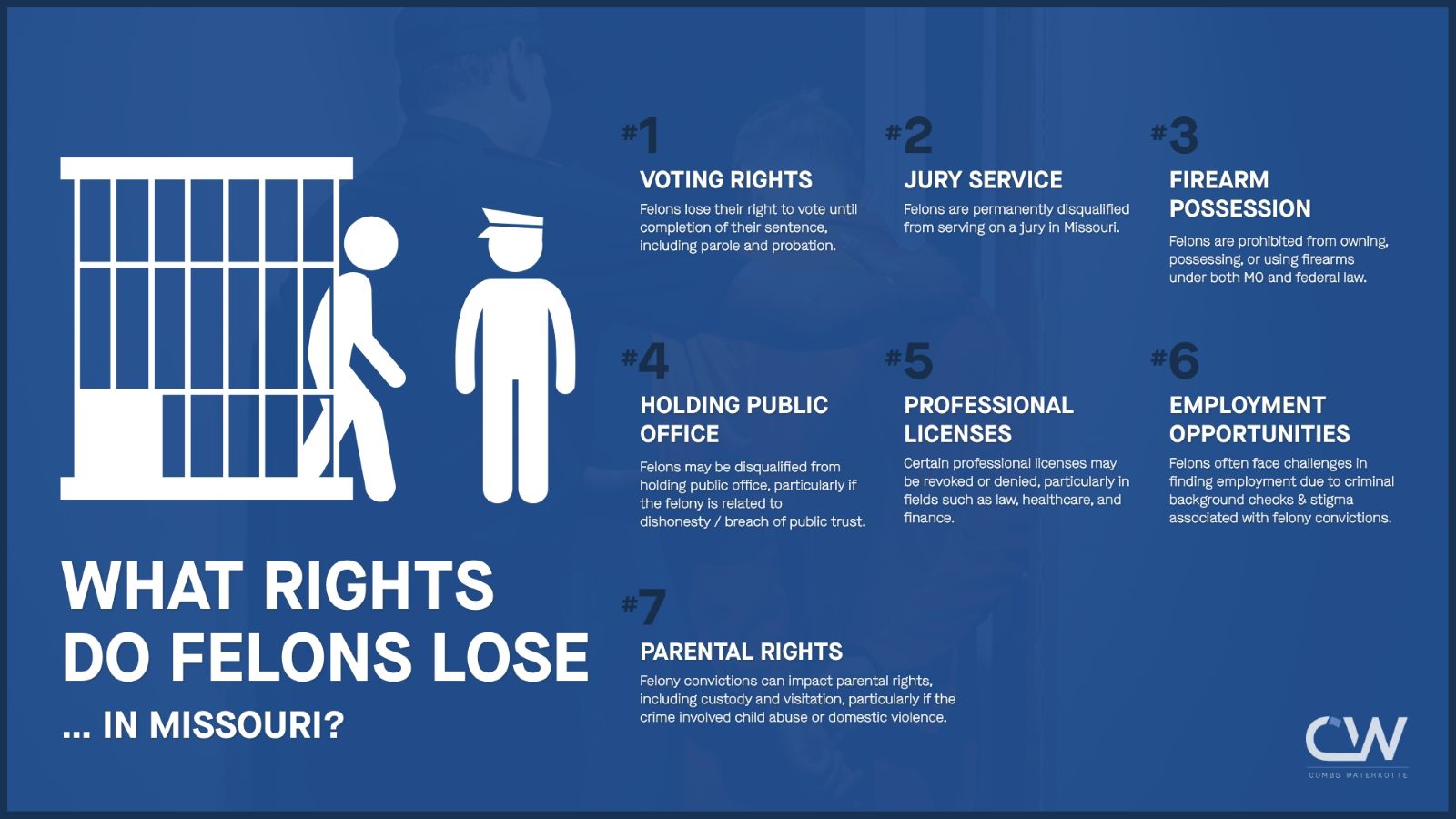
Depending on your circumstances, those consequences may involve:
- Finding or keeping employment
- Obtaining or maintaining a professional license
- Finding suitable housing
- Child custody and visitation
- Educational opportunities
- Immigration status for noncitizens
- Loss or restriction of firearm rights
- Strained personal and professional relationships
- Your reputation in the community
For these reasons, evaluating a child molestation case requires looking beyond the potential jail or prison sentence and considering how a conviction could affect nearly every part of your future.
What Should You Do After Being Accused of Child Molestation in Livingston County, MO?
The period immediately after an accusation can be chaotic. It is also when avoidable mistakes can create additional problems.
1. Avoid Answering Investigators’ Questions Without Legal Counsel
You may believe that telling the police your side of the story will resolve the matter quickly, but an interview can create additional evidence against you. Speak with a child molestation lawyer in Livingston County, MO before providing substantive answers to investigators.
2. Do Not Reach Out to the Accuser
Do not confront the child, parent, family member, or other person connected to the allegation. Attempts to “straighten this out” can be misunderstood or potentially create additional allegations.
3. Do Not Violate Court-Ordered Restrictions
Take every bond condition and no-contact order seriously. Follow the restrictions even if you disagree with them or the other person attempts to communicate with you.
4. Do Not Delete Potentially Relevant Information
Preserve texts, emails, photographs, social media content, location data, and other records that could relate to the allegations or timeline.
Preservation matters even when you believe something is embarrassing or unimportant. Let your attorney determine what is relevant.
5. Keep the Case Away From Social Media
Posting your version of events may feel like a way to defend your reputation, but public statements can complicate the criminal case. Avoid discussing the allegations, accuser, witnesses, police, or prosecutors online.
6. Write Down What You Remember for Your Attorney
Record what you remember about relevant dates, conversations, locations, witnesses, and events while those details are still fresh. Keep this information for your attorney rather than sharing your account with friends, family members, coworkers, or potential witnesses.
7. Contact an Experienced Livingston County, MO Child Molestation Defense Attorney
The earlier your defense begins, the greater the opportunity to preserve evidence, investigate witnesses, review the accusation’s development, and respond strategically to law enforcement.
Do Not Wait for Charges to Start Defending Yourself
You do not need to be formally charged before contacting a defense attorney in Livingston County, MO. When you know or suspect that a child molestation investigation is underway, getting legal counsel involved early can give your defense valuable time to respond.
Evidence can disappear. Surveillance footage may be overwritten. Messages can be deleted. Memories fade. Witnesses become harder to locate. Meanwhile, investigators may continue developing the prosecution’s case.
Getting a Livingston County, MO attorney involved during the investigative stage can provide an opportunity to:
- Handle communications with detectives and investigators
- Help prevent an unnecessary or damaging interview
- Learn more about the scope and direction of the investigation
- Preserve favorable electronic and physical evidence
- Locate witnesses while events are still relatively fresh
- Reconstruct important timelines, locations, and events
- Evaluate search warrants and law enforcement searches
- Prepare for the possibility that prosecutors will file charges
- Begin developing a defense before the prosecution controls the narrative
Instead of waiting to see what investigators or prosecutors decide to do, early intervention allows the defense to begin gathering information, protecting evidence, and preparing for what may come next.

Why Trust Combs Waterkotte With a Child Molestation Case in Livingston County, MO?
A child molestation allegation requires a defense team prepared for both the legal complexity of the case and the enormous personal consequences surrounding it.
At Combs Waterkotte, we know how quickly an accusation involving a sex crime can affect your reputation, relationships, career, and future. But an accusation is not proof, and we do not approach your case as though the outcome has already been decided.
We examine the case from the ground up rather than simply accepting the investigation conducted by law enforcement. That means looking closely at how the allegation began, how evidence was collected, whether accounts changed, and whether the state’s theory withstands scrutiny.
Our Livingston County, MO defense team can:
- • Conduct an independent investigation into the allegations
- • Analyze police reports, interviews, and investigative materials
- • Obtain and review forensic interview recordings
- • Compare witness statements for significant inconsistencies
- • Preserve and analyze texts, messages, location data, and other digital evidence
- • Evaluate relevant medical and forensic evidence
- • Investigate when, how, and under what circumstances the allegation originated
- • Challenge unconstitutional searches and improperly obtained evidence
- • Examine whether prosecutors can establish every element of the charged offense
- • Bring in investigators and appropriate experts when necessary
- • Build the defense around you and what is at stake in your life
- • Build the case with trial in mind when the case cannot be resolved fairly
You are more than the allegation written in a police report. We take the time to understand what happened, investigate the state’s version of events, and build a defense specifically around your case.
Contact a Child Molestation Lawyer in Livingston County, MO Today
Once a child molestation accusation is made, the investigation can move forward quickly, even while you are still trying to understand what happened and what the allegation could mean for your future.
But an accusation does not relieve the state of its burden of proof.
At Combs Waterkotte, we defend people against some of the most serious and damaging criminal allegations in Missouri. We investigate the circumstances behind the accusation, analyze forensic interviews and digital evidence, identify inconsistencies and weaknesses in the state’s case, challenge evidence obtained unlawfully, and prepare a defense designed to hold prosecutors to their burden.
The government may already be gathering evidence against you. Do not give investigators and prosecutors a head start while you wait to begin protecting yourself in Livingston County, MO.
Call (314) 900-HELP or contact Combs Waterkotte online today for a confidential consultation with a child molestation lawyer in Livingston County, MO who is prepared to fight for your freedom and future.

