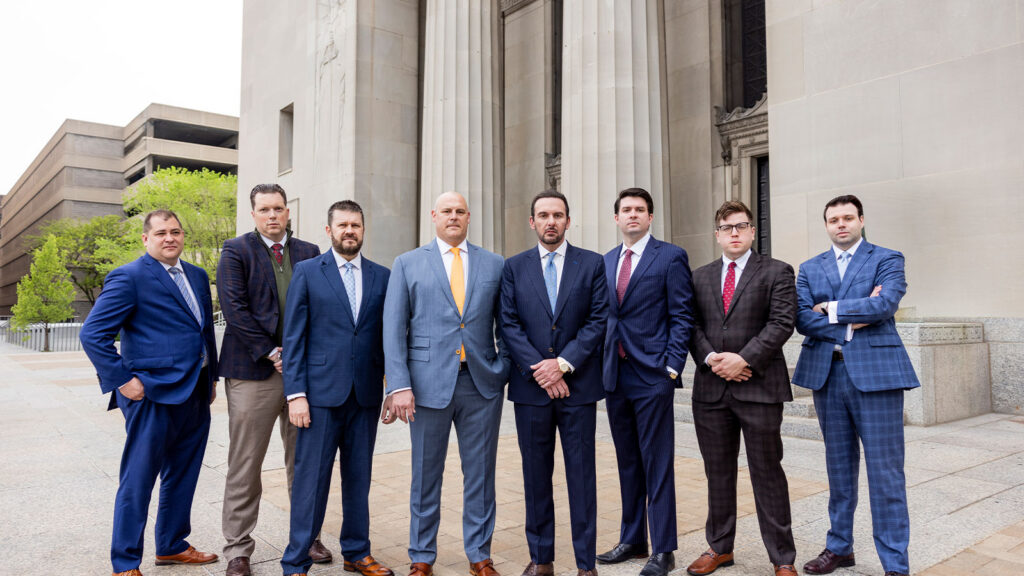








"Best group of criminal defense lawyers in the St. Louis area. I can't say enough about them and the lengths that this firm will go to ensure presumption of innocence and actually fight for their clients."
Client Review (Google)


















White-Collar Crimes Lawyer in Southern Illinois
A white-collar criminal investigation can put your freedom, career, business, finances, and reputation at risk before you ever step inside a courtroom.
These cases rarely begin and end with a single piece of evidence. Investigators may spend months examining bank accounts, business transactions, emails, text messages, contracts, tax records, computer data, financial statements, and years of activity before charges are filed. In some cases, the first indication that something is wrong is a subpoena, an unexpected visit from investigators, an internal company investigation, or questions from a federal agency.
That means you should not wait for an indictment or arrest to start protecting yourself.
At Combs Waterkotte, our Southern Illinois white-collar crimes lawyers defend business owners, executives, professionals, employees, public officials, and other individuals facing serious financial and fraud-related allegations. We investigate the government's case independently, challenge questionable evidence, examine whether prosecutors can actually establish criminal intent, and prepare every case with the possibility of trial in mind.
Accused of a white-collar crime in Southern Illinois? Call (314) 900-HELP or reach out online to schedule a free, confidential consultation with our defense team today.
What Is Considered a White-Collar Crime in Illinois?
"White-collar crime" is not one specific criminal charge. It is a broad term commonly used for financially motivated offenses involving allegations of fraud, deception, theft, misrepresentation, misuse of information, or abuse of a position of trust.
Illinois law addresses numerous offenses that can fall under the white-collar umbrella. Article 17 of the Illinois Criminal Code covers deceptive practices and several categories of fraud, including fraud against governmental and private entities, credit and debit card fraud, and computer fraud. Illinois law separately addresses offenses such as identity theft, commercial bribery, and money laundering.
What makes these cases particularly challenging is the amount of information prosecutors may attempt to turn into evidence. A transaction that appears perfectly ordinary by itself may be presented as one piece of a much larger alleged scheme.
Prosecutors may try to establish a pattern through:
- Banking and financial records
- Accounting documents
- Invoices and purchase orders
- Contracts
- Emails and text messages
- Computer and cellphone data
- Corporate records
- Tax documents
- Credit card transactions
- Electronic payment records
- Employee communications
- Recorded conversations
- Witness and cooperating-defendant testimony
The presence of complicated financial activity does not automatically prove criminal conduct. In many white-collar cases, one of the central questions is whether prosecutors can establish that the defendant knowingly and intentionally participated in the alleged crime.
Types of White-Collar Crimes We Defend in Southern Illinois
White-collar allegations can arise in virtually any environment where money, business records, financial information, government benefits, computer systems, or positions of trust are involved. Some cases remain within the Illinois court system, while others may attract the attention of federal investigators.
Combs Waterkotte represents people accused of a wide range of financial and white-collar offenses throughout Southern Illinois.
Fraud and Deceptive Practices
Fraud allegations generally involve claims that someone intentionally used deception, false statements, concealment, or misrepresentation to obtain money, property, services, or another financial benefit.
Illinois defines “intent to defraud” as knowingly acting with the specific intent to deceive or cheat for purposes of causing financial loss to another or obtaining financial gain. Illinois deceptive-practices law also covers several specific forms of allegedly fraudulent conduct.
Fraud allegations can emerge from business transactions, lending arrangements, contracts, financial statements, government programs, insurance claims, checks, investment activity, or countless other circumstances.
Forgery
Forgery allegations extend well beyond copying another person's signature. Under 720 ILCS 5/17-3, forgery can include knowingly making or altering certain false documents with intent to defraud, knowingly issuing or delivering them, or possessing them with the intent to issue or deliver them. Illinois law also addresses certain unauthorized digital and electronic signatures.
Checks, contracts, financial records, identification documents, business records, loan documents, electronic records, and other instruments may all become relevant in a forgery investigation.
Identity Theft
Identity theft cases can involve much more than stolen credit cards. 720 ILCS 5/16-30 addresses several forms of knowingly using, obtaining, possessing, transferring, selling, purchasing, or manufacturing another person's identifying information or identification documents under prohibited circumstances.
These investigations may involve Social Security numbers, bank accounts, credit information, identification documents, online accounts, business information, passwords, and electronically stored personal information.
Embezzlement and Employee Theft
Many allegations commonly described as embezzlement arise when someone who legitimately had access to money or property is accused of taking, transferring, redirecting, or using it without authorization.
These cases frequently involve employees, managers, executives, bookkeepers, accountants, fiduciaries, and others placed in positions of financial trust.
Access alone does not establish theft. The defense may need to determine what authority the accused actually possessed, how the organization normally handled transactions, whether expenditures were approved, how records were maintained, and whether the alleged misconduct was instead an accounting mistake, contractual disagreement, internal business dispute, or misunderstanding.
Computer Fraud
White-collar investigations increasingly involve digital activity. Under 720 ILCS 5/17-50, computer fraud can involve accessing computers, programs, or data as part of a scheme to defraud or deception, as well as obtaining money or control over another person's money, property, or services through prohibited computer access.
A computer fraud defense may require determining who actually accessed the system, what authorization that person possessed, whether passwords were shared, what the electronic records prove, and whether prosecutors can reliably connect particular digital activity to the accused.
Money Laundering
Money laundering investigations generally focus on financial transactions involving property or proceeds allegedly connected to unlawful activity. These cases can involve complicated banking activity, transfers between accounts, businesses, cash transactions, purchases, investments, and financial structures.
720 ILCS 5/29B-1 allows evidence concerning issues such as structured financial transactions, false or fictitious names, forged instruments, and materially false identifying information to be considered in money laundering prosecutions under specified circumstances.
Following the movement of money is only part of the investigation. Knowledge, intent, the source of funds, and the defendant's actual role can become critical issues in determining whether the transactions were criminal at all.
Bribery and Public Corruption
White-collar cases can also arise from allegations involving payments, gifts, benefits, contracts, kickbacks, influence, or misuse of public or private positions.
These investigations can be especially damaging because the allegation itself may jeopardize a professional career or public reputation before guilt has ever been established.
When Does a Southern Illinois White-Collar Case Become Federal?
One of the most important questions in a white-collar investigation is who is investigating you.
Some financial crimes are prosecuted exclusively under Illinois law. Others may violate both Illinois and federal statutes. The involvement of interstate communications, federally insured financial institutions, federal benefit programs, federal agencies, interstate transactions, or other federal interests can potentially bring federal investigators and prosecutors into the case.
Combs Waterkotte attorneys have decades of Illinois federal defense experience. Federal white-collar investigations may involve agencies such as:
- Federal Bureau of Investigation (FBI)
- Internal Revenue Service Criminal Investigation (IRS-CI)
- U.S. Postal Inspection Service
- Department of Health and Human Services Office of Inspector General
- Securities and Exchange Commission
- Department of Labor
- Other federal inspectors general and investigative agencies
Potential federal allegations can include:
- Wire fraud
- Mail fraud
- Bank fraud
- Healthcare fraud
- Tax fraud and tax evasion
- Money laundering
- Securities fraud
- Federal program fraud
- Conspiracy
- False statements
A federal investigation should never be treated like an ordinary criminal case. Federal investigators may spend months or years gathering documents, conducting surveillance, interviewing witnesses, executing search warrants, and building a case before the target learns how extensive the investigation has become.
How White-Collar Crime Investigations Begin in Southern Illinois
You do not have to be arrested to need a criminal defense attorney.
In white-collar cases, waiting until charges are formally filed can mean giving investigators a significant head start. Authorities may already have gathered thousands of pages of financial records and interviewed numerous witnesses before contacting the person they believe is responsible.
An investigation might become apparent when:
- Investigators contact you for an interview
- You receive a subpoena
- Your business receives a request for records
- Law enforcement executes a search warrant
- Your employer begins an internal investigation
- A bank account or transaction receives unusual scrutiny
- Coworkers or business partners are interviewed
- You learn that a grand jury is investigating certain conduct
- A former employee or business associate accuses you of misconduct
- A government agency begins auditing or reviewing transactions
One of the biggest mistakes someone can make is assuming that cooperating without an attorney will quickly clear everything up.
If investigators believe a crime occurred, your explanations may not be interpreted the way you expect. A statement that appears innocent in isolation can later be compared against documents, emails, testimony, or other evidence and used to challenge your credibility.
Before answering substantive questions or voluntarily providing information, speak with a Southern Illinois white-collar crimes lawyer who understands what may be at stake.
How Prosecutors Build Illinois White-Collar Crime Cases
White-collar prosecutions often depend less on physical evidence and more on reconstructing communications, transactions, relationships, and financial activity.
Investigators may collect:
- Bank statements
- Credit card records
- Wire transfer records
- Tax returns
- Payroll records
- Accounting ledgers
- Invoices
- Contracts
- Loan applications
- Insurance records
- Corporate documents
- Emails
- Text messages
- Cloud-storage data
- Computer files
- Cellphone data
- Internet activity
- Recorded conversations
- Witness statements
But a mountain of paperwork is not the same thing as proof of a crime.
The defense must examine what those records actually establish. A suspicious-looking transaction may have a legitimate business explanation. An email can be taken out of context. Multiple employees may have had access to an account. Accounting procedures may have been inconsistent. A witness may have a personal or financial incentive to blame someone else.
The government's interpretation of financial evidence is still an interpretation, and it can be challenged.
Why Criminal Intent Matters in Illinois White-Collar Cases
One of the most important issues in many white-collar prosecutions is intent.
A financial loss does not necessarily mean fraud occurred. A bad business decision is not automatically criminal. Neither is poor bookkeeping, an unsuccessful investment, a contract dispute, a misunderstanding between business partners, or an accounting mistake.
For example, Illinois deceptive-practices and forgery statutes specifically incorporate an intent-to-defraud element. Illinois defines that concept in this context as knowingly acting with the specific intent to deceive or cheat for financial loss or gain.
That distinction can become central to the defense. Depending on the allegations, your attorney may investigate:
- What you knew when the transaction occurred
- What information was available to you
- Whether you relied on accountants, attorneys, employees, or other professionals
- Whether you had authority to conduct the transaction
- Whether company policies were unclear or inconsistently enforced
- Whether similar transactions were routinely approved
- Whether records were incomplete or incorrectly interpreted
- Whether another individual was responsible for the alleged conduct
- Whether prosecutors are attempting to infer criminal intent from ordinary business activity
What Are the Penalties for White-Collar Crimes in Illinois?
There is no single penalty for a "white-collar crime" in Illinois because the term covers many different criminal offenses. The classification and potential punishment depend on the specific statute involved, the amount of money or property at issue, the alleged conduct, the number of victims or transactions, prior convictions, and other circumstances.
Some financial crimes become more serious as the alleged monetary value increases. Others are assigned a particular felony classification based primarily on the conduct itself. For example, standard forgery under Illinois law is generally a Class 3 felony, while computer fraud can range from a Class 4 to a Class 2 felony depending on the conduct and, in some circumstances, the value involved. Identity theft and money laundering also have classifications that can increase substantially based on the amount of money or property involved and other statutory factors.
The chart below provides examples of how several common Illinois white-collar offenses may be classified. It is not a complete list of charges or penalties, and it should not be used to determine the potential sentence in a particular case. White-collar statutes frequently contain exceptions, enhanced classifications, special circumstances, and additional sentencing provisions that can change the potential consequences.
| White-Collar Offense | Example Circumstances | Potential Classification |
|---|---|---|
| Forgery | Standard forgery involving a false or altered document with intent to defraud | Class 3 felony |
| Computer Fraud | Accessing a computer or data with intent to execute a scheme to defraud | Class 4 felony |
| Computer Fraud | Obtaining more than $1,000 but less than $50,000 through conduct covered by 720 ILCS 5/17-50(a)(3) | Class 3 felony |
| Computer Fraud | Obtaining $50,000 or more through conduct covered by 720 ILCS 5/17-50(a)(3) | Class 2 felony |
| Identity Theft | Credit, money, goods, services, or other property not exceeding $300 under 720 ILCS 5/16-30(a)(1) | Class 4 felony |
| Identity Theft | More than $300 but not more than $2,000 | Class 3 felony |
| Identity Theft | More than $2,000 but not more than $10,000 | Class 2 felony |
| Identity Theft | More than $10,000 but not more than $100,000 | Class 1 felony |
| Identity Theft | More than $100,000 | Class X felony |
| Money Laundering | Criminally derived property valued at $10,000 or less under applicable provisions of 720 ILCS 5/29B-1 | Class 3 felony |
| Money Laundering | More than $10,000 but not more than $100,000 | Class 2 felony |
| Money Laundering | More than $100,000 but not more than $500,000 | Class 1 felony |
| Money Laundering | More than $500,000 under applicable provisions of the statute | Class 1 non-probationable felony |
These are only examples. The same general category of white-collar crime can carry a different classification depending on exactly what prosecutors allege. Identity theft, for example, contains additional enhancements based on factors including the victim, prior convictions, the number of individuals whose identifying information was involved, and whether aggravated identity theft is charged. Money laundering also contains circumstances that can result in Class X felony treatment.
Depending on the charge and felony classification, a conviction can expose someone to incarceration, probation when legally available, fines, restitution, forfeiture, and other court-imposed consequences. For professionals and business owners, the effects can extend much further.
For that reason, determining what you are actually charged with, and what prosecutors must prove, is far more important than relying on a general white-collar sentencing chart. A Southern Illinois white-collar crimes lawyer can examine the specific statute, alleged financial amount, enhancement factors, and evidence to determine the potential exposure in your case.

A White-Collar Conviction Can Affect More Than Your Criminal Record in Southern Illinois
For many Illinois professionals and business owners, the collateral consequences of a white-collar conviction can be nearly as damaging as the criminal sentence itself.
A conviction or even a public criminal accusation may threaten:
- Your professional license
- Your current employment
- Qualifying for rental property
- Child custody and visitation opportunities
- Your firearm rights
- Your ability to hold fiduciary positions
- Your reputation within your industry
- Your personal and professional relationships
Doctors, nurses, attorneys, accountants, financial professionals, executives, government employees, contractors, and other licensed or regulated professionals may face additional administrative or disciplinary proceedings.
This is why defending a white-collar case requires looking beyond the immediate criminal charge. Your defense strategy should account for what a particular outcome could mean for the rest of your life.
Defenses to White-Collar Crime Charges in Southern Illinois
There is no universal defense to a white-collar criminal charge. The strategy depends on the offense, the evidence, the defendant's role, and what prosecutors must prove.
Potential defense issues may include:
Lack of Criminal Intent
Complicated financial activity can produce mistakes, misunderstandings, and disagreements without criminal conduct. If prosecutors cannot prove the required intent, they may not be able to establish the charged offense.
You Had Authority to Conduct the Transaction
Some cases arise because prosecutors or an alleged victim dispute how money or property was used. Evidence showing that the defendant had actual or apparent authority to access, transfer, spend, or manage the assets may undermine the government's theory.
The Government Misinterpreted the Financial Evidence
Financial records rarely tell their own story. Transactions may have legitimate explanations that investigators overlooked or misunderstood.
Accountants, forensic financial professionals, computer experts, or other specialists may be needed to analyze complicated evidence and test the prosecution's conclusions.
Another Person Was Responsible
Businesses often have numerous people with access to accounts, records, passwords, computer systems, or financial information. The fact that activity occurred under someone's department, account, or credentials does not necessarily prove that person performed or authorized it.
A Witness Has a Reason to Shift Blame
White-collar investigations frequently involve cooperating witnesses. Employees, business partners, codefendants, or others may have strong incentives to minimize their own involvement.
A Southern Illinois defense attorney can investigate what benefits a witness expects to receive and whether their version of events is consistent with the documentary evidence.
Evidence Was Obtained Unlawfully
Search warrants, electronic data, business records, computers, phones, and other evidence may raise constitutional and procedural questions.
If investigators violated your constitutional rights while obtaining evidence, your attorney may seek to prevent that evidence from being used against you.
Why Early Legal Intervention Matters in a White-Collar Investigation
White-collar defense can begin before charges exist.
In fact, the investigative stage may offer some of the most important opportunities to protect your interests.
When Combs Waterkotte becomes involved early, our attorneys can determine what agency is investigating, identify the apparent scope of the inquiry, communicate with investigators and prosecutors, help you respond appropriately to subpoenas or requests, preserve favorable evidence, and begin developing the defense before the government controls the narrative.
Early intervention may also provide opportunities to address factual misunderstandings or weaknesses in the government's theory before prosecutors make charging decisions.
You should not assume that hiring an attorney makes you look guilty. When your career, business, finances, and freedom may be at stake, obtaining legal advice is a practical step toward protecting yourself.
What Should You Do If You Are Under Investigation for a White-Collar Crime in Illinois?
If you believe state or federal investigators are examining your conduct, your next decisions can matter enormously.
Do Not Try to Explain Everything to Investigators Yourself
You may believe that if investigators simply hear your side, the misunderstanding will disappear. But you may not know what evidence they already possess, what witnesses have told them, or how your statements will be interpreted.
Speak with an attorney before participating in a substantive interview.
Do Not Delete or Alter Records
Do not destroy documents, delete emails, erase messages, modify files, or instruct someone else to remove potentially relevant information.
Your attorney can help you understand what records should be preserved and how to respond appropriately to requests for information.
Preserve Evidence That May Help Your Defense
Save relevant contracts, emails, messages, accounting records, authorization documents, policies, correspondence, and other materials that may provide context for the transactions under investigation.
Do Not Discuss the Investigation With Coworkers or Potential Witnesses
Conversations about an active investigation can create additional witnesses, misunderstandings, or allegations that you attempted to influence someone's testimony.
Contact a Southern Illinois White-Collar Crimes Attorney
The earlier your attorney understands the allegations, the more time the defense has to investigate independently and protect evidence that may become important later.
Why Choose Combs Waterkotte for White-Collar Criminal Defense in Southern Illinois?
White-collar cases demand more than simply showing up for court dates. They require attorneys who are prepared to work through complicated records, understand the prosecution's theory, investigate independently, and challenge the conclusions investigators have drawn from financial and electronic evidence.
At Combs Waterkotte, we approach serious financial crime allegations as cases that must be built from the ground up.
Our Southern Illinois criminal defense team can:
- • Investigate the allegations independently
- • Review financial, business, and accounting records
- • Examine emails, messages, computer data, and other digital evidence
- • Determine what prosecutors must prove regarding knowledge and intent
- • Identify weaknesses in loss calculations and transaction histories
- • Review search warrants, subpoenas, and investigative procedures
- • Interview witnesses and investigate cooperating witnesses
- • Examine whether other individuals had access or responsibility
- • Work with appropriate experts and investigative resources
- • Challenge unlawfully obtained or unreliable evidence
- • Build a defense around you and your priorities
- • Prepare your case for trial when a fair resolution cannot be reached
Most importantly, we do not treat the government's interpretation of the evidence as an established fact. We investigate what happened, what you knew, what your role actually was, and what the evidence can, and cannot, prove.
Southern Illinois White-Collar Crimes FAQs
What is considered a white-collar crime in Illinois?
White-collar crime is a general term for financially motivated criminal allegations frequently involving fraud, deception, theft, financial transactions, computer systems, or misuse of a position of trust. Illinois offenses commonly associated with white-collar crime include deceptive practices, forgery, identity theft, computer fraud, commercial bribery, and money laundering.
Can I be investigated without knowing about it?
Yes. White-collar investigations can continue for months before the target learns about them. Investigators may gather financial records, interview witnesses, obtain electronic evidence, issue subpoenas, and analyze transactions before approaching the person they suspect.
Should I talk to investigators if I know I did nothing wrong?
You should speak with a criminal defense attorney before participating in an interview. Investigators may possess information you have not seen, and statements can be compared against documents and witness testimony later. An attorney can communicate with investigators and help determine the safest way to address the inquiry.
Does making a financial mistake mean I committed fraud?
No. A financial loss, accounting mistake, poor business decision, or unsuccessful transaction does not by itself establish fraud. Many fraud offenses require prosecutors to prove a particular mental state or intent. For example, Illinois deceptive-practices law expressly uses an intent-to-defraud standard for specified conduct.
Can white-collar crimes be felonies in Illinois?
Yes. Numerous Illinois white-collar offenses can be prosecuted as felonies. The classification can depend on the particular offense and statutory circumstances, including, for some offenses, the amount or value involved. Computer fraud alone can range into felony classifications depending on the conduct alleged.
Can an Illinois white-collar case also become a federal case?
Yes. Certain conduct may potentially violate both Illinois and federal law. Federal jurisdiction and charging decisions depend on the facts and statutes involved, but allegations involving interstate activity, federal programs, federally insured financial institutions, or federal agencies can potentially lead to federal investigation or prosecution.
What if my employer is conducting an internal investigation?
Do not assume an internal investigation cannot lead to criminal exposure. Information gathered internally may eventually reach law enforcement or regulators. If you believe the allegations could expose you to criminal liability, consult a defense attorney before making detailed statements or signing documents concerning the conduct under investigation.
What if investigators show up at my home or business?
Remain calm and do not interfere with law enforcement. You do not need to volunteer explanations simply because investigators want to speak with you. If they are executing a warrant, contact a criminal defense attorney as soon as possible and avoid taking actions that could be interpreted as obstructing the investigation.
Can Combs Waterkotte represent me before charges are filed?
Yes. You do not have to wait until an arrest or indictment to contact a defense attorney. Early representation can be particularly valuable in white-collar cases because an attorney may be able to communicate with investigators, evaluate subpoenas or requests for information, preserve defense evidence, and begin investigating before charging decisions are made.