







Additional Links
- Top 10 Sex Crime Questions
- What Happens During a Sexual Assault Investigation?
- What Should I Do If I’m Accused Of a Sex Crime in Missouri?
- Sex Offense Lawyers: How & When to Tell Your Side of the Story When You’re Falsely Accused
- Sex Offense Lawyers: Is There a Legal Definition of “Too Drunk to Consent?”
- Can a Sex Crime Conviction be Expunged From My Record in Missouri?
- Can I Be Arrested for a Sex Crime Without Evidence?
- Can Sex Crime Charges Be Dropped?
- How Can a Sex Crime Accusation Affect My Employment and Personal Life in Missouri?
- How Does the Sex Offender Registry Work in Missouri?

What Is First Degree Sodomy in St. Louis?
The laws regarding first degree sodomy in St. Louis are complex. While the statute itself is just a single sentence, there are a few terms to understand that constitute first degree sodomy. According to RSMo §566.060:
- Someone commits first degree sodomy if they have deviate sexual intercourse with another person who is incapacitated, incapable of consent, or lacks the capacity to consent, or by the use of forcible compulsion.
If you’ve been accused of or charged with first degree sodomy in St. Louis, you need a criminal defense lawyer right away. Reach out to Combs Waterkotte online or call (314) 900-HELP as soon as you can.
The three terms that make up the substance of Missouri’s first degree sodomy law are “deviate sexual intercourse,” “consent,” and “forcible compulsion.” Let’s take a closer look at each term to understand what they mean and how they constitute the first degree sodomy statute.
Deviate Sexual Intercourse
RSMo §566.010 defines deviate sexual intercourse as:
- An act involving the genitals of the perpetrator and the hand, mouth, tongue, or anus of the victim, or
- A sex act penetrating the victim’s penis, vagina, or anus that arouses the perpetrator and/or terrorizes the victim
In order for a sexual act to qualify as first degree sodomy in St. Louis, it must qualify as a deviate sexual act.
Consent
Consent is an important component of a St. Louis sodomy charge. Lack of consent or the inability to consent is at the heart of what constitutes first degree sodomy. Under Missouri statute RSMo §556.061, consent is not recognized under the law if:
- It is given by someone who lacks the mental capacity to give it (and the perpetrator knows about this mental incapacity)
- It is given by a person who is underage, has a mental disease, is intoxicated, or under the influence of drugs and does not understand the harmfulness of the sex act
- It is induced by force, duress, or deception
While this statute does concede that consent may be implied (i.e., consent does not necessarily have to be vocally confirmed or communicated during sex), it’s also clear about the instances in which consent does not apply.
Forcible Compulsion
Forcible compulsion covers the physical and mental coercion aspects of a sex act that qualify the act as first degree sodomy. According to RSMo §556.061, forcible compulsion is:
- Physical force that overcomes reasonable resistance
- A threat that places a person in reasonable fear or death, serious physical injury or kidnapping
If you forcibly compel someone into a sex act, you can be charged with first degree sodomy in St. Louis.

Aggravating Factors in First Degree Sodomy Offenses in St. Louis
The first degree sodomy statute outlines a few aggravating factors that can result in harsher penalties for individuals who are convicted. There are three of these aggravating factors: “aggravated sexual offense,” “persistent sexual offender,” and “predatory sexual offender.”
Aggravated Sexual Offense
According to RSMo §566.010, an aggravated sexual offense is any sexual offense in which someone:
- Inflicts serious physical injury on the victim
- Displays a deadly weapon or dangerous instrument threateningly
- Subjects the victim to sex with more than one person
- Commits the offense as part of a series of acts performed by two or more persons as part of an ongoing pattern of sexual abuse activity
- Commits an incestual act with:
- A blood relative
- A stepchild
- A half brother or sister
- An aunt, uncle, niece, or nephew
- Has previously been found guilty of:
Any of these factors on their own or in combination with each other can result in stricter first degree sodomy sentencing guidelines.
Persistent Sexual Offender
With most criminal offenses in Missouri, a prior conviction on your record can lead to longer prison sentences. The same is true for persistent sexual offenders facing a first degree sodomy charge. According to RSMo §566.125, a persistent sexual offender is anyone who has a past conviction for:
- First degree statutory rape
- First degree statutory sodomy
- First degree rape
- First degree sodomy
If you’re facing a first degree sodomy charge in St. Louis and have a conviction for any of these offenses on your record, you’re looking at significant time in prison.
Predatory Sexual Offender
Under RSMo §556.125, a predatory sexual offender is anyone accused of the same offenses as a persistent sexual offender, with the additions of:
- Child molestation
- Any Class B felony sexual offense
The primary difference between a persistent and a predatory sexual offender is that a predatory sexual offender does not have to have been found guilty of any of the offenses listed. Merely having committed the acts against more than one victim in the past is enough for someone to qualify.
What Are the Penalties for First Degree Sodomy in St. Louis
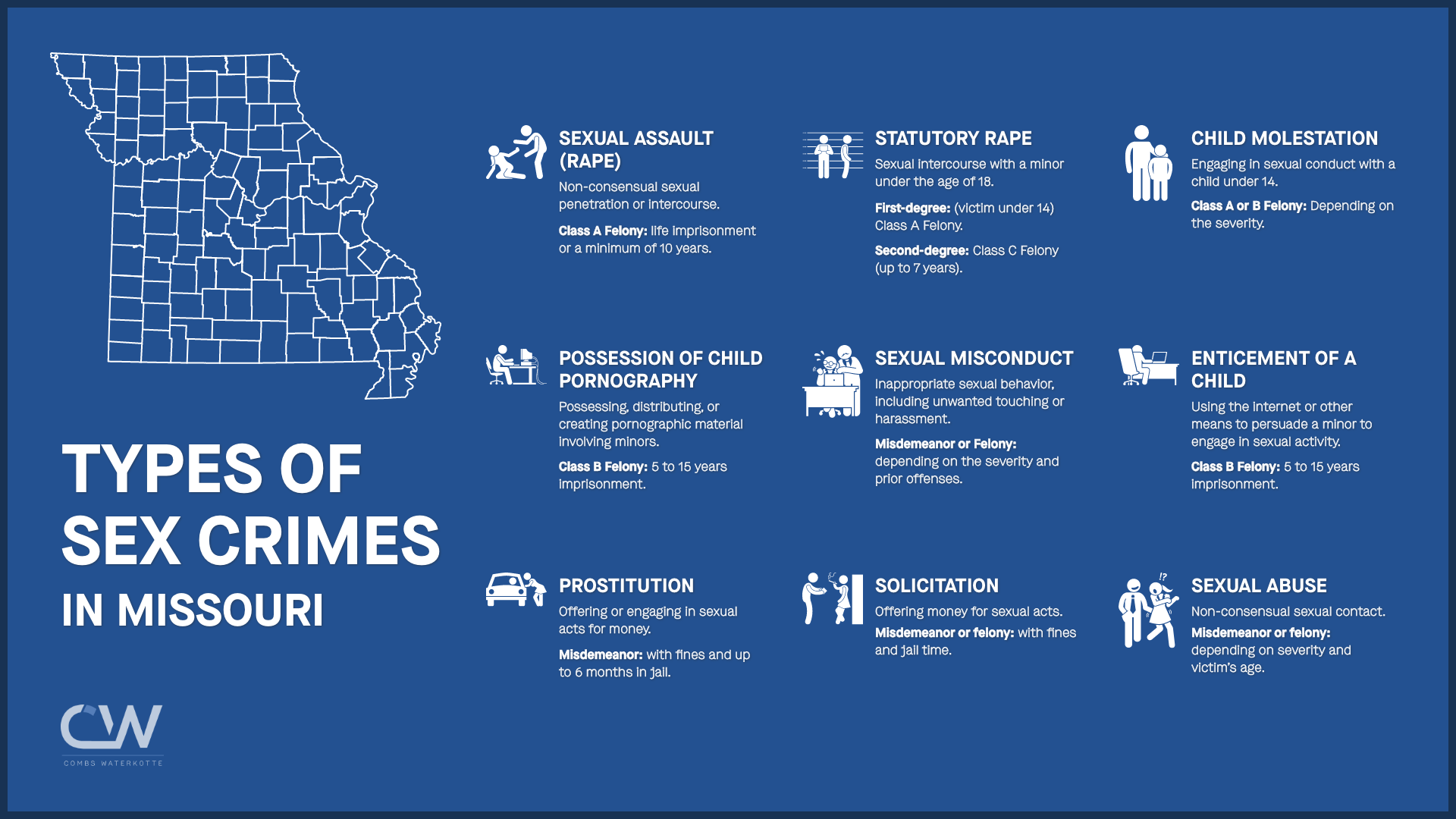
First degree sodomy is a felony in St. Louis. However, the charge doesn’t fit into the typical felony classes under Missouri law (i.e., Class A, Class B, Class C, etc.). Instead, the penalties for the offense are outlined in the statute itself.
In St. Louis, Missouri, a first degree sodomy conviction carries up to a lifetime prison sentence with a mandatory minimum of 5 years before parole or probation eligibility. However, certain aggravating factors can make the sentence much harsher:
- If the offense is an aggravated sexual offense, a conviction results in a life sentence with a mandatory minimum of 10 years
- If the perpetrator is a persistent or predatory sexual offender, a conviction results in a 15 to 30-year minimum sentence (depending on the perpetrator’s prior convictions)
- If the victim was a child less than 12 years old, a conviction results in a life sentence with no parole eligibility for at least 30 years
- If the victim was a child less than 12 years old and the offense was “outrageously or wantonly vile,” a conviction results in a life sentence without the possibility of parole
The statute also mentions that anyone found guilty of first degree sodomy (or attempted first degree sodomy) cannot be granted a suspended imposition or sentence (SIS) or suspended execution of sentence (SES), underscoring just how seriously Missouri takes these charges.
What to Do If You’re Under Investigation for First Degree Sodomy in St. Louis
By now, it’s clear that first degree sodomy charges have very high stakes in St. Louis. That having been said, it’s very important to do as much as you can to strengthen your criminal defense. If you’re under investigation for first degree sodomy in St. Louis, Combs Waterkotte recommends you take the following steps:
- Stay calm and avoid confrontation. Being investigated for first degree sodomy charges can be overwhelming, but reacting emotionally will only make things worse. Don’t speak with the police, the alleged victim, or anyone else about the allegations without an attorney present.
- Contact an experienced St. Louis sex crimes lawyer immediately. Prosecutors take sex crimes incredibly seriously, so you absolutely need legal assistance. A criminal defense attorney can protect your rights and begin building your defense even before charges are filed.
- Do not discuss the situation with friends, family, or on social media. It may feel natural to seek support, but anything you say related to your charges could potentially be used against you, even private messages or casual conversations. Keep all discussions about the case between you and your attorney.
- Work with your lawyer to gather evidence. This may include texts, emails, social media messages, photos, videos, or any other records that may support your side of the story.
- Be cautious of police questioning tactics. Investigators may try to pressure you into making a statement or may suggest that cooperating will help your situation. Law enforcement is legally allowed to use certain deceptive tactics during questioning. This means the safest approach is declining any law enforcement interactions and requesting that all communications go through your attorney.
- Follow all legal instructions and court requirements. If you’re required to attend hearings, respond to legal notices, or comply with specific conditions, take them seriously. Missing deadlines or ignoring court orders can damage your case.
- Prepare for a lengthy trial and stay focused. Investigators and prosecutions for sex crimes like first degree sodomy can take years to resolve. While the process can be trying, it’s important to maintain patience, stay organized, and closely follow your attorney’s guidance.
Criminal Defense Strategies Against First Degree Sodomy in St. Louis
Strong defense tactics could mean the difference between decades in prison for a first degree sodomy charge and complete freedom. In high stakes sex crimes cases like these, Combs Waterkotte employs a number of proven criminal defense strategies to help our clients achieve the best possible outcome to their case:
- Consent: In some cases, the defense may be able to argue that the alleged sexual activity was consensual. If prosecutors cannot prove a lack of consent or forcible compulsion beyond a reasonable doubt, the charge may not stand.
- Lack of Intent: Some aspects of the first degree sodomy statute require prosecutors to prove that the defendant acted knowingly or purposely. If the defense can demonstrate that the alleged conduct did not occur intentionally or that the accused lacked the required mental state, the prosecution may struggle to meet its burden of proof.
- Alibi: An alibi defense shows that the accused person was somewhere else when the alleged defense occurred. Phone records, surveillance footage, GPS data, receipts, or witness testimony may demonstrate that it was not possible for the defendant to have committed the crime.
- Fourth Amendment Violations: If investigators obtained evidence through an unlawful search or seizure, the defense may ask the court to suppress that evidence. Without key evidence, prosecutors may have a difficult time proving their case.
- Fifth Amendment or Miranda Rights Violations: Statements made during police questioning may be excluded if law enforcement violated the defendant’s constitutional rights, such as failing to properly administer Miranda warnings or coercing a confession.
- False Allegations or Credibility Challenges: In some first degree sodomy cases, the defense may be able to argue that allegations are false or exaggerated. This can involve examining inconsistencies in statements, motives to fabricate claims, prior conflicting reports, or credibility issues with witnesses.
- Insufficient Evidence: Prosecutors must prove every element of first degree sodomy beyond a reasonable doubt, including deviate sexual intercourse and lack of consent or forcible compulsion. If the available evidence is weak, contradictory, or incomplete, the defense may argue that the state cannot meet its burden.
- Mistake of Age: While consent is never valid for victims under the age of 14, for victims under the age of 17, mistake of age is a valid defense under RSMo §566.020. In this case, the defense has to demonstrate reasonable belief that the victim was of age.

First Degree Sodomy Conviction and the Sex Offender Registry in St. Louis
If you’re convicted of first degree sodomy in St. Louis, you must register as a sex offender. RSMo §589.400 groups sex offenders into three possible tiers, and each tier determines how long you must remain a registered sex offender:
- Tier I sex offenders must remain on the sex offender registry for 15 years
- Tier II sex offenders must remain on the sex offender registry for 25 years
- Tier III sex offenders must remain on the sex offender registry for life
Under RSMo §589.414, first degree sodomy is a tier III offense and requires a lifetime on the Missouri sex offender registry. However, if you commit no additional sex crimes, complete parole and probationary requirements, and complete any sex offender treatment programs required by the court, you may be eligible for removal from the sex offender registry after 25 years.