

First-Degree Burglary Lawyer Kansas City, MO
Facing first-degree burglary charges in Kansas City, Missouri? Combs Waterkotte can fight to protect your freedom, record, and future.
TO COMBS WATERKOTTE,YOU ARE WHY WE EXIST.


First-Degree Burglary Lawyer Kansas City, MO
Getting charged with first-degree burglary in Kansas City, MO, can mean facing up to 15 years in prison. The attorneys at Combs Waterkotte have over 100 years of combined experience handling countless cases involving burglary and other criminal offenses. If you’re facing first-degree burglary charges, we understand what’s at stake for you and can fight aggressively to protect your freedom and future.

I owe my life to Combs Waterkotte. If not for them, I would be spending the rest of my life behind bars. There is no amount of words that can explain what they did for me and my family. Its the highest recommendation that I can give.
Alexander B.
Felonies
Verify on

If I could give Steve and his team 10 stars I would in a heartbeat. Was facing more then one felony charge and after these guys found the arresting officer violated my 4th Amendment Rights and those charges were dismissed. My family and I can't thank you enough.
Dean J
Felonies
Verify on
I was hands down guilty. ON VIDEO !!! In a smaller town, and a job dealing with the public, this was devastating. I made one phone call and spoke for maybe 15 minutes. I DIDN'T appear in court. I am extremely impressed. QUIETLY relieved of the matter!
Y.I.V.
Theft
Verify on
My fiance had a felony drug charge and Combs Waterkotte got it dismissed! There were no fines, court cost, nothing. Chris is loyal, professional, knowledgeable, and a man of his word. We are forever grateful for you.
Kimberly T.
Drug Crimes
Verify on
If I was found guilty, it would have been over 100 years in prison. They promised me that they would fight like hell and get me out of it. After everything was done, I just felt free. Like this wasn’t gonna end with me rotting away in a prison cell. I felt like I could start my life and have a fresh start.
Caleb
Assault 1st, Armed Criminal Action
Verify on

I was facing, probably 18 years… I actually got 5 years probation and 40 hours of community service. Without Combs Waterkotte’s help, I don’t think my family could have made it without me. It was just a written book to where it's a perfect ending.
Chris
Unlawful Use of a Weapon, Armed Criminal Action
Verify on
I went through what was supposed to be one of the top law firms in St. Louis. They said I wouldn't have no chance. I end up firing the other lawyer and everything and going with Chris. I felt like Combs Waterkotte actually did something for me and wasn't I wasn't just another number on somebody's desk.
Willy
DWI/DUI
Verify onI owe my life to Combs Waterkotte. If not for them, I would be spending the rest of my life behind bars. There is no amount of words that can explain what they did for me and my family. Its the highest recommendation that I can give.
Alexander B.
Felonies
If I could give Steve and his team 10 stars I would in a heartbeat. Was facing more then one felony charge and after these guys found the arresting officer violated my 4th Amendment Rights and those charges were dismissed. My family and I can't thank you enough.
Dean J
Felonies
I was hands down guilty. ON VIDEO !!! In a smaller town, and a job dealing with the public, this was devastating. I made one phone call and spoke for maybe 15 minutes. I DIDN'T appear in court. I am extremely impressed. QUIETLY relieved of the matter!
Y.I.V.
Theft
My fiance had a felony drug charge and Combs Waterkotte got it dismissed! There were no fines, court cost, nothing. Chris is loyal, professional, knowledgeable, and a man of his word. We are forever grateful for you.
Kimberly T.
Drug Crimes
If I was found guilty, it would have been over 100 years in prison. They promised me that they would fight like hell and get me out of it. After everything was done, I just felt free. Like this wasn’t gonna end with me rotting away in a prison cell. I felt like I could start my life and have a fresh start.
Caleb
Assault 1st, Armed Criminal Action
I was facing, probably 18 years… I actually got 5 years probation and 40 hours of community service. Without Combs Waterkotte’s help, I don’t think my family could have made it without me. It was just a written book to where it's a perfect ending.
Chris
Unlawful Use of a Weapon, Armed Criminal Action
I went through what was supposed to be one of the top law firms in St. Louis. They said I wouldn't have no chance. I end up firing the other lawyer and everything and going with Chris. I felt like Combs Waterkotte actually did something for me and wasn't I wasn't just another number on somebody's desk.
Willy
DWI/DUI
Degrees of Burglary in Missouri
Missouri classifies burglary as a property crime rather than a theft crime. Contrary to popular belief, burglary is not synonymous with stealing.
This offense originally covered unlawful breaking and entering of dwellings at night. Missouri expanded the definition of burglary to include unlawful entries into all buildings, not just dwellings, at all times, not just during nighttime.
In broadening this offense, the state recognized that some burglaries are less dangerous than others. As a result, Missouri divides burglary offenses into two degrees.

A good attorney can mean the difference between going free and going to prison. To fight your first-degree burglary charges, contact Combs Waterkotte online or call us now at (314) 900-HELP.
Second-degree burglary is the lesser offense. It covers unlawful entries into buildings and inhabitable structures to commit a crime, as well as unlawful entries into motor vehicles to commit a felony, including theft.
First-degree burglary is the more serious offense. Similar to second-degree burglary, it covers unlawful entries into buildings and inhabitable structures to commit any offense. However, it also requires an aggravating circumstance that increases the risk to anyone inside, even if the building or structure is uninhabited.
Why Combs Waterkotte is the best Law firm for your case.
Real results for people just like you.

First-Degree Burglary in the Missouri Revised Statutes
The Missouri Revised Statutes define first-degree burglary to occur when someone knowingly and unlawfully enters or remains in a building or an inhabitable structure to commit an offense. Additionally, prosecutors must prove that at least one of the following aggravating circumstances occurred during the entry, while in the building, or while fleeing the crime scene:
- The accused or an accomplice was armed with explosives or a deadly weapon
- The accused or an accomplice injured or threatened injury to a non-accomplice
- The building or structure was occupied by a non-accomplice
Keep in mind that burglary requires entry into a building or an inhabitable structure. Crossing onto someone’s land is not burglary, even if the accused intends to commit a crime.
What Is a Building or Inhabitable Structure in Missouri Law?
Inhabitable structure means any vessel, vehicle, or structure where any of the following can occur:
- A person lives or carries on business
- People assemble for business, government, education, religion, entertainment, or public transportation
- People can be accommodated overnight
The definition specifically states that a vehicle, vessel, or structure can be inhabitable even if it is currently uninhabited.
As a result, any of the following could be considered an inhabitable structure, whether they are occupied or vacant:
- Single-family house
- Multi-family house, such as a duplex
- Manufactured home
- Apartment, townhouse, or condominium
- Hotel
- RV
- Travel trailer
- Tent
- Houseboat
- Office or office building
- Church
- School
- Store
- Mall
- Movie theater
- Museum
- Arena or stadium
- Bus or streetcar
Additionally, if a structure is divided into units, any unit not occupied by the accused is considered the inhabitable structure of another. Renting a hotel room, for example, does not give the accused the right to enter other hotel rooms.
The term “building” is not defined in Missouri’s criminal code, so a court will likely use its ordinary meaning when interpreting the statute. Building typically means any permanent structure with walls and a roof. This word supplements the term “inhabitable structure” by covering buildings that are not inhabitable.
Some locations that might be considered buildings include sheds, garages, carports, barns, and storage units.
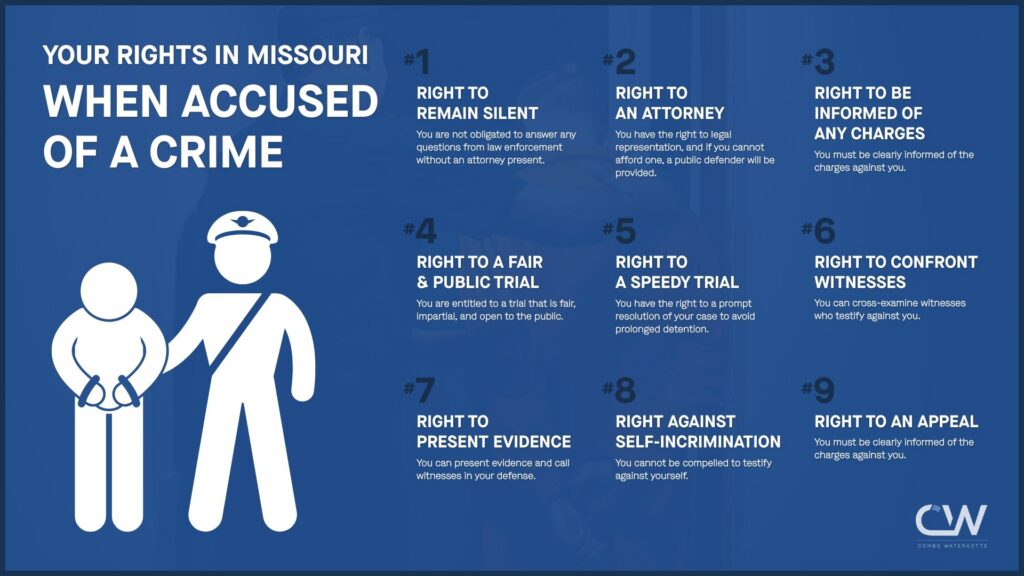
Unlawfully Entering or Remaining in Missouri
Burglary happens when someone unlawfully enters or remains in a structure. This means that the accused did not have express or implied permission to enter the building or inhabited structure.
Express permission is granted by the person who owns or occupies the location. Notably, someone can unlawfully enter a portion of a building or inhabited structure, even if other parts are open to them. For instance, unlawful entry can occur if you enter a storeroom marked “Employees Only.”
Implied permission is when the owner or occupier does not expressly permit entry, but the law presumes that they would if asked. Firefighters have implied permission to enter a building or structure that is on fire.
Someone unlawfully remains when the person stays somewhere after their permission to be there expires. Hiding in a bathroom to stay in a store after closing would likely count as unlawfully remaining.
Aggravating Circumstances Under Missouri’s Statutes
For a first-degree charge, aggravating circumstances are required, such as the use of an explosive. An explosive is any chemical compound, mixture, or device that has a primary purpose of causing an explosion, including these devices:
- Dynamite and high explosives
- Blasting agents
- Pellet powder
- Detonators, detonating cords, safety fuses, and other initiating explosives
- Igniters and igniter cords
- Squibs
It’s important to note that the explosive doesn’t have to be intended for use against people or the building. Even a small amount of explosive substance to open a safe could satisfy the aggravating factor.
Deadly weapons include the following devices:
- Loaded and unloaded firearms
- Projectile weapons capable of causing death or serious physical injury
- Switchblades
- Daggers
- Billy clubs
- Blackjacks
- Metal knuckles
The weapon does not need to be used to trigger this charge. Having one of these in your pocket during a break-in can satisfy the aggravating factor.
Finally, a physical injury means any impairment of a body part’s function, no matter how slight. As a result, someone who suffered a bump on the head or a bruised arm in the process of a break-in could satisfy this factor.
Potential Defenses Against Kansas City, MO, First-Degree Burglary Charges
The criminal defense strategy our team uses to advocate for you will be personalized to your particular needs, but here are some common strategies we may leverage:
Lack of Intent
Prosecutors must prove that you acted knowingly. If the entry was accidental, you lacked the intent required for this offense. Suppose that you lost control of your motorcycle and crashed through the wall of someone’s shed. Even though you entered, you did not do so knowingly.
Lack of intent can also constitute a defense when you enter or remain for a reason other than committing a crime. For example, if you entered an abandoned house just to take pictures, we could argue that while you trespassed, your actions didn’t constitute burglary.
Claim of Right
You can only burglarize a building or structure when you have no legal right to be there. You usually still have a right to be somewhere if you share that right with someone else.
For example, suppose that you are separated from your spouse. Your spouse tells you to leave the jointly-owned house, and you refuse. If you co-own the home, you have the right to be there and, thus, cannot commit burglary.
However, keep in mind that this defense might not apply when a court has ordered you not to enter a home you own. If a court has issued temporary divorce orders or a domestic violence restraining order to stay away from the family home and you enter it anyway, you could face burglary charges.
Necessity
A necessity defense could arise when you need to break the law to protect your life or safety. For example, suppose you were hunting in a snowstorm. You broke into someone’s cabin for shelter because you could not find your vehicle. In addition to claiming that you lacked the intent to commit an offense inside, you can also argue that you needed shelter from the storm.
Potential Penalties for First-Degree Burglary in Kansas City
Burglary in the first degree is a Class B felony, punishable by 5 to 15 years in prison. By comparison, second-degree burglary is typically a Class C felony that comes with three to ten years in prison. We may work to disprove the aggravating factors alleged by the prosecutors so that you could serve a significantly shorter sentence.
Similarly, first-degree trespassing is typically a Class B misdemeanor, subject to up to six months in jail. If we disprove that you intended to commit a crime after unlawfully entering, your sentence could end in just a few months.
Why You Should Hire Combs Waterkotte for Your First-Degree Burglary Case in Kansas City, MO

Combs Waterkotte has defended thousands of criminal cases. We have extensive experience representing people accused of burglary and trespassing, so we know the defenses that appeal most to prosecutors and jurors.


Burglary charges can be difficult for prosecutors because they must prove your intent. We aggressively push prosecutors to produce evidence for every element of the offense and, if they do not, fight for a dismissal, a reduction in charges, or an acquittal.
How We Defend You From Kansas City, MO, First-Degree Burglary Charges
We start by learning your side of the story and gathering evidence to support it, such as alibi witnesses. Our team can negotiate with prosecutors for a dismissal or the best possible plea deal in light of your defenses.

Legal Video:

If prosecutors refuse to offer an acceptable deal, we can fight your charges in court. At trial, we can present your evidence to a jury and advocate for an acquittal.
Contact Combs Waterkotte for Missouri First-Degree Burglary Defense

Your freedom is on the line when you’re facing first-degree burglary charges. Let us serve as your trusted advocate to fight for your best interests at every turn. Contact us online or at (314) 900-HELP to discover how we can defend you against burglary charges today.
Resources
For more information on burglary defense in Kansas City or anywhere else in Missouri, call the Combs Waterkotte criminal defense attorneys right away at (314) 900-HELP or contact us online for a confidential consultation.
Can I Lose My Job If I’m Charged With a Crime?
What are the Long-Term Impacts of a Criminal Conviction?
Free book
How a Criminal Defense Attorney Can Protect Your Rights and Future
Combs Waterkotte has over 80 years of experience and over 10,000 cases handled. This ebook helps guide you through the criminal defense process and how an experienced, skilled defense attorney can keep your freedoms intact.

