
First Degree Assault Lawyer Kansas City, MO
Hire the leading first degree assault defense law firm in Kansas City, MO to protect your freedom, rights, and future. Whether you have been charged or are under investigation, we can help.
TO COMBS WATERKOTTE,YOU ARE WHY WE EXIST.


First Degree Assault Lawyer Kansas City, MO
A first degree assault charge can place a person’s freedom, reputation, career, and family under intense pressure. A conviction can mean years behind bars, large fines, and collateral consequences that can follow you for the rest of your life. If you’ve been arrested or charged, you need legal assistance right away.
Combs Waterkotte’s Kansas City criminal defense lawyers are ready to take on your first degree assault charges, no matter your situation or criminal history. We preserve evidence, challenge overcharging, and prepare a defense capable of withstanding the rigors of a trial. To learn more, call us today at (314) 900-HELP.

I owe my life to Combs Waterkotte. If not for them, I would be spending the rest of my life behind bars. There is no amount of words that can explain what they did for me and my family. Its the highest recommendation that I can give.
Alexander B.
Felonies
Verify on

If I could give Steve and his team 10 stars I would in a heartbeat. Was facing more then one felony charge and after these guys found the arresting officer violated my 4th Amendment Rights and those charges were dismissed. My family and I can't thank you enough.
Dean J
Felonies
Verify on
I was hands down guilty. ON VIDEO !!! In a smaller town, and a job dealing with the public, this was devastating. I made one phone call and spoke for maybe 15 minutes. I DIDN'T appear in court. I am extremely impressed. QUIETLY relieved of the matter!
Y.I.V.
Theft
Verify on
My fiance had a felony drug charge and Combs Waterkotte got it dismissed! There were no fines, court cost, nothing. Chris is loyal, professional, knowledgeable, and a man of his word. We are forever grateful for you.
Kimberly T.
Drug Crimes
Verify on
If I was found guilty, it would have been over 100 years in prison. They promised me that they would fight like hell and get me out of it. After everything was done, I just felt free. Like this wasn’t gonna end with me rotting away in a prison cell. I felt like I could start my life and have a fresh start.
Caleb
Assault 1st, Armed Criminal Action
Verify on
I was facing, probably 18 years… I actually got 5 years probation and 40 hours of community service. Without Combs Waterkotte’s help, I don’t think my family could have made it without me. It was just a written book to where it's a perfect ending.
Chris
Unlawful Use of a Weapon, Armed Criminal Action
Verify on
I went through what was supposed to be one of the top law firms in St. Louis. They said I wouldn't have no chance. I end up firing the other lawyer and everything and going with Chris. I felt like Combs Waterkotte actually did something for me and wasn't I wasn't just another number on somebody's desk.
Willy
DWI/DUI
Verify onI owe my life to Combs Waterkotte. If not for them, I would be spending the rest of my life behind bars. There is no amount of words that can explain what they did for me and my family. Its the highest recommendation that I can give.
Alexander B.
Felonies
If I could give Steve and his team 10 stars I would in a heartbeat. Was facing more then one felony charge and after these guys found the arresting officer violated my 4th Amendment Rights and those charges were dismissed. My family and I can't thank you enough.
Dean J
Felonies
I was hands down guilty. ON VIDEO !!! In a smaller town, and a job dealing with the public, this was devastating. I made one phone call and spoke for maybe 15 minutes. I DIDN'T appear in court. I am extremely impressed. QUIETLY relieved of the matter!
Y.I.V.
Theft
My fiance had a felony drug charge and Combs Waterkotte got it dismissed! There were no fines, court cost, nothing. Chris is loyal, professional, knowledgeable, and a man of his word. We are forever grateful for you.
Kimberly T.
Drug Crimes
If I was found guilty, it would have been over 100 years in prison. They promised me that they would fight like hell and get me out of it. After everything was done, I just felt free. Like this wasn’t gonna end with me rotting away in a prison cell. I felt like I could start my life and have a fresh start.
Caleb
Assault 1st, Armed Criminal Action
I was facing, probably 18 years… I actually got 5 years probation and 40 hours of community service. Without Combs Waterkotte’s help, I don’t think my family could have made it without me. It was just a written book to where it's a perfect ending.
Chris
Unlawful Use of a Weapon, Armed Criminal Action
I went through what was supposed to be one of the top law firms in St. Louis. They said I wouldn't have no chance. I end up firing the other lawyer and everything and going with Chris. I felt like Combs Waterkotte actually did something for me and wasn't I wasn't just another number on somebody's desk.
Willy
DWI/DUI
What Makes First Degree Assault Different From Other Missouri Assault Charges?
Missouri organizes assault offenses in Chapter 565 of the Missouri Revised Statutes: offenses against the person. The degree doesn’t simply track how frightening an incident may have looked. The charge you face largely depends on:
- Your mental state
- The intended result of the assault
- The actual resulting injury
- Whether you used a weapon
- Whether the victim is a protected individual
Intent, Injury, and Circumstances Determine the Degree
First degree assault focuses on an attempt to kill or knowing conduct meant to cause a serious physical injury. By contrast, second degree assault usually involves sudden passion arising from an adequate cause, causing a physical injury with a deadly weapon, a reckless and serious physical injury, or a reckless injury caused by discharging a gun.

“I was charged with unlawful use of a weapon and armed criminal action, and I was facing probably 18 years… I actually got 5 years probation and 40 hours of community service… For anybody looking to hire an excellent defense attorney or attorney in general, I’d really contact [Combs Waterkotte]. [They are] about the client, the work, and getting the job done.”
-Chris | Combs Waterkotte Client
Third degree assault generally involves a knowing physical injury, while fourth degree assault covers specified reckless injuries, threats, offensive physical contact, and conduct that creates a risk of harm.
The same event may support different charging interpretations. A deliberate attempt to cause life-threatening harm, a reckless act, an impulsive response to an immediate threat, and a justified defensive act can all lead to very different outcomes. Prosecutors choose the charge, but in the end, the evidence must prove every element beyond a reasonable doubt.
Why Combs Waterkotte is the best Law firm for your case.
Real results for people just like you.

Missouri’s First Degree Assault Statute Explained
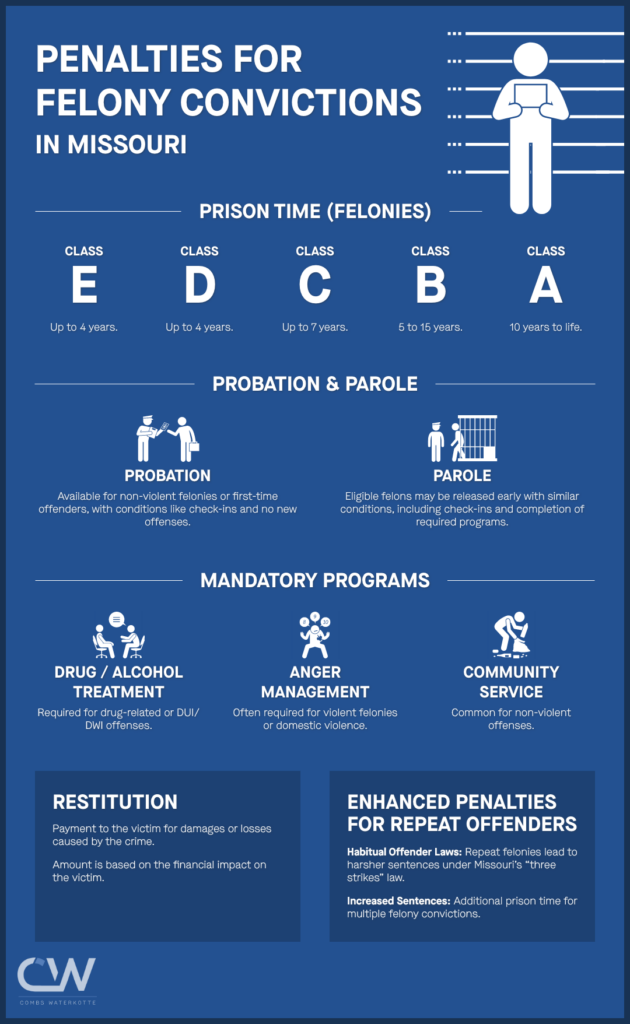
RSMo §565.050 states that a person commits first degree assault by attempting to kill another person or by knowingly causing or trying to cause someone a serious physical injury. The offense starts as a Class B felony, but it can be elevated to a Class A felony when the person inflicts a serious physical injury or the alleged victim is classified as a protected individual.
Attempting to Kill
The state does not need a completed homicide or a physical injury to charge first degree assault. It must prove intent to kill and conduct that amounts to a substantial step toward killing, not just angry words or preparation.
The surrounding facts, like distance, the number of shots or blows, statements, weapon handling, and conduct before and after the event, can strengthen or weaken the possibility of a conviction.
Knowingly Causing or Attempting Serious Physical Injury
Under Missouri’s criminal-code definitions, a person acts “knowingly” when they’re aware that their conduct is practically certain to cause a certain outcome. “Serious physical injury” means an injury that creates a substantial risk of death or causes serious disfigurement or permanent disability. Bruising or temporary pain may be proof of a physical injury, but they don’t automatically prove an intent to kill.
An attempt theory of first degree assault allows someone to be charged even if they didn’t cause an injury. However, the state must still connect the accused’s intent and actions to a possible injury.
Special Victims and Weapon Allegations
A person can face a Class A felony first degree assault charge when the alleged victim is a protected individual. That category includes:
- On-duty police officers
- Certain emergency, corrections, highway, utility, cable, and transit workers
- Elderly people
- People with disabilities
- Vulnerable people
The use of a weapon is not necessarily required for a first degree assault charge. But when the state alleges that a person used a deadly weapon during an assault, prosecutors may add an armed criminal action charge. Under RSMo §571.015, that separate offense can add a consecutive prison term.
Defense Strategies for First Degree Assault Charges in Kansas City, MO
A sound assault charge defense takes on every statutory element and the investigation that produced the charge. The strongest strategy depends on evidence like videos, witness accounts, medical records, forensic testing, and phone data. Here are some common defense strategies we use to fight first degree assault charges.
Self-Defense or Defense of Another Person
Missouri law permits proportional force when a person reasonably believes it’s necessary to stop an immediate threat (though deadly force requires additional conditions). To prove self-defense, we reconstruct timing, movement, threats, injuries, and each participant’s access to weapons. A viable self-defense claim or a claim of defense of others may aid greatly in your defense.
Challenge Intent, Knowledge, and Attempt
Prosecutors often attempt to infer intent from a chaotic encounter. We instead determine whether the evidence shows an accident, a warning, a reflex, or any other purpose unrelated to killing or serious injury. A focused lack-of-intent defense attacks the difference between what happened and what the state says the accused meant to do.
Contest Injury, Causation, and Medical Conclusions
We compare the charge requirements with emergency records, imaging, follow-up care, photos, and expert opinions. Preexisting conditions, treatment complications, or another participant’s acts may come into play. If the state can’t prove a serious physical injury, it may not be able to reach its standard of proof.
Expose Identification and Credibility Problems
Low light, stress, intoxication, bias, and inconsistent statements can undermine eyewitness claims. Factors like surveillance footage, 911 audio, location records, social media posts, clothing, DNA, ballistics, and independent witnesses may contradict an accusation to help defeat an assault charge.
Suppress Unlawfully Obtained Evidence or Statements
We closely examine home and vehicle searches, warrants, and interrogations to ensure our clients’ constitutional rights weren’t violated. An unsupported search warrant, unlawful detention, coerced statement, or Miranda rights violation can lead to suppression of critical evidence. Removing an alleged weapon or a confession may fundamentally damage the state’s case.
Challenge Enhancements and Pursue Negotiations
In assault cases, we can separately challenge serious injury, special victim, and weapon allegations. We also evaluate whether we can secure a dismissal or negotiate a charge reduction (without assuming that a plea deal is automatically the right move). If prosecutors don’t offer a fair resolution, Combs Waterkotte is always ready to build a trial-ready defense.
Possible Penalties for First Degree Assault in Kansas City, MO
The possible sentencing ranges for a crime in the state of Missouri are covered in RSMo §558.011. The date of the alleged conduct, your criminal history, charging decisions, and pertinent facts found during a plea or at trial control the actual sentencing exposure. This table covers the possible sentencing outcome for first degree assault convictions in Kansas City, Missouri:
| Charge or Finding | Classification | Authorized Imprisonment |
|---|---|---|
| First degree assault (no serious injury inflicted or special victim) | Class B felony | 5 to 15 years |
| First degree assault (with serious physical injury) | Class A felony | 10 to 30 years or life |
| First degree assault (against a special victim) | Class A felony | 10 to 30 years or life |
| First armed criminal action conviction | Unclassified felony | 3 to 15 years (consecutive) |
| Second armed criminal action conviction | Unclassified felony | 5 to 30 years (consecutive) |
| Third or subsequent armed criminal action conviction | Unclassified felony | At least 10 years (consecutive) |
The armed criminal action statute raises the minimum sentence to five years for a first offense involving unlawful firearm possession and to fifteen years for subsequent offenses involving unlawful firearm possession. Punishments run consecutively with the assault sentence (i.e., back to back).
Missouri also designates first degree assault as a dangerous felony. Under the dangerous-felony minimum-term law, a person convicted of first degree assault must serve 85% of their sentence before they’re eligible for parole. Restitution, court costs, firearm ownership restrictions, immigration status issues, and lasting employment, housing, and professional licensing consequences are also possible.
Why Choose Combs Waterkotte for a Kansas City First Degree Assault Case?

First degree assault charges require urgent investigations and meticulous trial preparation. Combs Waterkotte has handled more than 15,000 criminal cases and brings decades of combined experience to defending against violent felonies. We know how prosecutors build intent from circumstantial evidence, how medical proof affects charging decisions, and how an armed criminal action count can add additional prison time.
Read More:

Our attorneys communicate directly, explain all of your choices, and build a strategy around your specific circumstances rather than a standard script. We pursue dismissal or a charge reduction when the evidence supports it, all while remaining ready to select a jury and try the case if we need to.
How Combs Waterkotte Will Take On Your First Degree Assault Charges
When you choose our firm to take on your assault case, we start by protecting you from avoidable mistakes and identifying evidence that may disappear. Then, we obtain discovery, investigate independently, and take immediate actions to strengthen your defense, like:
- Preserving the scene and digital records: Secure video, photos, messages, location data, 911 calls, and witness information
- Reconstructing the encounter: Build a reliable timeline of threats, movement, force, injuries, and police response
- Scrutinizing the state’s proof: Test intent, medical causation, forensic results, weapon evidence, and chain of custody
- Litigating constitutional issues: Challenge unlawful searches, seizures, interrogations, identifications, and discovery issues
- Preparing for every possible result: Pursue dismissal, reduction, a defensible agreement, or acquittal at trial

Throughout the case, we address bond conditions, no-contact orders, work and family concerns, and sentencing risks. Early preparation creates leverage and gives you informed control over each decision involved in your case
Contact a Kansas City First Degree Assault Lawyer Today
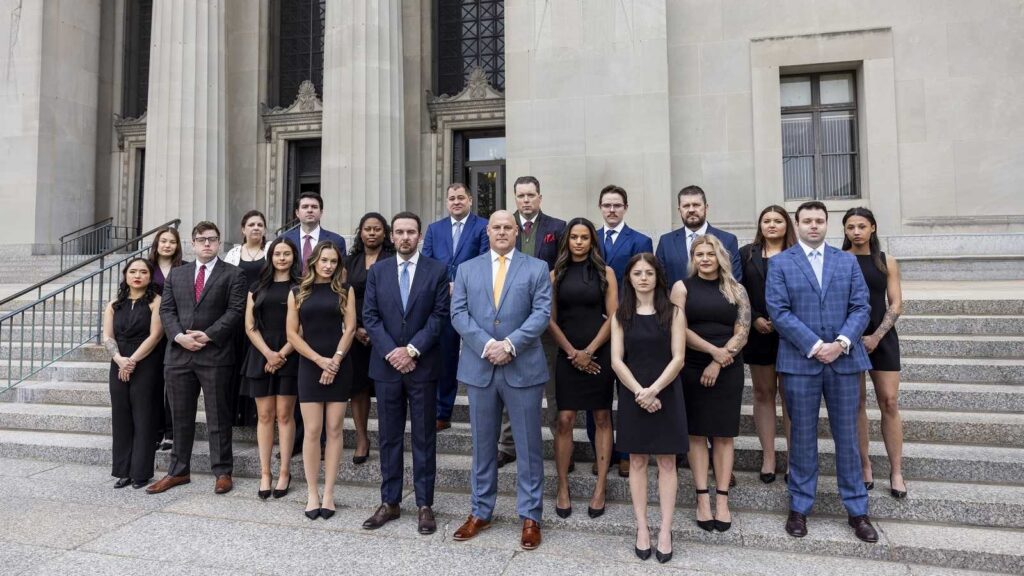
A sound, well-prepared legal defense can mean the difference between serious prison time and an acquittal in a Kansas City first degree assault case. Combs Waterkotte is here to fight for you and minimize the impact of your charges on your life and career. Just contact us online or call (314) 900-HELP today. Our team can evaluate the allegations against you, preserve critical evidence, and begin building a focused defense designed to achieve the best outcome possible.
Resources
For more information on criminal defense in Kansas City or anywhere else in Missouri, call the Combs Waterkotte criminal defense attorneys right away at (314) 900-HELP or contact us online for a confidential consultation.
Steps to Take When You’re Charged with a Felony in Missouri
Should I Take a Plea Deal in My Kansas City Criminal Case?
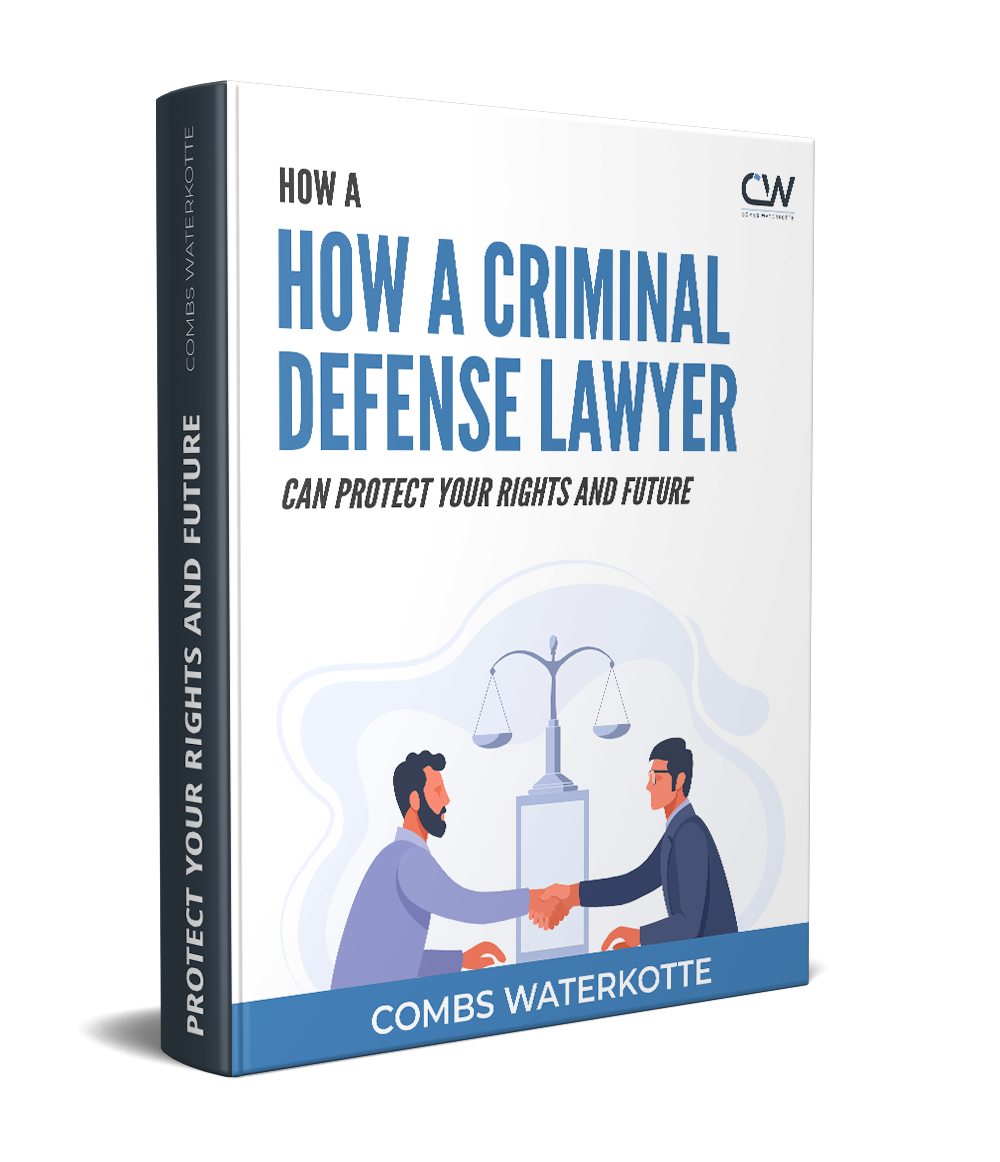
Free book
How a Criminal Defense Attorney Can Protect Your Rights and Future
Combs Waterkotte has over 80 years of experience and over 10,000 cases handled. This ebook helps guide you through the criminal defense process and how an experienced, skilled defense attorney can keep your freedoms intact.

