



Additional Links
- Don’t “Blow” Your DWI/DUI Case: Key Mistakes to Avoid
- Top 10 DWI/DUI Questions
- Got Your 2nd, 3rd, or 4th DWI in Missouri? Here’s Why You Have a Big Problem
- DWI Defense Strategies for Winning Your Case
- Should You Blow During a DWI Stop?
- What to Do During a DUI/DWI Stop?
- How to Prepare for a DWI Administrative Hearing
- Can a DWI/DUI Be Reduced in Missouri?
- Can You Drive After Being Charged With a DWI/DUI?
- How Long Does a DWI/DUI Stay on My Driving Record in Missouri?
Missouri Second DWI Lawyer
While facing your second DWI charge in Missouri is intense, it doesn’t have to consume your life. At Combs Waterkotte, we’ve worked with thousands of clients accused of DWI in Missouri, and we know how to handle the situation.
We start each consultation with a conversation, going over the facts of the case, outlining possible defense strategies that pertain to your situation, and answering any questions that may be bothering you about your specific circumstances.
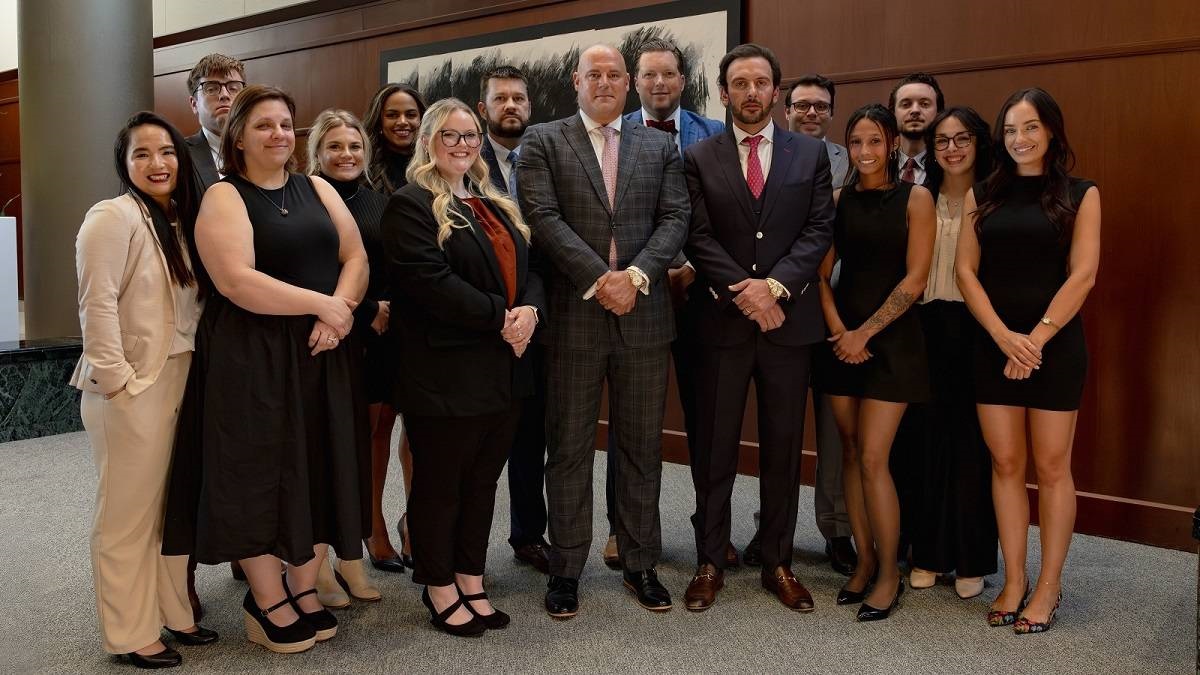
Our team of paralegals, attorneys, and experienced staff members have the resources to take on any DWI charge in Missouri. In whatever city, county, or municipality you’re being accused, we’re ready to tailor our statewide expertise to your case.
To find out how we can help reduce or dismiss your charges (or even work for an acquittal at trial, if necessary), contact Combs Waterkotte online or call us at (314) 900-HELP. Don’t wait, though — your rights and your freedom are on the line.

What Are the Criminal Penalties for a Second DWI in Missouri?

There’s no getting around it: A second DWI offense in Missouri is a major issue. First-time DWI offenders tend to manage probation or diversion programs, but the more the offenses stack up, the harsher the penalties get.
The severity of a DWI penalty also depends on whether anybody hurt or killed in the incident was a “special victim,” as defined in RSMo §565.002:
- A police officer, corrections officer, firefighter, or EMS worker
- Hospital or emergency room staff
- An elderly person or a person with a disability
- Road workers (e.g., highway workers, utility workers, etc.)
- A bus driver or train operator
With this in mind, here are some of the potential penalties for your second DWI in the state of Missouri.
Minor Second DWI
If you’re a prior DWI offender and you commit a second, relatively minor offense (e.g., you don’t drive recklessly or injure anybody), your second DWI offense will likely be charged as a class A misdemeanor. This is the most common scenario for Second DWI offenses in Missouri.
In this case, you'll face a minimum of 10 days in jail or 240 hours of community service, with a possible jail sentence up to 1 year. You may also have to pay a fine up to $2,000.
Second DWI with Aggravating Factors
In some cases, a second Missouri DWI offense may not cause an injury but may still have been committed with some aggravating factors, such as:
- A high blood alcohol content (0.15% or higher)
- Having a minor passenger
- Driving recklessly
In these instances, the charge is still most likely to be a Class A misdemeanor, but the sentencing guidelines may be harsher. Plus, if there was a minor in the car, prosecutors could add a charge of endangering the welfare of a child.
Second DWI Causing a Physical Injury
If your second DWI results in an accident that causes a non-serious injury, you may still face a Class A misdemeanor. Prosecutors may attempt to charge a Class E felony, though — a charge that carries a prison sentence up to 4 years.
In some cases, you may also face a fourth-degree assault charge for recklessly causing an injury, adding to any additional penalties.
Second DWI Causing a Serious Physical Injury
When a second DWI in Missouri causes a serious physical injury, the potential criminal charges start getting very serious. In this situation, prosecutors may seek to add a second-degree assault charge — a Class D felony that carries a prison sentence up to 7 years.
If the person who was hurt falls into the “special victim” category, the charge can increase to a Class B felony, resulting in 5 to 15 years in prison.
Second DWI Causing Death
Even if it’s just your second offense, a DWI that causes a death carries the heaviest charges possible. These incidents are often charged as first-degree involuntary manslaughter in Missouri, a Class C felony that results in 3 to 10 years in prison. If the victim falls into the "special victims” category, the charge becomes a Class B felony.
What Are the License Consequences for a Second DWI in Missouri?
In Missouri, DWIs come with two types of cases: a criminal case (tried by the court) and an administrative case (handled by the Missouri Department of Revenue). Driver’s license issues are handled on the administrative side.
If you’re convicted of a second DWI in Missouri, your driver’s license is automatically revoked for 1 year. If the second offense happens within 5 years of your first DWI offense, you may face a 5-year license revocation period.
Can You Still Drive After a Second DWI Offense in Missouri?

Yes, you can still drive after a second DWI offense in Missouri, but with some major caveats.
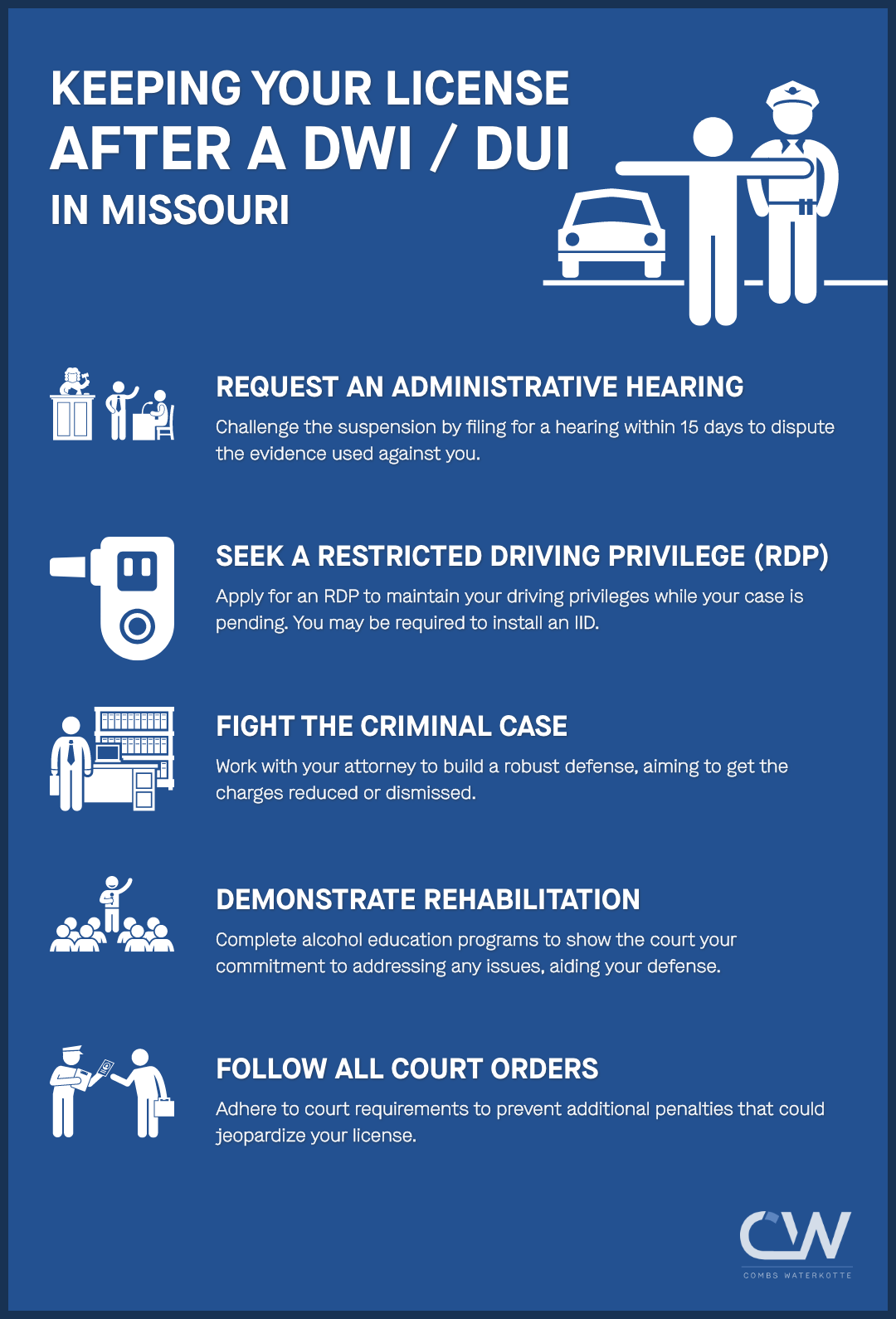
After you’re arrested for your second DWI, you’re issued a temporary permit (under RSMo §302.574). After the issuance of that permit, you have 15 days to request an administrative hearing (under RSMo §302.530) during which your lawyer can try to retain your driving privileges.
You may also have to apply for limited driving privileges (LDP), a set of restricted driving rules that allows you only to drive to select places like work, school, medical appointments, court appearances, etc.
To regain your driving privileges after your second DWI, you may have to complete some or all of the following requirements:
- The installation of an ignition interlock device on your vehicle
- The completion of a Substance Awareness Traffic Offender Program (SATOP)
- Proof of SR-22 high-risk insurance to the Missouri Department of Revenue (under RSMo §303.025)
What to Do If You’re Pulled Over for Your Second DWI in Missouri
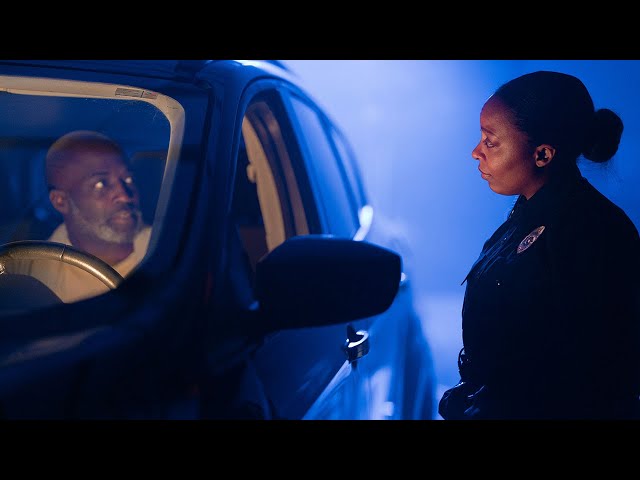
A DWI stop in Missouri can feel intimidating, but there are plenty of steps you can take to maximize your defense while exercising your rights and remaining non-combative with law enforcement. If you’re pulled over, be sure to follow these steps:
Pull Over Calmly and Safely
During a DWI stop, police officers are constantly on the lookout for probable cause. This allows them to search your vehicle and gather incriminating evidence against you. You can minimize these efforts by driving calmly, using your turn signal, turning your radio off, and keeping your hands visible (preferably on your steering wheel) at all times.
Be Polite but Exercise Your Rights
You should never be rude to a police officer; it will only make the situation worse. Stay calm, and answer questions politely and succinctly. At the same time, it’s important to understand that you are not required to answer questions like, “Have you been drinking?” or “How much have you had to drink tonight?” If a police officer asks these questions, politely decline to answer.
Refuse Breath and Blood Tests
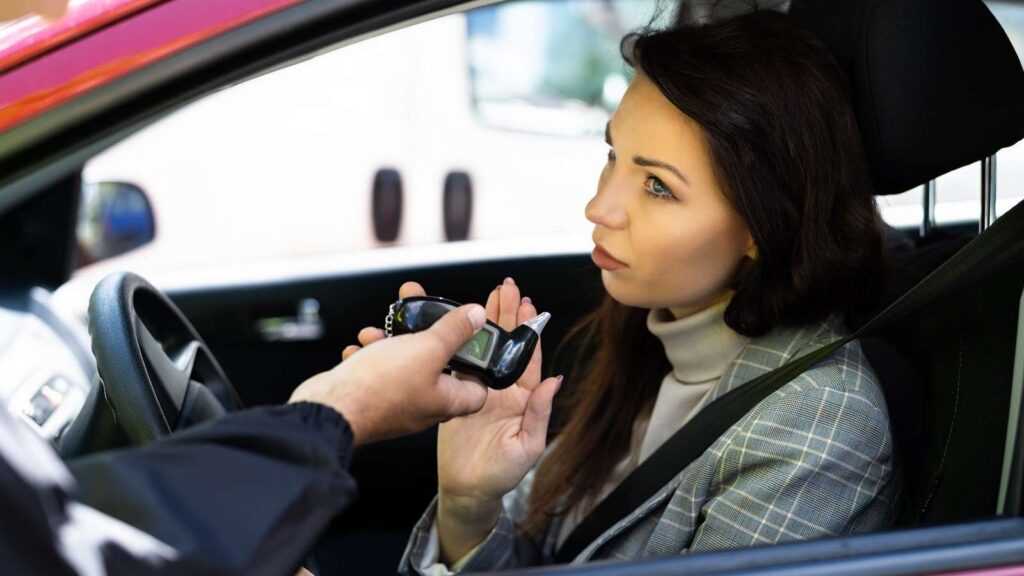
While Missouri’s implied consent law indicates that, simply by virtue of driving in the state, you consent to breath and blood tests, you are still allowed to refuse implied consent. Combs Waterkotte recommends refusing all breath and blood tests up until the point where you have been arrested and served with a warrant for the tests. While refusal may result in an “automatic” license suspension, you actually have 15 days to challenge the suspension in an administrative hearing.
Refuse Field Sobriety Tests
Contrary to popular belief, field sobriety tests are not mandatory in the state of Missouri. You have the right to refuse these tests without any immediate legal penalty, and you should do so in all instances (respectfully).
Refuse Vehicle Searches
Again, during a DWI stop, a police officer’s job is to establish probable cause to arrest and charge you. Your job is to prevent that from happening if you can. If the officer does not have a search warrant, politely refuse them to search your vehicle until they provide one.
If Arrested, Stay Calm
Being arrested is a trying experience, but it’s important to stay calm, and remember that, even when you’re under arrest, you have legal rights that can help your defense. If you’re cuffed and taken to the station, exercise your right to remain silent and only speak to ask for a lawyer.
Call Combs Waterkotte as Soon as Possible
If you’ve been accused or arrested for your second DWI in Missouri, you need legal aid right away. Call Combs Waterkotte at (314) 900-HELP as soon as you’re able to, and we’ll do everything we can to help.

Common Second DWI Defense Strategies in Missouri
A good Missouri defense attorney understands that, even if you’ve been convicted of a DWI before, there are still plenty of legal tactics and strategies that can aid in your defense. Here are some of the common defense strategies an attorney will use to combat a second DWI charge:
- Fourth Amendment Violations: A lawyer may argue that police lacked reasonable suspicion to initiate your traffic stop. If the stop was unlawful, any evidence obtained afterwards (e.g., field sobriety tests, breath tests, statements) may be suppressed.
- Fifth Amendment Violations: If law enforcement obtained statements without properly advising you of your rights, those statements may be excluded from evidence.
- Miranda Rights Violations: If the police failed to read you your Miranda rights during a custodial interrogation, statements you made could be ruled inadmissible in court.
- Lack of Intent/Not Actually Intoxicated: A lawyer may be able to argue that you were not actually intoxicated or that any behavior the officer saw had another explanation, such as fatigue, illness, or side effects of medication.
- Faulty Breathalyzer Equipment: Breath testing devices must be properly calibrated and maintained. A lawyer may challenge machine calibration records, officer certification, or maintenance logs. If testing procedures were flawed, the BAC results may be unreliable.
- Improperly Administered Field Sobriety Tests: Field sobriety tests must follow standardized procedures set by the National Highway Traffic Safety Administration (NHTSA). A defense attorney may argue the tests were improperly administered, influenced by weather or road conditions, or affected by medical conditions or age.
- Lack of Probable Cause: Even if the traffic stop was valid, police must have probable cause to make a DWI arrest. If officers relied on weak or inconsistent observations, a lawyer may be able to challenge your arrest.
- Blood Test or Chain-of-Custody Challenges: If a blood test was used, attorneys may challenge improper sample collection, contamination, broken chain of custody, or lab testing procedures. These issues can undermine the reliability of the prosecution’s chemical evidence against you.