






Additional Links
- Don’t “Blow” Your DWI/DUI Case: Key Mistakes to Avoid
- Top 10 DWI/DUI Questions
- What DWI/DUI Defense Lawyers Actually Do (and Why You Need One)
- Got Your 2nd, 3rd, or 4th DWI in Missouri? Here’s Why You Have a Big Problem
- What to Do During a DUI/DWI Stop?
- Should You Blow During a DWI Stop?
- How Do You Beat a DWI/DUI Charge in Missouri?
- How to Prepare for a DWI Administrative Hearing
- Can a Class B Felony Be Expunged From My Record?
- What Is The Difference Between A Federal Felony And A State Felony?

What Is a Felony DWI in Missouri?
In Missouri, A DWI becomes a felony based on the number of DWI or blood alcohol content (BAC) offenses on your record. RSMo §577.001 groups the number of DWI offenses into a few categories:
- A 3rd DWI offense makes someone a “persistent offender” and is a Class E felony
- A 4th DWI offense makes someone an “aggravated offender” and is a Class D felony
- A 5th DWI offense makes someone a “chronic offender” and is a Class C felony
- A 6th DWI offense makes someone a “habitual offender” and is a Class B felony
Anyone who commits two Class B DWI felonies can be charged with a Class A felony — the most severe felony charge under Missouri law.
If you’re facing a felony DWI in Missouri, you need an experienced criminal defense lawyer on your side. Reach out to Combs Waterkotte online or call (314) 900-HELP to start building your defense today.

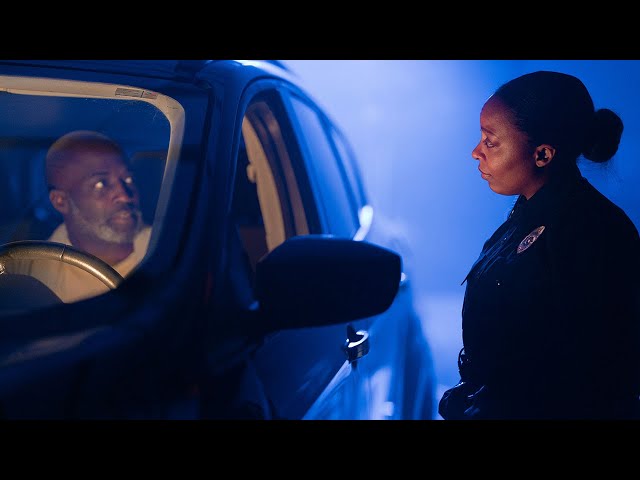
Can My First DWI Be a Felony in Missouri?
Yes, even your first DWI offense can be a felony charge in Missouri. While most Missouri felony DWIs come as a result of repeated offenses, certain aggravating or mitigating factors can elevate what would have been a misdemeanor to a felony. These factors include:
- Class E felony DWI
- Causing physical injury to another person
- Class D felony DWI
- Causing physical injury to a police officer or emergency personnel
- Causing serious injury to anyone else
- Class C felony DWI
- Causing serious injury to a police officer or emergency personnel
- Causing the death of another
- Class B felony DWI
- Causing the death of a police officer or emergency personnel
- Causing the death of a pedestrian or passenger of another car
- Causing the death of two or more people
- Causing death with a blood alcohol content of .18% or higher
- Class A felony DWI
- Being charged with two (or more) Class B felony DWIs
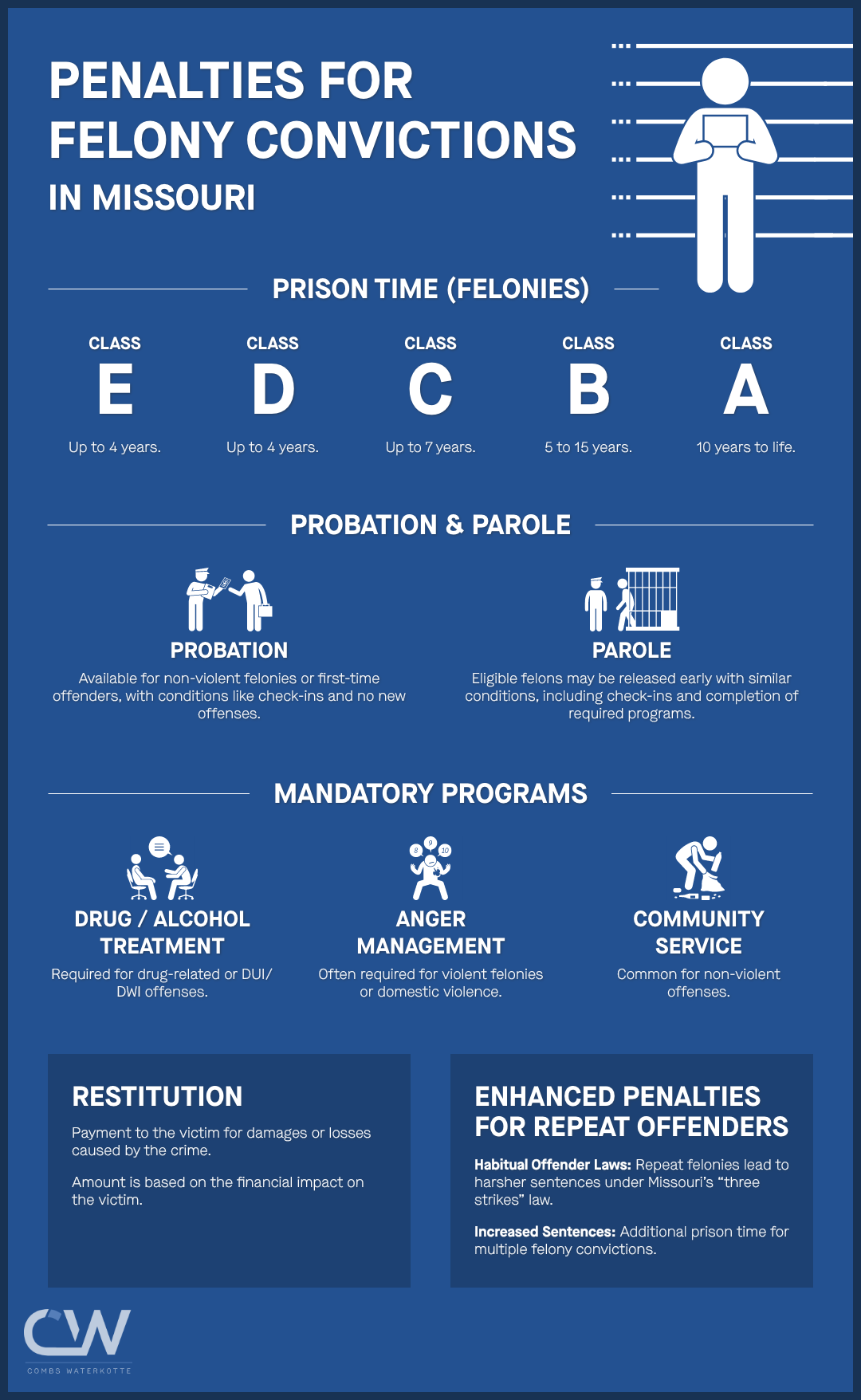
What Are the Penalties for Felony DWI in Missouri?
When facing a DWI charge in Missouri, there are two separate cases against you to deal with: an administrative case and a criminal case. The administrative case (handled by the Missouri Department of Revenue) deals with license suspension and revocation issues, and the criminal case deals with any potential fines or prison time you may face.
On the criminal side, felony DWI charges potentially come with hefty fines and lengthy prison sentences. Here’s what to expect based on which felony charge you’re facing:
- Class A DWI felony: Life in prison or 10 to 30 years
- Class B DWI felony: 5 to 15 years in prison
- Class C DWI felony: 3 to 10 years in prison (and a fine up to $10,000)
- Class D DWI felony: Up to 7 years in prison (and a fine up to $10,000)
- Class E DWI felony: Up to 4 years in prison (and a fine up to $10,000)
Can I Lose my License Because of a Felony DWI in Missouri?
Yes, you can lose your driver’s license for a felony DWI in Missouri. In fact, you’re much more likely to lose your driver’s license due to a felony DWI than if you were facing a misdemeanor DWI charge.
In most cases, a felony DWI in Missouri means you’re on your third DWI offense and, according to the Missouri Department of Revenue, 3 or more DWIs is the point at which you start facing a 10-year license denial.
To get your driver’s license back after this 10-year period is up, there are some steps you have to follow:
- You must file for an order of reinstatement with the court where your last conviction occurred
- You must register on the Missouri Automated Criminal History Site (MACHS) for a criminal history check
- You must install an ignition interlock device equipped with a camera (and possibly even GPS) for 6 months
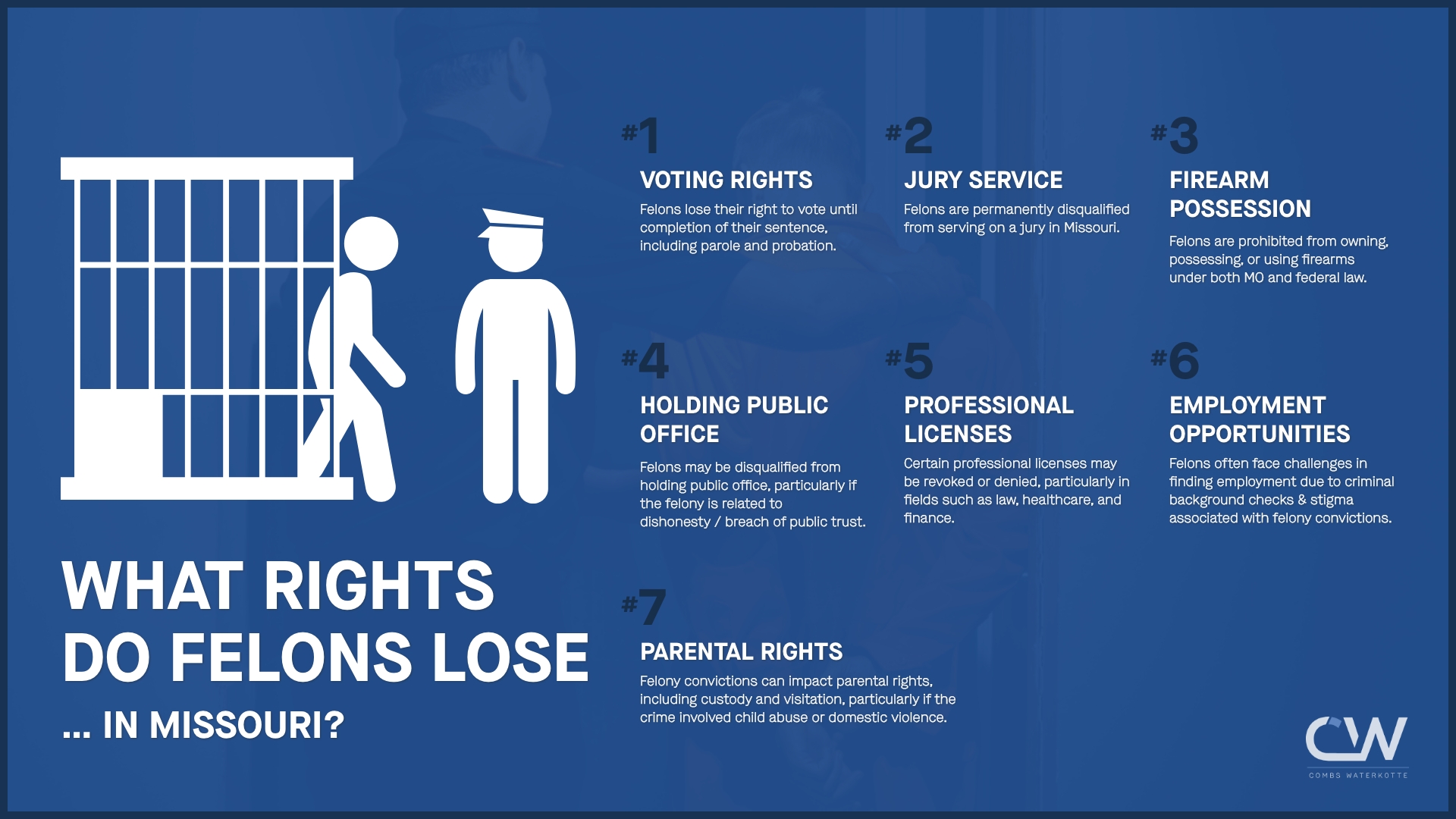
What Rights Can I Lose for a Felony DWI in Missouri?
Felony convictions in Missouri come with the forfeiture of certain rights and possible side effects in your personal life. Under state law, after a felony DWI conviction, you:
- Lose the right to vote
- Lose the ability to serve on a jury
- Lose the right to own a firearm
- Lose the right to hold public office
The consequences of a felony conviction don’t stop there, though. A felony conviction in Missouri may also result in some of the following problems:
- The inability to receive certain professional licenses
- The loss of certain employment opportunities
- The loss of parental rights
- Immigration consequences (e.g., deportation, visa denial, ineligibility for naturalization)
- The denial of housing applications
- Travel restrictions to certain countries
Felony DWI Defense Strategies in Missouri
Although a federal DWI charge in Missouri is very serious, a good criminal defense attorney can employ an effective legal strategy to reduce or dismiss the charges, even if you have multiple DWIs on your record. At Combs Waterkotte, we’ve used these DWI defense strategies to help hundreds of clients.
Some of the most effective criminal defense strategies a lawyer may use in a felony DWI case in Missouri are:
- Fourth Amendment violations: The Fourth Amendment exists to protect citizens from unlawful searches and seizures of evidence. In felony DWI cases, a good lawyer will argue that police lacked reasonable suspicion to initiate a traffic stop in the first place.
- Fifth Amendment violations: The Fifth Amendment offers protection against self-incrimination. In a felony DWI situation, an attorney can challenge any statements obtained in violation of this constitutional protection.
- Miranda rights violations: During an arrest, law enforcement must read you your Miranda rights. Failure to read you your rights (or even improper reading of them) if you’ve been pulled over for a DWI can get damaging statements thrown out.
- Probable cause challenges: Even if a traffic stop is valid, police must have probable cause to arrest someone for DWI. A good defense attorney may be able to demonstrate that police did not have proper cause to arrest the accused.
- Blood test challenges: In this defense, a lawyer challenges the procedure or chain of custody of a blood test in an attempt to get any DWI blood evidence thrown out.
- Breathalyzer challenges: A defense attorney may be able to challenge the calibration or maintenance of breathalyzer test equipment to get its results thrown out in a felony DWI case.
- Field sobriety test challenges: In this legal defense, the attorney argues that field sobriety tests were administered improperly or that the defendant experienced mitigating conditions that caused them to fail the test. These challenges can undermine probable cause.
- Reduction to a misdemeanor DWI: In many cases, a defense lawyer can get a felony DWI reduced to a misdemeanor charge, resulting in diversion programs or community service rather than lengthy prison sentences.