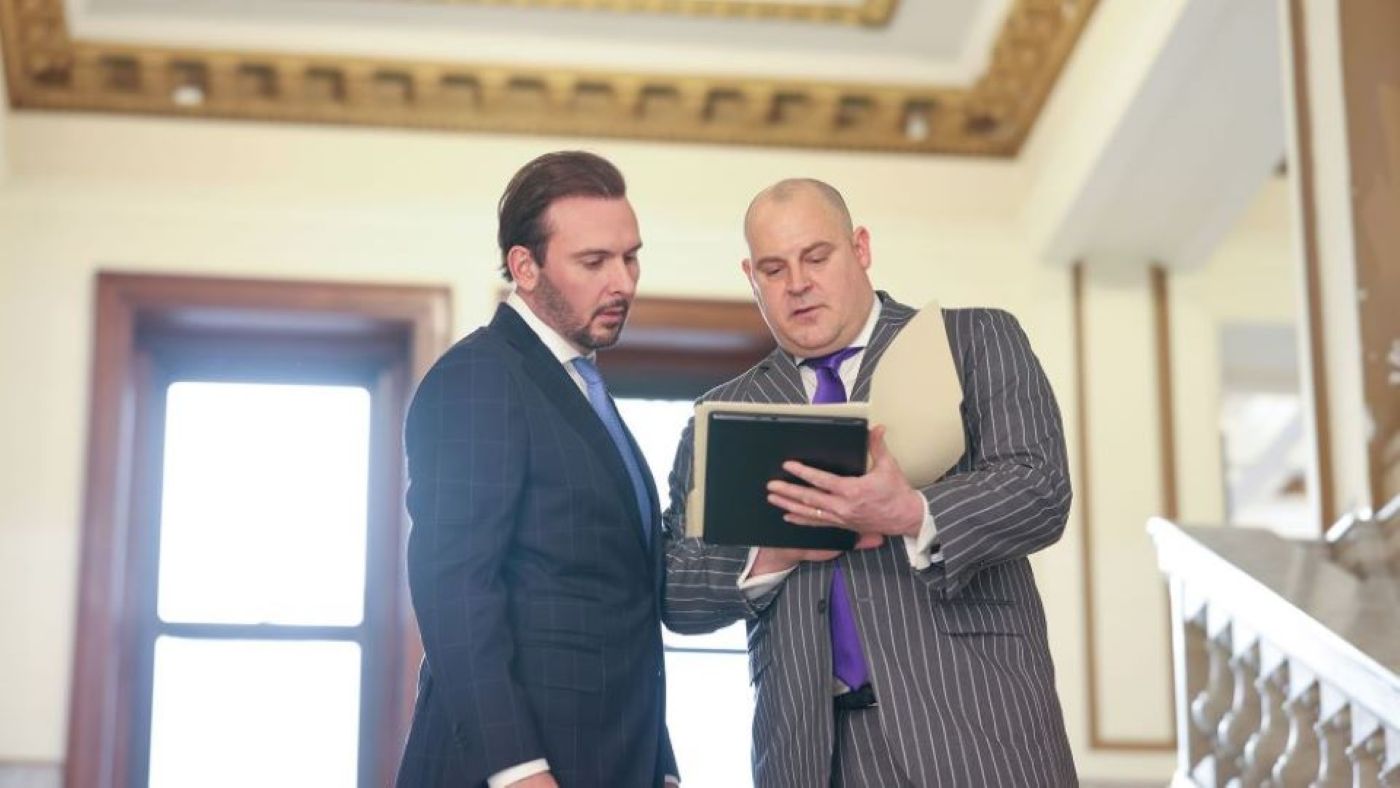
When you’re facing criminal charges, hiring a Kansas City, MO, criminal defense attorney could preserve your freedom, reputation, and civil rights.
Without a criminal defense lawyer, you risk incarceration, fines, and a criminal record that could keep you from obtaining employment, renting a home, or owning a firearm. However, you might wonder just how a criminal defense attorney can protect your rights.
The skilled legal professionals at Combs Waterkotte have handled over 10,000 criminal cases. We have the knowledge and resources to mount a strong legal defense against your criminal charges and seek a positive outcome in your case. Contact us online or at (314) 900-HELP to learn how we can help you build a criminal defense strategy.
This article addresses:
- The steps a Kansas City, MO, criminal defense attorney will take to defend you
- How defense attorneys resolve cases without going to trial
- What happens at trial if your case isn’t dismissed or resolved via a plea agreement

How a Kansas City, MO, Criminal Defense Attorney Can Help You
Depending on your situation, your criminal defense attorney’s work may begin before prosecutors file charges and officers arrest you.
For example, white-collar crimes often require extensive investigation, including forensic analysis of financial records. You may have advance notice that law enforcement officers are investigating a crime and that you may be a target of their investigation.
In these circumstances, a criminal defense lawyer can protect your rights from the outset by representing you in any interactions with investigators. Through these discussions, your lawyer can present defenses to explain what happened. For instance, they might point out how you couldn’t have been involved in any criminal activity.
In other situations, you may not have time to engage a lawyer before your arrest. For example, officers responding to a domestic violence call often have to make a snap decision at the scene to arrest one or both of the parties. As a result, the lawyer will only become involved after an arrest occurs.
Once your lawyer begins working on your case, they’ll typically take the following steps:
Listen to Your Story
Your attorney must hear your side of the story to build an effective defense. The defense strategy they devise must match the evidence in the case. Thus, you should have a detailed and honest conversation with your lawyer so they can be prepared for any evidence the police may uncover.
Under the Missouri Rules of Professional Conduct, your attorney must maintain the confidentiality of anything you disclose to them in the course of your legal representation.
Gather Evidence
Prosecutors are required to turn their evidence over to your defense lawyer.
This evidence might include witness statements, business records, physical evidence, lab results, photographs, video recordings, and anything else officers collected during their investigation. Importantly, the prosecution must release everything it has, including evidence that might ultimately prove your innocence.
Your lawyer will review this evidence carefully. They may re-interview witnesses to verify that the police statements are accurate. They’ll also investigate further to identify any evidence the police missed.
For example, if you’re facing charges of drug possession, your lawyer might have the alleged “drugs” tested to prove that they don’t fall on the state’s controlled substances schedule.
Consult Experts
Expert witnesses can render opinions about issues in question for your case. For example, an expert witness may offer testimony about:
- Forensic analysis and laboratory testing
- DNA evidence
- Psychological and mental health concerns
- Scientific or engineering reconstructions
This testimony can help jurors understand the evidence. Just as importantly, it can raise questions about the accuracy and completeness of the prosecution’s version of events and present details that support the defense’s version.
Build a Fierce Defense Strategy
Once they’ve assembled all relevant evidence, your lawyer can begin formulating a defense strategy that matches it.
For example, suppose that you’re facing homicide charges but believe you acted in self-defense. Your attorney might seek to prove your innocence using the prosecution’s evidence, witnesses who corroborate your claims that the victim was the aggressor, and expert testimony reconstructing the event.
It’s possible that your defense strategy will also assert that your rights were violated during the investigation or arrest.
Let’s say you were arrested for weapons violations because the police found a gun under your car seat. Your lawyer could review the dash cam and body camera footage to determine whether the police had grounds to search your vehicle.
If the officers conducted an illegal search, your attorney can ask the court to block prosecutors from using the gun as evidence, thereby undermining the entire case.
Options for Resolving Kansas City Criminal Charges Without a Trial
Once your lawyer has developed a robust defense, they’ll likely talk to the prosecutors about dismissing or reducing your charges. Ideally, your defense will be strong enough that your attorney can persuade the prosecution that you didn’t commit the crime in question and, therefore, that your charges should be dropped.
That said, many cases involve at least some genuine disputes of fact or law. In these cases, prosecutors might refuse to dismiss the charges. However, they may take certain aspects of your defense into account and offer a plea bargain.
A plea bargain is an agreement in which the defendant agrees to plead guilty in exchange for reduced charges or a downgraded sentencing recommendation.
For example, prosecutors might agree that murder charges are inappropriate in your case and offer a deal where you agree to plead guilty to involuntary manslaughter. You would receive a much lighter sentence, and the prosecution would avoid the time and risk associated with a trial.
Taking Your Criminal Case to Trial
If your Kansas City, MO, criminal defense attorney can’t strike a fair plea bargain, your case will go to trial.
Your lawyer can make special requests known as “motions” during pre-trial proceedings. These motions may seek to exclude evidence from your trial to ensure a fair process. They might also seek to remedy any violations of your legal or Constitutional rights.
You have the right to a jury trial. If you want a jury to decide your case, your lawyer will participate in jury selection. This process includes questioning prospective jurors and rejecting those who might not be able to examine your case objectively.
Once the jury is impaneled, your attorney will argue your case by presenting witnesses offering corroborating testimony and cross-examining the prosecution’s witnesses. At the end of the trial, your lawyer will present closing arguments summarizing the evidence that proves your innocence.
Contact Combs Waterkotte to Start Putting Together Your Criminal Defense in Kansas City, MO
Hiring a Kansas City, MO, criminal defense attorney could make the difference in the outcome of your criminal case. Contact Combs Waterkotte online or at (314) 900-HELP today to start building your case and protect your freedom and reputation.