

If you’re facing accusations of domestic battery, harassment, or similar offenses in Franklin County, IL, an experienced domestic violence defense lawyer can protect your rights under Illinois law.
These charges are extremely serious — they can result not only in jail time and steep fines but also long-lasting consequences like the loss of firearm rights, difficulty finding employment, and restrictions on child custody.
Being accused of domestic violence in Franklin County, IL puts everything at risk — your freedom, your record, and your family.
Southern Illinois courts treat these cases aggressively, and prosecutors are under heavy pressure to secure convictions.
The outcome often depends on whether you have a skilled Franklin County, IL criminal defense lawyer who can fight for a dismissal or acquittal.
Don’t wait to protect your future — call Combs Waterkotte at (314) 900-HELP or contact us online for a free, confidential consultation.
Cases Handled
Over 10,000
Jail Days Saved
Over 1 Million
Google Reviews
500+ Perfect
Legal Experience
100+ Years
At a Glance: Domestic Violence Cases in Franklin County, IL
- Illinois domestic violence cases may be filed as a misdemeanor or felony, depending on the details and criminal history.
- Possible consequences range from incarceration and fines to probation and court-issued protective orders.
- A conviction can trigger firearm restrictions, problems finding work, and custody challenges.
- Defense strategies may involve self-defense, false accusations, or lack of evidence.
- Hiring a defense lawyer immediately can change the course of your case.
What Counts as Domestic Violence in Franklin County, IL?
In Illinois, domestic violence is legally recognized as abuse against a family or household member. It goes beyond physical injury and can include emotional, psychological, or controlling actions.
Under the Illinois Domestic Violence Act, “abuse” includes:
- Physical abuse: Acts that inflict physical injury or harm.
- Harassment: Patterns of threats or repeated behavior that create emotional suffering.
- Intimidation of a dependent: Using threats, coercion, or control to instill fear.
- Interference with personal liberty: Restricting another person’s freedom of movement or decision-making.
- Willful deprivation: Refusing to provide essentials like care, housing, or basic support.
These protections apply to a wide range of family or household relationships, including:
- Spouses and former spouses
- Current or former dating partners
- Parents, children, step-parents, and step-children
- Individuals who live or have lived together
- Co-parents, regardless of marital status
- Elderly or disabled adults along with their caregivers
This broad definition means that many types of conduct — even without physical injury — can be the basis for a domestic violence case in Illinois.
Charges & Classifications for Domestic Violence in Franklin County, IL
How domestic violence is charged in Franklin County, IL depends heavily on the facts of the case and any prior convictions.
- Domestic Battery (Class A Misdemeanor): A first-time charge without aggravating factors is usually a Class A misdemeanor, punishable by up to 1 year in jail and fines up to $2,500.
- Aggravated Domestic Battery (Class 2 Felony): Involves strangulation, use of a weapon, or causing great bodily harm. Penalties include 3 to 7 years in prison, or longer if extended terms apply.
- Repeat Offenses: Prior domestic violence or violent-crime convictions can elevate new allegations, turning a misdemeanor into a felony and increasing sentencing ranges.
- Violating an Order of Protection: Ignoring the terms of a protective order is a separate criminal offense. First violations are often misdemeanors; repeat or aggravated violations can be charged as felonies.
- Interfering with the Reporting of Domestic Violence (typically Class A Misdemeanor): Blocking or discouraging someone from calling police, seeking medical care, or reporting domestic violence can lead to additional misdemeanor charges.
- Stalking / Aggravated Stalking: Persistent surveillance, following, or threats that cause fear may be prosecuted as stalking, and can be tied to DV cases when family or household relationships exist.
- Intimidation (Felony): A felony charge involving threats meant to force someone’s compliance or prevent action, often tied to harm or confinement.
- Unlawful Restraint (Felony): Holding or confining someone against their will without authority; frequently paired with DV-related allegations.
- Criminal Trespass to Residence: Illegally entering or refusing to leave a residence, often linked to DV disputes following separations or protective orders.
- Harassment / Harassment by Electronic Communications: Repeated, threatening, or abusive calls/messages that cause emotional distress. Often charged as standalone misdemeanors or as part of a DV case (statutes vary by conduct and medium).
- Child Present Enhancements: Offenses committed in the presence of a child can trigger mandatory minimum penalties, counseling requirements, and stricter probation terms.
Comparison: Misdemeanor vs. Felony Domestic Violence in Illinois
| Offense | Penalty |
|---|---|
| Misdemeanor Domestic Battery |
Up to 1 year in jail Fines up to $2,500 Probation possible |
| Felony Domestic Battery (Aggravated or Repeat) |
3 to 7 years in prison (Class 2 Felony) Higher fines and longer probation terms Longer sentences if prior convictions or aggravating factors are present |
| Protective Order Violations |
Separate criminal charge Additional jail or prison time Permanent impact on custody and housing |
| Interfering with Reporting Domestic Violence |
Class A Misdemeanor Up to 1 year in jail Fines up to $2,500 |
| Stalking / Aggravated Stalking |
Class 4 to Class 3 Felony 1–5 years in prison, higher if aggravated Protective order extensions possible |
| Unlawful Restraint |
Class 4 Felony 1–3 years in prison Probation sometimes available |
| Harassment by Electronic Communications |
Typically Class B or Class A Misdemeanor Escalates with prior convictions Can be charged alongside domestic battery |
Penalties and Consequences of a Domestic Violence Conviction in Franklin County, IL
The immediate penalties of a domestic violence conviction are severe, but the collateral consequences can be even more damaging:
- Jail or Prison Sentences: Sentences vary based on whether the case is charged as a misdemeanor or a felony.
- Fines and Restitution: Courts can impose heavy fines and order repayment to the alleged victim.
- Mandatory Counseling or Programs: Judges often require anger management or domestic violence intervention programs.
- Orders of Protection: Convictions typically result in no-contact orders, loss of access to the home, or loss of child visitation rights.
- Firearm Restrictions: Federal and state law prohibit those convicted of domestic violence from owning or possessing firearms.
- Custody and Family Law Impact: A conviction may be used against the accused in custody disputes or divorce proceedings.
- Criminal Record: A DV conviction creates a permanent criminal record that can damage employment prospects, housing opportunities, and professional licensing.

Free book
How a Criminal Defense Attorney Can Protect Your Rights and Future
Combs Waterkotte has over 80 years of experience and over 10,000 cases handled. This ebook helps guide you through the criminal defense process and how an experienced, skilled defense attorney can keep your freedoms intact.
Defense Strategies in Franklin County, IL Domestic Violence Cases
No two domestic violence cases are the same, but an experienced Franklin County, IL defense lawyer can rely on proven strategies to challenge the charges:
- Self-Defense: Arguing that the accused used force lawfully to defend themselves or someone else.
- False Accusations: Allegations may stem from custody disputes, divorce conflicts, or personal grudges, and a defense attorney can reveal ulterior motives.
- Lack of Evidence: Because guilt must be proven beyond a reasonable doubt, cases with no injuries, inconsistent accounts, or weak witnesses often fall apart.
- Procedural Errors: If police violated constitutional rights by conducting illegal searches, seizing evidence without a warrant, or mishandling interrogations, evidence can be excluded.
- Mutual Combat: When both parties voluntarily took part in a fight, courts may reduce or drop charges.
The right defense strategy depends on the specific facts of the case. A domestic violence defense attorney in Franklin County, IL can begin building your defense right away.
What Happens After a Domestic Violence Arrest in Franklin County, IL?
Knowing the steps in the legal process can ease some of the stress and confusion following an arrest.
- Arrest & Booking: The accused is arrested, booked, and held until a bond hearing is scheduled.
- Bond Hearing: A judge decides whether the accused can be released and under what conditions.
- Protective Order Hearing: Courts frequently impose protective orders that limit contact with the alleged victim.
- Pre-Trial Motions: Defense lawyers may file motions to suppress evidence or dismiss charges.
- Discovery & Negotiations: Both sides exchange evidence. Plea deals may be discussed.
- Trial Preparation: Defense counsel builds the case, including gathering witnesses and consulting experts.
- Trial: The case is argued in court, with evidence reviewed by a judge or jury.
- Sentencing & Appeals: If convicted, the defense may argue for reduced sentencing or file an appeal.
An experienced Franklin County, IL domestic violence attorney can walk you through each step, reducing stress and ensuring your rights are protected throughout the process.
Why Choose Combs Waterkotte for Your Domestic Violence Defense in Franklin County, IL?
A domestic violence accusation is serious — and you need a defense team that knows what’s at risk.
- Proven Experience: Combs Waterkotte attorneys have successfully defended individuals across Illinois in some of the most challenging domestic violence cases. We win cases other Franklin County, IL defense firms won’t touch.
- Aggressive Advocacy: Our trial-ready team dismantles weak evidence, questions witnesses aggressively, and forces prosecutors to meet their burden of proof.
- Confidential Support: We handle sensitive matters with discretion and respect.
- Results-Driven Defense: Our goal is always the best possible outcome — whether that means dismissal, reduced charges, or acquittal.
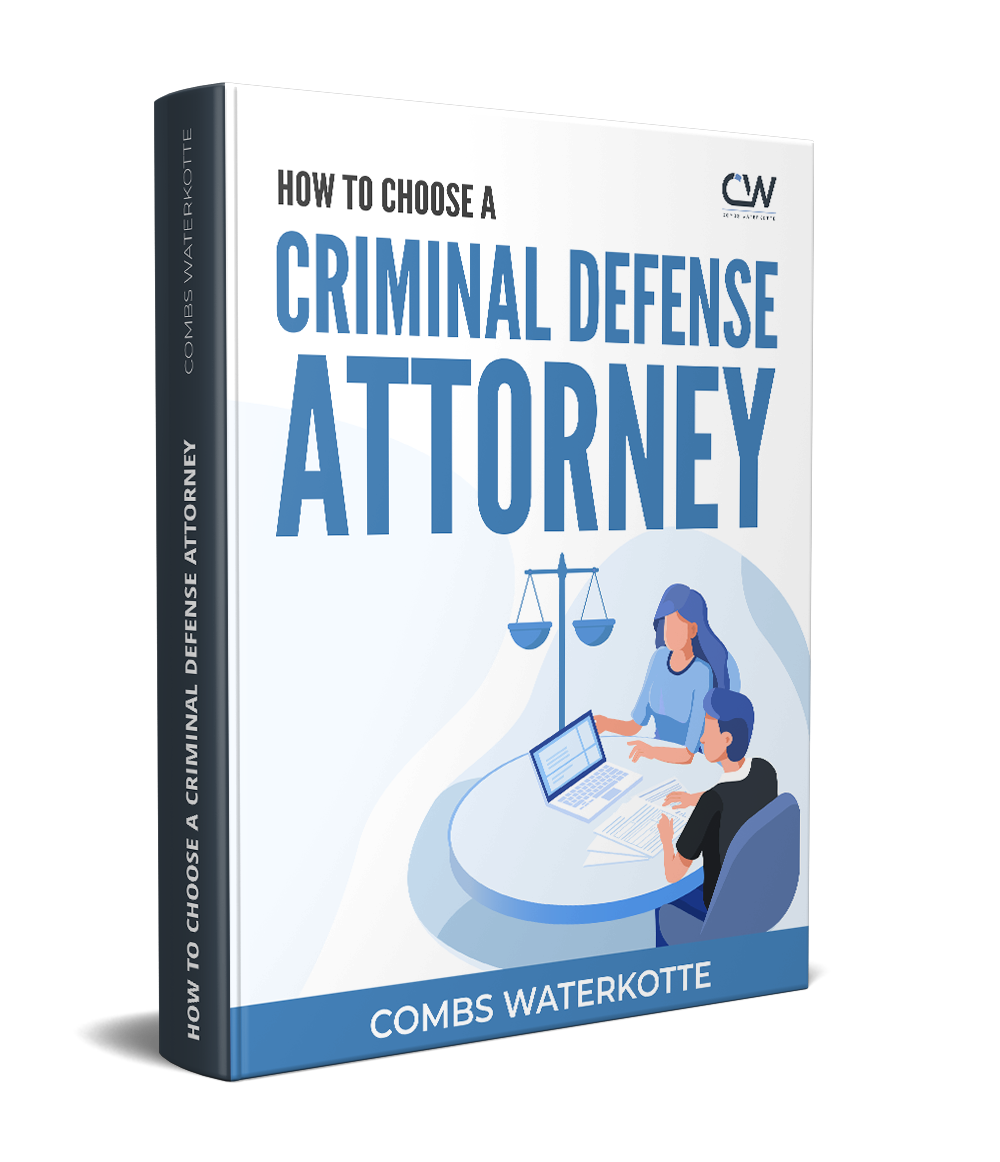
Free book
How to Choose a Criminal Defense Lawyer
Charged with a crime? The lawyer you hire matters. Combs Waterkotte, recognized for top-tier criminal defense in Missouri and Illinois, created this guide to help you find the right attorney. Learn what to look for, key questions to ask, and red flags to avoid.
FAQs About Domestic Violence Charges in Franklin County, IL
- Can domestic violence charges be dropped?
Yes. Prosecutors decide whether to pursue the case, but charges can be dismissed if the evidence is weak, witnesses change their testimony, or the defense challenges credibility. - Is domestic battery always a felony in Illinois?
No. A first-time offense without aggravating factors is usually a misdemeanor, but repeat or aggravated cases are charged as felonies. - What happens if I violate an order of protection?
Violation of an order of protection is a separate criminal offense and can result in additional jail time, fines, or felony charges. - Will a conviction affect my custody rights?
Yes. Domestic violence convictions are often used in custody battles and can severely limit parental rights. - Do I lose my gun rights after a conviction?
Yes. Both federal and state law bar people convicted of domestic violence from owning or possessing firearms.
Speak to an Experienced Franklin County, IL Domestic Violence Defense Attorney Today
Facing domestic violence charges in Franklin County, IL? Don’t wait. The earlier you involve a skilled defense lawyer, the stronger your chances of safeguarding your freedom and future.
Reach out to Combs Waterkotte at (314) 900-HELP or connect with us online to schedule your free, confidential consultation with a domestic violence defense attorney in Franklin County, IL.

