
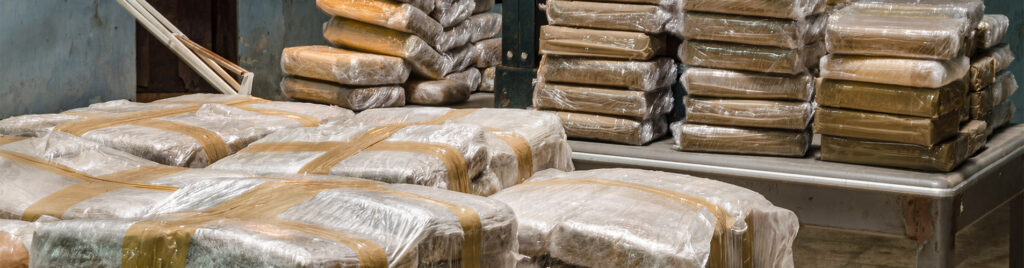
Federal drug lawyer Greene County, IL — if you’re under investigation or already charged with a federal drug offense, your future is on the line. These prosecutions are driven by the U.S. Attorney’s Office with the support of agencies such as the DEA or FBI, and they come with rigid sentencing rules, asset seizures, and complex federal procedures — the kind of case that demands the guidance of a seasoned Greene County, IL federal crimes lawyer.
There’s no reason to stand in front of federal prosecutors without protection. Get experienced help now so we can start protecting your rights today. Call Combs Waterkotte at (314) 900-HELP or contact us online for a confidential consultation and to put an experienced team in your corner now.
Federal Drug Lawyer Greene County, IL — Key Takeaways
- The law governing federal drug offenses is the Controlled Substances Act (CSA) and its Schedules I–V.
- What makes a case federal is usually cross-border activity, the involvement of agencies like the DEA or FBI, or crimes on federal land.
- Prosecutors often bring cases such as trafficking, manufacturing, possession with intent, conspiracy, CCE “kingpin” cases, and simple possession on federal property.
- Sentences can involve 5-, 10-, or 20-year mandatory minimums, federal sentencing guidelines, forfeiture, and the fact that there is no traditional parole federally.
- Common defense angles are motions to suppress unlawful searches, lack of possession, disputes over quantity, entrapment, or challenging statements.
- Federal trials from Southern Illinois go to the U.S. District Court for the Southern District of Illinois (East St. Louis & Benton), with appeals to the Seventh Circuit.
- Hiring an experienced Greene County, IL federal drug lawyer ensures knowledge of local courts, federal prosecutors, and sentencing strategies.
- Immediate steps: Never meet with agents without counsel, don’t consent to searches, keep all potential evidence, write down details, and call a lawyer right away.
What Is the Federal Law on Drugs?
Federal drug crimes are prosecuted under the Controlled Substances Act (CSA), Title 21 of the U.S. Code. Under the CSA, controlled substances are organized into schedules that drive how harsh the charges and punishments can be. In plain terms, the CSA criminalizes the handling of controlled substances outside legitimate medical or scientific use.
Controlled Substances Act: Drug Schedules (I–V)
Drugs are divided into five schedules under the CSA. Higher schedules and larger quantities usually mean harsher federal penalties.
| Schedule | Examples | Key Features |
|---|---|---|
| I | Heroin, LSD, MDMA | Highest abuse potential; no accepted medical use. |
| II | Cocaine, Fentanyl, Methamphetamine, Oxycodone | High abuse potential; some accepted medical use with severe restrictions. |
| III | Ketamine, Anabolic Steroids, Buprenorphine | Moderate to low physical dependence; accepted medical use. |
| IV | Xanax, Valium, Klonopin | Lower abuse potential than Schedule III; accepted medical use. |
| V | Cough medicines with low-dose codeine | Lowest abuse potential; accepted medical use. |
Federal prosecutors look first at drug type and quantity—these two factors drive both the level of charge and the sentencing range. Larger amounts and higher schedules generally trigger mandatory minimums and higher guideline ranges. If you’re asking, “What is the federal law on drugs?”—this is it: the CSA controls the substances, the schedules shape the penalties, and Title 21 provides the charging statutes.
What Is Considered a Federal Drug Charge in Greene County, IL?
Drug charges in Greene County, IL can move to federal court if they tie into interstate commerce, federal investigators, or crimes on federal land or systems.
Common federal triggers:
- Interstate or international activity: any transport of drugs, money, or messages that cross state or national boundaries.
- Federal agencies involved: DEA, FBI, HSI, USPS inspectors, or special federal units.
- Federal property: any crime occurring on government-owned property such as parks, bases, or airports.
- Use of federal systems: the U.S. mail, certain financial or communication systems that cross state lines.
Real-world examples: Cases can include busts at national park campgrounds, DEA-led sting operations, or large-scale shipments using interstate highways or the postal system.
So when asking “What counts as a federal drug case?”, the answer is any matter that gives the U.S. government jurisdiction.
Common Federal Drug Crimes We Defend in Greene County, IL
- Drug trafficking & distribution (21 U.S.C. § 841): Large-scale sales or transport of controlled substances. Possessing baggies, large amounts of cash, or firearms alongside drugs may push charges into trafficking territory, with penalties of 5, 10, or even 20 years mandatory.
- Manufacturing & cultivation: Manufacturing charges include meth labs, large-scale grows, or chemical conversion labs. Cases become federal if the supplies or finished product cross state borders, or if the activity happens on government land.
- Possession with intent to distribute (PWID): Even if there’s no proof of a sale, prosecutors may argue intent to distribute based on the amount of drugs, packaging, cash, or weapons.
- Drug conspiracy (21 U.S.C. § 846): Simply joining an agreement to distribute or traffic drugs can bring federal conspiracy charges. Federal law does not require proof of an overt act, and you may be blamed for the full amount moved by the conspiracy, regardless of your level of involvement.
- Continuing Criminal Enterprise (CCE) (21 U.S.C. § 848): Sometimes called the “kingpin statute,” this targets organizers or leaders of large networks. Penalties start at 20 years mandatory and can reach life imprisonment.
- Simple possession: Rare in federal court but still possible, especially if the arrest happens on federal property (airports, military bases, national parks) or if tied to another federal offense.
Anyone facing one of these charges should get a Greene County, IL federal drug attorney involved quickly, and avoid talking to federal investigators alone.
Penalties for Federal Drug Crimes in Greene County, IL
Compared to state charges, the federal system delivers much stricter penalties. Most federal cases trigger mandatory minimum prison sentences under federal law, with the length driven by the drug’s schedule and how much was seized.
| Charge Type | Drug/Quantity Triggers | Mandatory Minimum | Maximum |
|---|---|---|---|
| Trafficking / Distribution (21 U.S.C. § 841) | Varies by drug type and quantity (e.g., 500g cocaine, 5g meth, 100kg marijuana) | 5, 10, or 20 years (depending on threshold) | Up to life in prison |
| Conspiracy (21 U.S.C. § 846) | Penalties track the underlying drug/quantity | Same as trafficking | Up to life |
| Manufacturing / Cultivation | Labs, grow operations; thresholds depend on drug type | 5, 10, or 20 years | Up to life |
| Simple Possession | On federal property or tied to another federal crime | Up to 1 year (first offense) | Up to 3 years (repeat offenses) |
How sentencing works:
- Mandatory minimums: Federal statutes impose 5, 10, or even 20-year mandatory minimums depending on drug type and quantity, with life possible in serious cases.
- U.S. Sentencing Guidelines: Federal judges rely on guideline ranges that weigh drug type and amount, prior record, role, and other adjustments.
- No traditional parole: Unlike state cases, federal prison terms do not have parole — defendants usually serve the majority of their time.
- Forfeiture & fines: The government can seize money, vehicles, real estate, and equipment allegedly tied to the offense.
- Collateral consequences: Immigration issues, professional licenses, federal benefits, and housing impacts may follow a conviction.
Important safety valves and reductions:
- Safety Valve (18 U.S.C. § 3553(f)): If you meet specific criteria (limited criminal history, non-violence, truthful debriefing, etc.), a judge can sentence below an otherwise applicable mandatory minimum.
- Substantial Assistance (USSG §5K1.1 / Rule 35): Federal prosecutors can file a motion to reduce sentencing if the defendant meaningfully assists their investigation.
The sentence for a federal drug case depends on many factors: the drug’s schedule, the amount, your role, prior history, and any mitigating options like safety-valve or cooperation. An experienced federal defense attorney can challenge enhancements and push for the lowest sentence possible.
Need help now? Getting a lawyer immediately can change bail outcomes, impact what charges are filed, and limit sentencing risk. Call Combs Waterkotte at (314) 900-HELP for immediate legal help.
Defenses Against Federal Drug Charges in Greene County, IL
Short answer: We build a strategy tailored to your facts and the law, then use federal motion practice to attack the government’s case early.
Common defense themes:
- Illegal search & seizure: We examine whether searches, warrants, or surveillance (including GPS, wiretaps, or cell data) violated the Fourth Amendment; if so, the evidence can be thrown out.
- Possession & knowledge: Proximity is not possession. We fight “constructive possession” and require proof you knew about and controlled the substance.
- Quantity & purity challenges: We contest lab reliability, purity levels, and how quantities are attributed in conspiracies.
- Entrapment / government inducement: We investigate whether confidential informants or federal agents crossed the line into creating the offense.
- Statements: Confessions and interviews can be suppressed if agents violated Miranda or if they were involuntary.
- Role & mitigation: Even when guilt is not disputed, we fight about role (minor vs. organizer), history, rehabilitation, and other mitigation to reduce sentencing.
To “beat” federal drug charges means building fact-driven defenses — excluding illegal evidence, fighting possession claims, reducing attributed amounts, and arguing for mitigation.
Federal vs. State Drug Charges in Greene County, IL— Key Differences
Federal prosecutions differ sharply from state cases, with tighter rules, faster timelines, and more severe sentencing.
- Prosecutors: Handled by the State’s Attorney at the state level, but prosecuted federally by the U.S. Attorney.
- Rules: Rules differ: Illinois courts apply state rules; federal judges apply the Federal Rules of Evidence and Criminal Procedure.
- Investigators: Local law enforcement handles state charges, but federal drug cases often rely on large task forces with agencies like DEA, FBI, and HSI.
- Penalties: In state court, parole may be possible; in federal court, there’s no parole, and mandatory minimums are far more common.
- Dual sovereignty: The same act can result in two prosecutions—one in state court and one in federal—under the dual sovereignty rule. Coordination is common, but it’s a real risk that must be considered in strategy.
So, “What’s the difference between federal and state drug charges?” In short: different prosecutors, rules, resources, and punishments.
Where Will My Federal Drug Case Be Heard in Greene County, IL?
Federal drug cases from Greene County, IL are heard in the U.S. District Court for the Southern District of Illinois, with courthouses in East St. Louis and Benton. If a case is appealed, it goes to the Seventh Circuit.
What to expect early:
- Initial appearance & detention: At your first appearance, the court rules on detention or supervised release.
- Grand jury: Federal prosecutors often use grand juries to start cases, though defense lawyers may influence charges before that stage.
- Fast timelines: Federal courts enforce strict deadlines for motions and discovery. Missing one can hurt your case—get counsel involved immediately.
Why Hire Combs Waterkotte as Your Greene County, IL Federal Drug Lawyer?
Federal prosecutions can feel overwhelming—agents at your door, a grand jury you never see, and guidelines that look impossible. You need lawyers who listen, respond quickly, and stand up for your rights at every stage.
What an experienced Greene County, IL federal drug attorney brings:
- Local federal court familiarity: Knowledge of the judges, prosecutors, and rules in the Southern District of Illinois.
- DEA/HSI/USPS investigation experience: Our team dissects DEA, HSI, and USPS investigative tactics to uncover weaknesses.
- Motion practice that matters: Strategic motions to suppress bad searches, wiretaps, or confessions can weaken the prosecution.
- Defense at trial: We build a jury-facing story backed by facts, experts, and cross-examination to fight for a “not guilty” verdict.
- Sentencing advocacy: We fight for lower sentences by arguing safety-valve, role adjustments, and presenting mitigation evidence.
- Availability: Serious charges require 24/7 responsiveness, and we make ourselves available when clients need answers.
Don’t face investigators alone—call us first. Early involvement preserves your rights and options.

What to do right now (before it gets worse)
- Don’t talk to agents alone. Even casual conversations are evidence.
- Don’t consent to searches. You have the right to refuse consent until you’ve spoken with an attorney.
- Save everything. Messages, call logs, receipts, packaging, devices—do not delete or discard.
- Write down details. Document who was there, when, and where events occurred before you forget.
- Call a lawyer. Quick legal intervention can shape bail, charging decisions, and strategy.
We provide nonjudgmental, confidential support, and a single call to our Greene County, IL defense team can shift the course of your case.
Call a Federal Drug Lawyer in Greene County, IL Today
Federal drug cases move quickly and carry severe consequences. You need aggressive defense attorneys who know the Southern District of Illinois, federal rules, and how to dismantle the government’s case. Call (314) 900-HELP now or contact us for a confidential case review. Early action means more defense options and a better chance to shape the outcome.

