






Additional Links
- Top 10 DWI/DUI Questions
- DWI Attorney: Top Mistakes DWI Defendants Make
- Don’t “Blow” Your DWI/DUI Case: Key Mistakes to Avoid
- Can a DWI/DUI Be Reduced in Missouri?
- Can You Drive After Being Charged With a DWI/DUI?
- How Do You Beat a DWI/DUI Charge in Missouri?
- How Likely is Jail Time for a First Time DUI/DWI Offense in Missouri?
- How Long Does a DWI/DUI Stay on My Driving Record in Missouri?
- Should I Blow if I Get Pulled Over for a DWI/DUI in Missouri?
- What Defense Strategies Are Effective in DWI/DUI Cases?
- What Happens If You Get Your Third DWI?

What Is a DWI in Missouri?
The state of Missouri is very clear about what exactly a DWI is. RSMo §577.001 lays out many definitions pertaining to driving while intoxicated, but here are the most pertinent ones:
- Drive (or operating) is when someone physically drives a vehicle or boat
- Intoxicated is when someone is under the influence of alcohol or a controlled substance
- Controlled substances are laid out in RSMo §195.017. Some of the most common include:
- Alcohol
- Marijuana
- Methamphetamine
- Oxycodone
- Alprazolam (a benzodiazepine that can cause drowsiness)
- Diazepam (another benzodiazepine)
“I got in trouble over a DWI... I was looking at jail time, I was looking at a felony charge, and [Combs Waterkotte] turned that all around for me... I was very pleased with the outcome. I was very happy because I wouldn't have to go to jail.”
- Willy | Combs Waterkotte Client
Missouri law also groups offenders into certain categories based on the number of DWIs they’ve incurred and the circumstances around those DWIs. Those groups are:
- Prior offenders: A person with 1 DWI offense within the past 5 years
- Persistent Offenders: A person with 2 or more separate DWI offenses, or at least 1 offense where someone was killed or injured
- Aggravated Offenders: A person with 3 or more separate DWI offenses, or at least 2 offenses where someone was killed or injured
- Chronic Offenders: A person with 4 or more separate DWI offenses, or 3 offenses where at least once someone was killed or injured, or 2 offenses where both times someone was killed or injured
- Habitual Offenders: A person with 5 or more separate DWI offenses, or 4 offenses where at least once someone was killed or injured, or 3 offenses where at least twice someone was killed or injured
What Are the Consequences of a DWI in Missouri?
There are many possible consequences of a DWI in Missouri, including jail time, prison time, driver’s license suspension, and fines. In most cases (even for many first-time offenses), the court will require a Substance Awareness Traffic Offender Program (SATOP).
Other consequences vary based on whether the defendant is a prior, persistent, aggravated, chronic, or habitual offender.
First Offense
A first DWI offense in Missouri, while still serious, carries the lightest possible legal consequences. In many cases, the accused may even receive a suspended imposition of sentence (SIS), resulting in probation without a conviction.
Barring SIS, first-time DWI offense penalties in Missouri include a 30-day license suspension, and eligibility for restricted driving privileges after 60 days. Offenders may also have to install an ignition interlock device on their vehicle, a handheld breath-testing device connected to the car’s ignition system that won’t allow the car to start until the driver blows under the legal limit.
Offenders may also have to pay a fine up to $500.
Second Offense (Prior Offender)
For a second DWI offense in Missouri, offenders face a minimum of 10 days in jail (with a possible sentence up to 1 year) or 30 days of community service. A second offense at any time in an offender’s criminal history will result in a 1-year license revocation.
A second conviction within 5 years of a prior conviction comes with a 5-year license denial (in addition to license revocation). Offenders will also have to take a SATOP class, install an ignition interlock device for 6 months after their license is reinstated, and pay a fine up to $1,000.
Third Offense (Persistent Offender)
A third Missouri DWI offense comes with a minimum of 30 days in jail (with a possibility of up to 4 years in prison) or 60 days of community service. Offenders also face a 10-year driver’s license denial.
On top of that, third-time offenders will have to install an ignition interlock device for 6 months or more and pay a fine of up to $5,000.
Fourth Offense (Aggravated Offender)
Fourth-time DWI offenses in Missouri result in a minimum of 60 days in jail, with up to a possible 7 years in prison. They also come with a 10-year license denial, the installation of an ignition interlock device (for 6 months or more), and a fine up to $5,000.
Fifth Offense (Chronic Offender)
By a fifth DWI offense in Missouri, the penalties start getting very severe. Offenders face a minimum of 2 years in jail with a possible 3 to 10 years in prison and a 10-year license denial. They’ll also have to install an ignition interlock device for 6 months or more and pay a fine up to $10,000.
Sixth Offense (Habitual Offender)
Sixth-time Missouri DWI offenses come with a minimum of 2 years in jail and the possibility of 5 to 15 years in prison. If convicted, an offender faces a 10-year license denial, requires an ignition interlock device on their vehicle for at least 6 months, and must pay a fine up to $10,000.

Is a DWI a Felony in Missouri?
A DWI in Missouri can result in a felony charge, especially if the offender has multiple convictions on their record. In addition to the number of offenses, a felony DWI charge depends on if anyone was injured or killed by the accused driver. RSMo §577.010 lays out the penalties:
- Class A Felony: Charged when, on two (or more) occasions, someone drives while intoxicated and kills a police officer, kills someone not in their car, kills two (or more) people, or kills someone while their blood alcohol content is above .18%
- Class B Felony: Charged for habitual offenders or when someone drives while intoxicated and kills a police officer, kills someone not in their car, kills two or more people, or kills someone while their blood alcohol content is above .18%
- Class C Felony: Charged for chronic offenders or when someone drives while intoxicated and seriously injures a police officer or causes someone else’s death
- Class D Felony: Charged for aggravated offenders or when someone drives while intoxicated and injures a police officer or seriously injures someone else
- Class E Felony: Charged for persistent offenders or when someone drives while intoxicated and physically injures another person
In some instances, driving while intoxicated in Missouri can result in a misdemeanor:
- Class A Misdemeanor: Charged for prior offenders or someone drives while intoxicated with someone under the age of 17 in their car
- Class B Misdemeanor: Typically charged for first-time offenders who drive while intoxicated
What to Do When You’re Pulled Over for DWI in Missouri
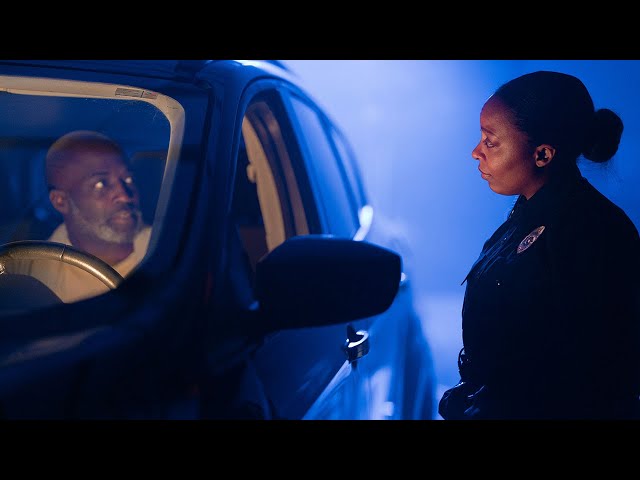
Seeing the flashing lights and hearing the siren behind you can be a heart-stopping moment if you’ve had a couple of drinks. Still, there are plenty of rights you have in this situation and plenty of things you can do to help yourself.
Pull Over Safely and Calmly
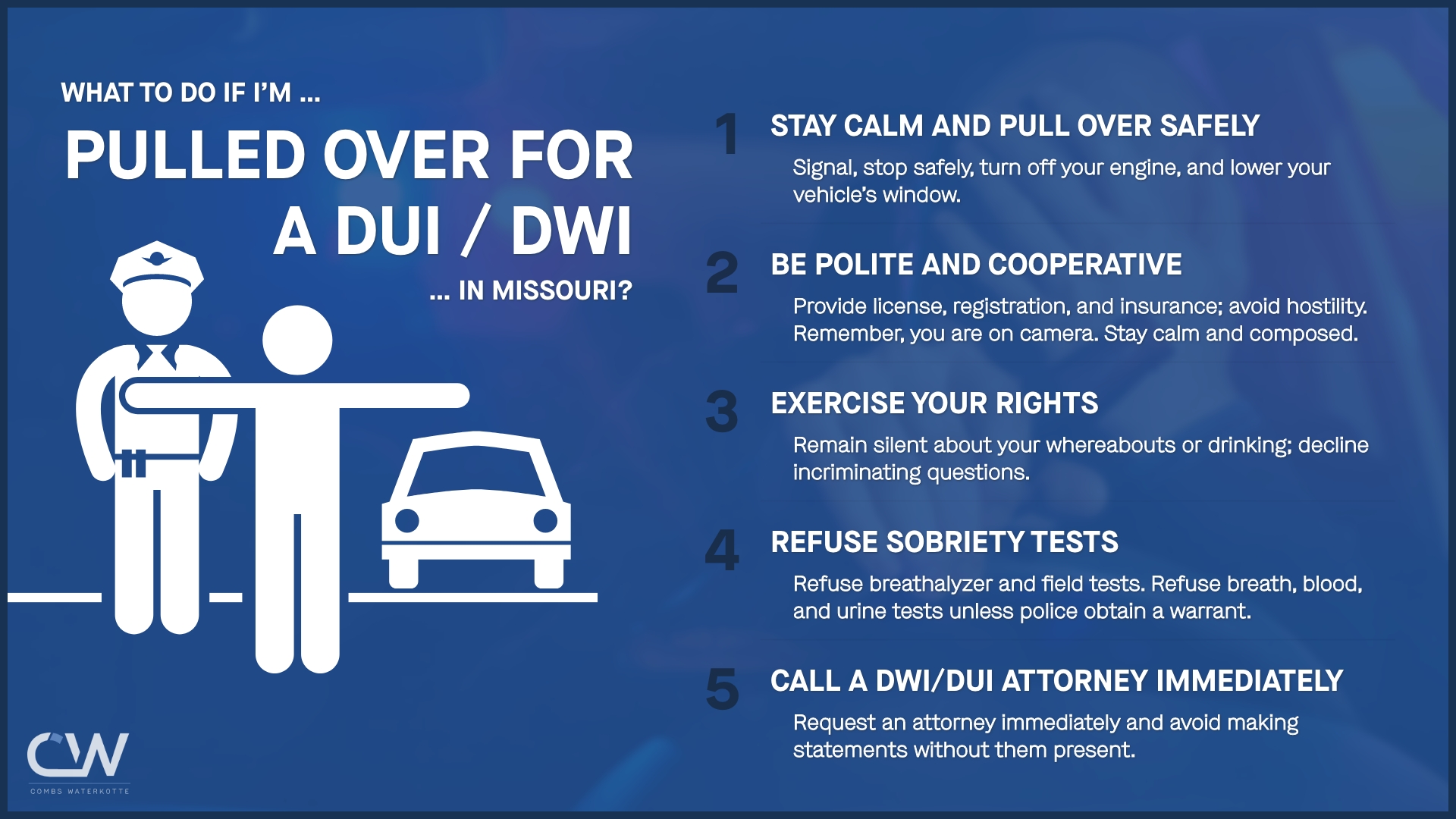
At the start of the traffic stop, stay calm. Use your turn signal, pull over into a safe location, and keep your hands visible at all times, preferably on the steering wheel. Police officers look for erratic and suspicious behavior to establish probable cause during DWI stops. Staying calm and compliant will go a long way.
Be Polite but Know Your Rights
During a traffic stop, there are things you must provide to the police officer, including:
- Your driver’s license
- Vehicle registration
- Proof of insurance
However, you do not have to answer any incriminating questions like, “Have you been drinking?” or, “How much have you had to drink?” Statements like, “I only had two beers” may sound relatively harmless, but they can ruin your case.
Refuse Field Sobriety Tests
In Missouri, field sobriety tests are not mandatory. You have the right to refuse them without any immediate legal penalty. Walking and turning, standing on one leg, touching your finger to your nose — these tests are sometimes tough even for sober people. Respectfully decline them.
Refuse Breath and Blood Tests
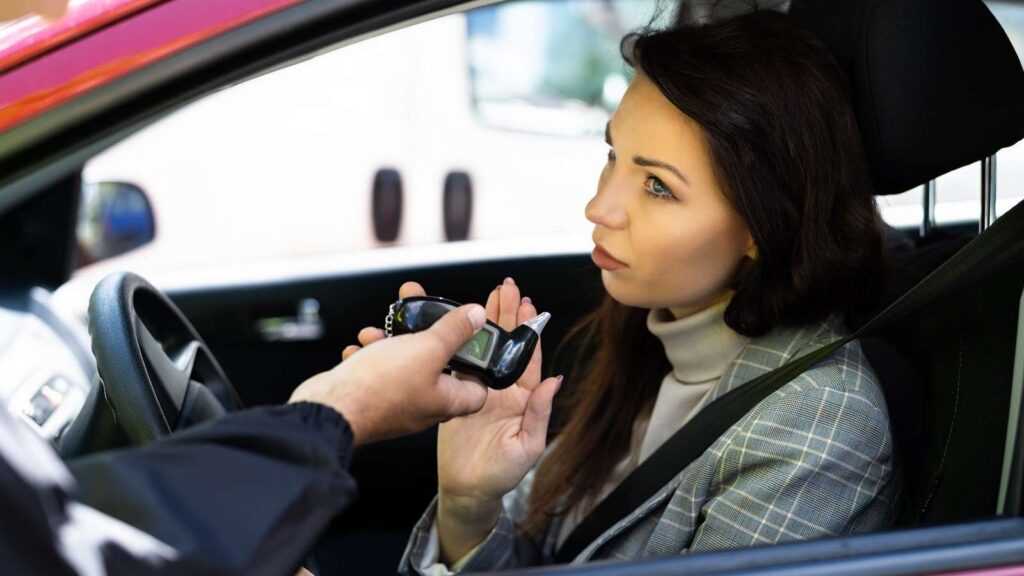
Missouri’s implied consent law only applies after an arrest, so refuse them during your traffic stop. Also, if you’re arrested, refuse them at the police station up until the point where law enforcement obtains a warrant for the tests. While you may face an “automatic” license suspension, you actually have 15 days to challenge the suspension in court.
Refuse Vehicle Searches
Without a warrant or probable cause, you’re protected from unreasonable searches and seizures under the Fourth Amendment. If a police officer requests to search your vehicle, politely decline.
Stay Calm If Arrested
While an arrest is highly stressful, it’s important to stay calm. Arguing, resisting, or fighting back can only hurt you and add to your list of charges. Just remain calm, invoke your right to remain silent, and speak only to ask for your attorney.
Call Combs Waterkotte as Soon as You Can
If you’re arrested for a DWI in Missouri, Combs Waterkotte can help. We’ll take on both your criminal case and your administrative hearing (during which you can lose your driver’s license). You only have a 15-day window to request an administrative hearing, so call (314) 900-HELP right away.
DWI Defense Strategies in Missouri
A DWI arrest may leave you feeling hopeless, but there are plenty of excellent defense strategies a good defense lawyer can use during a Missouri DWI case. At Combs Waterkotte, we’ve used them hundreds of times for hundreds of clients facing the entire spectrum of DWI charges.
Here are some of the most common DWI defense strategies a criminal attorney may use in Missouri:
- Illegal Traffic Stop: There’s a chance the arresting officer didn’t have the right to arrest you to begin with. Vague claims of “weaving within the lanes” or the lack of an actual traffic violation may mean the officer stopped you illegally.
- No Probable Cause: If the accused individual showed no clear signs of impairment, the officer exaggerated their observations, or they “smelled alcohol” (the odor of alcohol alone is insufficient for probable cause), the officer may not have had proper probable cause.
- Faulty Field Sobriety Tests: If the accused individual was given improper instructions, had medical conditions that affected their performance, performed the test in poor lighting, or was tested in bad weather conditions, this may undermine the results of a field sobriety test.
- Breathalyzer Inaccuracies: Was the breathalyzer properly calibrated? Are there issues with its maintenance logs? Scrutiny or procedural errors around a breathalyzer test can go a long way to undermining its results.
- Blood Test Errors: If the accused individual's blood was collected using improper technique, the sample was contaminated, or there were custody gaps with the blood sample, a defense lawyer may be able to get blood test evidence thrown out.
- Rising Blood Alcohol: Alcohol absorbs slowly. The blood of someone accused of a DWI may test over .08% at the police station, but prosecutors must prove they were over the limit while they were actually driving.
- Fourth Amendment: If the police officer didn’t have reasonable suspicion or probable cause, or didn’t execute a lawful search, this may be a violation of the accused’s Fourth Amendment rights.
- Fifth Amendment: Did the police officer coerce statements? Did questioning continue after the accused invoked their rights? If so, the police officer may have violated the Fifth Amendment rights of the accused — a strong legal defense.
- Miranda Rights Violations: Police must — by law — read the Miranda warning to anyone they arrest. If they don’t, this violation of rights can get a DWI case thrown out.
Missouri DWI Diversion Programs
Missouri’s DWI diversion program acts as a second chance for first-time offenders. This program can help avoid a criminal record, jail or prison time, and the loss of a driver’s license. The program comes with certain requirements:
- The individual must be a first-time offender without a previous DWI conviction
- The individual must not have been in a diversion program within the last 10 years
- The individual must not hold a commercial driver’s license
- The individual must not have been operating a commercial vehicle during the offense
- The individual must not have caused a death or an injury
Combs Waterkotte’s experienced attorneys may be able to get you into a DWI diversion program if you’re a first-time offender. To learn more, call us at (314) 900-HELP or fill out our online form.