
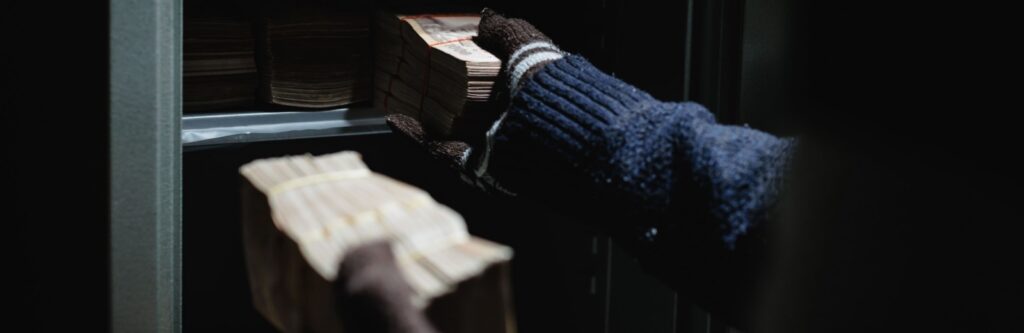
18 U.S.C. § 2113 – Bank Robbery and Incidental Crimes
The primary federal statute governing robbery, theft, and violence involving federally insured financial institutions.
What § 2113 covers.
Section 2113 criminalizes a wide range of conduct involving banks, credit unions, and savings and loan associations, extending far beyond classic “bank robbery.” The statute reaches robbery, attempted robbery, extortion, burglary, theft, possession of stolen funds, and violence connected to those offenses.
Federal jurisdiction exists because these institutions are federally regulated or federally insured.
Core offenses under the statute.
- Taking or attempting to take money or property by force, violence, intimidation, or extortion
- Entering or attempting to enter a covered financial institution with intent to commit a felony or larceny
- Theft of bank property, with penalties scaled by dollar amount
- Possession, concealment, or sale of stolen bank property knowing it was stolen
Enhanced penalties for violence.
The statute escalates sharply when force is involved:
- Assault or use of a dangerous weapon during a robbery: up to 25 years
- Killing a person or forcing someone to accompany the offender during or after the crime: minimum 10 years, up to life imprisonment or death
Who and what institutions are protected.
Section 2113 applies to:
- FDIC-insured banks
- Federally insured credit unions
- Federally insured savings and loan associations
- Branches or agencies of foreign banks operating under U.S. law
Why § 2113 matters.
This statute is frequently charged alongside conspiracy, firearm, kidnapping, or homicide offenses. Even conduct that looks like a “theft” rather than a robbery can trigger serious federal exposure depending on intent, amount, and surrounding conduct.
Federal bank robbery charges carry severe penalties and often expand quickly based on alleged conduct before, during, or after the offense. If § 2113 is involved, call (314) 900-HELP or contact our federal criminal defense attorneys to review the allegations and defense posture.

