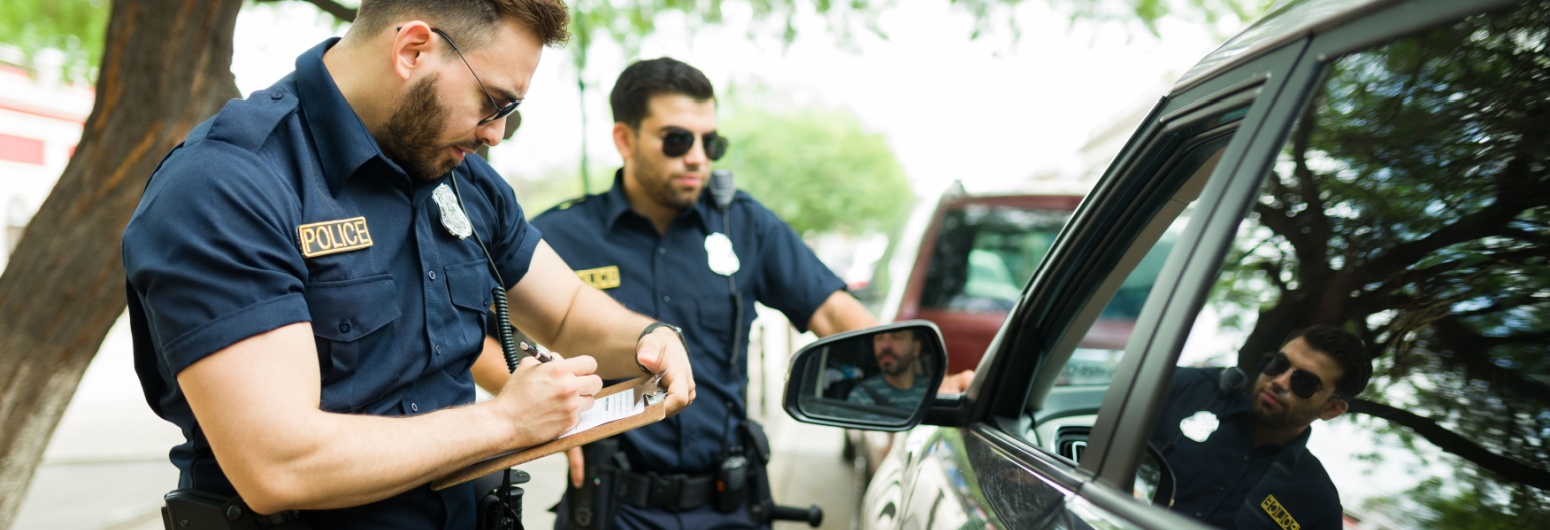
Can You Really Fight a Speeding Ticket in Illinois? Nobody wants to deal with a speeding ticket. Between the lost time and stress, it might seem easier to just pay the fine and move on. But that’s not always the best outcome for you. Fighting your speeding ticket can protect your license from points and a suspension.
At Combs Waterkotte, our leading team of Southern Illinois defense lawyers knows the ins and outs of the Illinois court process and specializes in speeding and traffic violations.
If you have a ticket, you can send us a picture of it below, call us at (314) 900-HELP, or reach out online for a free consultation.
Can You Really Fight a Speeding Ticket in Illinois?
The short answer is yes! There are numerous defenses you can employ to challenge a speeding ticket in Illinois, several of which we’ll be diving into below. Before that, though, it’s important to understand the traffic court process after you receive your ticket in the first place:
- Receive a Speeding Ticket: For allegedly driving over the speed limit, you will be issued a speeding ticket. It will be marked as either “Court Appearance Required” or “No Court Appearance Required.”
- Not Required: You have the option of paying the fine, possibly attending traffic safety school, and then moving on.
- Required: You will need to attend a court hearing regardless.
- Possible Negotiations: A skilled traffic attorney will work with the court to see if the charges can be reduced to a non-moving violation, minimize fines, and/or keep points off your driving record.
- Enter Plea: When you first appear in court, you’ll be asked to plead either guilty or not guilty. If you plead not guilty, the case will proceed to trial.
- Other Court Proceedings: Between the plea and a trial, you could be granted a continuance, and there could be other court hearings.
- Trial: Once you arrive in court, the hearing will typically play out as a trial, with the prosecution and defense each presenting their case. It will typically end with a judge declaring you guilty or not guilty.
Having an experienced Southern Illinois traffic attorney present for this process lends you more experience and expertise not just on the case itself, but also on the traffic court system and how to navigate it.
Benefits of Fighting an Illinois Speeding Ticket
It’s possible to fight against a speeding ticket in Illinois, receive a “not guilty” verdict, and walk away like it never happened. However, that’s not the most common outcome. The good news is that a traffic attorney can help you significantly reduce penalties, protecting your license and your wallet. Here are some favorable outcomes you can hope for:
- Court Supervision: You’ll still have to pay a fine, and avoid receiving any additional tickets for a period of time, but you will avoid having a conviction on your record.
- Reduced Charges: The speed of the ticket may be reduced, or it may be turned into a non-moving violation.
- Traffic Safety School: Similar to court supervision, you can avoid having a conviction on your record, but you’ll also have to attend an education program on safe driving.
- Avoid Points: You might still have to pay a fine, but you can avoid having points added against your license.
- Dismissal: Finally, it’s possible for the case to be dismissed if the officer does not show up to the trial, or if there was an evidence/procedural error.
Defenses Against a Speeding Ticket in Illinois:
If you go court, there are a few defensive strategies to pick from, such as necessity, failure to identify, faulty equipment, or the lack of a violation. At Combs Waterkotte, our trial-ready defense team will evaluate your case and decide which strategy is best for you, whether one of these or another.
Necessity
Necessity applies if you were speeding due to emergency circumstances. For example, perhaps your wife was going into labor, and you were speeding to reach the hospital. Or, if a passenger was injured and needed to be rushed to the emergency room. In either case, you’ll need to show records to prove it was an emergency.
Failure to Identify
Illinois uses cameras to enforce speed limits in some cases, and while useful, they are not infallible. For example, if someone else were driving your car and the picture was blurred, you would probably be sent the ticket because you were the car owner, but you weren’t actually the one who sped.
Faulty Equipment
If something in your car malfunctioned unexpectedly, it could cause you to speed unintentionally. Perhaps your accelerator became stuck, or your speedometer wasn’t displaying correctly. This can absolve you of fault for the violation. This is another strategy that will require strong evidence, such as a mechanic’s report, to pull off.
Improper Signage
If the speed limit sign was missing, damaged, obstructed, or incorrect, you can use this as a defense against your speeding. Normally, intent is not required to be convicted of speeding, but in cases where you made a good effort to find the speed limit and failed for reasons outside your control, that can be a defense.
No Violation
You can also argue that there was not a violation in the first place – perhaps the police officer’s radar gun was malfunctioning, and so they erroneously believed you were speeding. Or, perhaps the equipment was working correctly, but the officer accidentally pulled over the wrong person.
Consequences of Uncontested Illinois Speeding Tickets
Driving over the speed limit and receiving a ticket can have implications beyond the fines. These range from legal to personal consequences, and can go as far as losing your driving privileges. To avoid the worst and longest-lasting consequences, you’ll need to fight the ticket with a top Southern Illinois traffic violations law firm. Otherwise, you’re facing the following:
Fines
The first thing most people think of when they receive a ticket is how much they’ll need to pay for a fine. This can range a lot based on how fast you were allegedly speeding, from $120 for going 1-20 mph over the limit, to $2,500 and/or jail time for going 35+ mph over.
Ticket on Your Driving Record
After a guilty plea or a conviction, your ticket will remain on your driving record for about 4 to 5 years. This can go even longer, though, if your license was either suspended or revoked because of the ticket.
Points on Your License
Illinois’ Problem Driver Pointer System assigns a number of ‘points’ to your license for each ticket, which varies depending on the severity of the alleged violation. This can range from 5 points for going 1-10 mph over the limit, to 50 points for driving 26+ mph over.
Lose Your License
In Illinois, if you are convicted of three or more offenses in a 12-month period, your license will be either revoked or suspended. The length of time is determined by the number of points on your license at the time. For example, here are the suspension lengths for drivers 21 or older:
- 15-44 Points: 2-Month License Suspension
- 45-75 Points: 3-Month License Suspension
- 75-89 Points: 6-Month License Suspension
- 90-99 Points: 9-Month License Suspension
- 100-109 Points: 12-Month License Suspension
- 110+ Points: Driver’s License Will Be Revoked
Increased Insurance Premiums
Finally, related to your record, you will likely see your auto insurance costs go up. After a speeding ticket, on average, your insurance rates will go up 22%. Preventing the ticket from going on your record can save you from these additional costs.
Protect Your License And Your Wallet: Call Combs Waterkotte Today.
You can fight a speeding ticket in Illinois. And we can win those fights. At Combs Waterkotte, our Southern Illinois traffic violations lawyers are experienced at beating speeding tickets, and bring over 60 years of combined legal experience to your defense.
Call us today at (314) 900-HELP or get in touch online for a free consultation on your defense. We’ll be with you every step of the way.