
A domestic violence defense lawyer in Marion County, IL represents individuals accused of domestic battery, harassment, or related offenses under Illinois law.
Such allegations are serious and can bring not just jail time and fines, but also permanent consequences like losing gun rights, struggling to find work, and limits on custody.
Being accused of domestic violence in Marion County, IL puts everything at risk — your freedom, your record, and your family.
Prosecutors in Southern Illinois pursue these cases hard, and judges rarely take them lightly.
Having the right Marion County, IL criminal defense lawyer at your side can make the difference between conviction and a dismissal or Not Guilty verdict.
Don’t wait to protect your future — call Combs Waterkotte at (314) 900-HELP or contact us online for a free, confidential consultation.
Cases Handled
Over 10,000
Jail Days Saved
Over 1 Million
Google Reviews
400+ Perfect
Legal Experience
Over 60 Years
At a Glance: Domestic Violence Cases in Marion County, IL
- Domestic violence can be charged as a misdemeanor or felony, depending on the severity and prior convictions.
- Penalties include jail, fines, probation, and orders of protection.
- A conviction can trigger firearm restrictions, problems finding work, and custody challenges.
- Defense strategies may involve self-defense, false accusations, or lack of evidence.
- Getting an attorney involved early often makes the difference in how your case is resolved.
What Counts as Domestic Violence in Marion County, IL?
Illinois law defines domestic violence as a pattern of abuse directed toward a family or household member. Importantly, it is broader than just physical harm — the law also covers emotional, psychological, and controlling behavior.
Under the Illinois Domestic Violence Act, “abuse” includes:
- Physical abuse: Acts that inflict physical injury or harm.
- Harassment: Repeated or threatening conduct intended to cause emotional distress.
- Intimidation of a dependent: Threatening or coercive behavior that frightens or dominates a dependent.
- Interference with personal liberty: Restricting another person’s freedom of movement or decision-making.
- Willful deprivation: Denying an individual necessary care, assistance, shelter, or access to basic needs.
These protections apply to a wide range of family or household relationships, including:
- Current or former spouses
- Current or former dating partners
- Parents, children, and step-family members
- Individuals who live or have lived together
- Unmarried or married individuals who share children
- Elderly or disabled adults along with their caregivers
This broad definition means that many types of conduct — even without physical injury — can be the basis for a domestic violence case in Illinois.
Charges & Classifications for Domestic Violence in Marion County, IL
The severity of domestic violence charges depends on the circumstances.
- Domestic Battery (Class A Misdemeanor): A first-time charge without aggravating factors is usually a Class A misdemeanor, punishable by up to 1 year in jail and fines up to $2,500.
- Aggravated Domestic Battery (Class 2 Felony): Involves strangulation, use of a weapon, or causing great bodily harm. Penalties include 3 to 7 years in prison, or longer if extended terms apply.
- Repeat Offenses: Prior domestic violence or violent-crime convictions can elevate new allegations, turning a misdemeanor into a felony and increasing sentencing ranges.
- Violating an Order of Protection: Ignoring the terms of a protective order is a separate criminal offense. First violations are often misdemeanors; repeat or aggravated violations can be charged as felonies.
- Interfering with the Reporting of Domestic Violence (typically Class A Misdemeanor): Preventing or attempting to prevent a victim or witness from calling 911, seeking medical help, or reporting the crime.
- Stalking / Aggravated Stalking: Repeated following, monitoring, or threatening that causes fear or emotional distress. Often charged alongside DV when the parties are family or household members.
- Intimidation (Felony): A felony charge involving threats meant to force someone’s compliance or prevent action, often tied to harm or confinement.
- Unlawful Restraint (Felony): Holding or confining someone against their will without authority; frequently paired with DV-related allegations.
- Criminal Trespass to Residence: Illegally entering or refusing to leave a residence, often linked to DV disputes following separations or protective orders.
- Harassment / Harassment by Electronic Communications: Threatening calls, texts, or online messages that create emotional distress; may be prosecuted on their own or alongside DV charges.
- Child Present Enhancements: When children are present during a DV incident, courts often impose mandatory minimums, counseling, and stricter probation conditions.
Comparison: Misdemeanor vs. Felony Domestic Violence in Illinois
| Offense | Penalty |
|---|---|
| Misdemeanor Domestic Battery |
Up to 1 year in jail Fines up to $2,500 Probation possible |
| Felony Domestic Battery (Aggravated or Repeat) |
3 to 7 years in prison (Class 2 Felony) Higher fines and longer probation terms Longer sentences if prior convictions or aggravating factors are present |
| Protective Order Violations |
Separate criminal charge Additional jail or prison time Permanent impact on custody and housing |
| Interfering with Reporting Domestic Violence |
Class A Misdemeanor Up to 1 year in jail Fines up to $2,500 |
| Stalking / Aggravated Stalking |
Class 4 to Class 3 Felony 1–5 years in prison, higher if aggravated Protective order extensions possible |
| Unlawful Restraint |
Class 4 Felony 1–3 years in prison Probation sometimes available |
| Harassment by Electronic Communications |
Typically Class B or Class A Misdemeanor Escalates with prior convictions Can be charged alongside domestic battery |
Penalties and Consequences of a Domestic Violence Conviction in Marion County, IL
A domestic violence conviction brings harsh penalties, and the long-term collateral consequences often cause even greater harm:
- Jail or Prison Sentences: Sentences vary based on whether the case is charged as a misdemeanor or a felony.
- Fines and Restitution: Courts can impose heavy fines and order repayment to the alleged victim.
- Mandatory Counseling or Programs: Judges often require anger management or domestic violence intervention programs.
- Orders of Protection: Those convicted often face protective orders that block contact, restrict access to a residence, or limit visitation with children.
- Firearm Restrictions: Federal and state law prohibit those convicted of domestic violence from owning or possessing firearms.
- Custody and Family Law Impact: A conviction may be used against the accused in custody disputes or divorce proceedings.
- Criminal Record: Domestic violence convictions remain on your record permanently, making employment, housing, and licensing more difficult.

Free book
How a Criminal Defense Attorney Can Protect Your Rights and Future
Combs Waterkotte has over 60 years of experience and over 10,000 cases handled. This ebook helps guide you through the criminal defense process and how an experienced, skilled defense attorney can keep your freedoms intact.
Defense Strategies in Marion County, IL Domestic Violence Cases
Every case is unique, but there are proven defense strategies that a skilled Marion County, IL domestic violence defense attorney may use to fight domestic violence charges in Marion County, IL:
- Self-Defense: Demonstrating that the accused acted to protect themselves or another person.
- False Accusations: Domestic violence claims sometimes arise in the context of custody battles, divorces, or personal vendettas. A defense lawyer can uncover the motive behind false claims.
- Lack of Evidence: Because guilt must be proven beyond a reasonable doubt, cases with no injuries, inconsistent accounts, or weak witnesses often fall apart.
- Procedural Errors: Evidence may be suppressed if law enforcement violated rights through unlawful searches, warrantless seizures, or improper interrogations.
- Mutual Combat: When both parties voluntarily took part in a fight, courts may reduce or drop charges.
The right defense strategy depends on the specific facts of the case. A domestic violence defense attorney in Marion County, IL can begin building your defense right away.
What Happens After a Domestic Violence Arrest in Marion County, IL?
Knowing the steps in the legal process can ease some of the stress and confusion following an arrest.
- Arrest & Booking: The accused is arrested, booked, and held until a bond hearing is scheduled.
- Bond Hearing: A judge decides whether the accused can be released and under what conditions.
- Protective Order Hearing: Judges often issue orders of protection, restricting contact between the accused and the alleged victim.
- Pre-Trial Motions: Defense lawyers may file motions to suppress evidence or dismiss charges.
- Discovery & Negotiations: Both sides exchange evidence. Plea deals may be discussed.
- Trial Preparation: Preparation includes interviewing witnesses, consulting experts, and developing trial strategy.
- Trial: The case is argued in court, with evidence reviewed by a judge or jury.
- Sentencing & Appeals: Following a conviction, the defense can advocate for lighter sentencing or challenge the verdict on appeal.
An experienced Marion County, IL domestic violence attorney can walk you through each step, reducing stress and ensuring your rights are protected throughout the process.
Why Choose Combs Waterkotte for Your Domestic Violence Defense in Marion County, IL?
A domestic violence accusation is serious — and you need a defense team that knows what’s at risk.
- Proven Experience: Our attorneys have a track record of handling some of Illinois’ toughest DV cases — including those other Marion County, IL firms refuse to take.
- Aggressive Advocacy: Our trial-ready team dismantles weak evidence, questions witnesses aggressively, and forces prosecutors to meet their burden of proof.
- Confidential Support: We handle sensitive matters with discretion and respect.
- Results-Driven Defense: We focus on results: aiming for dismissal, reduced charges, or a Not Guilty verdict whenever possible.
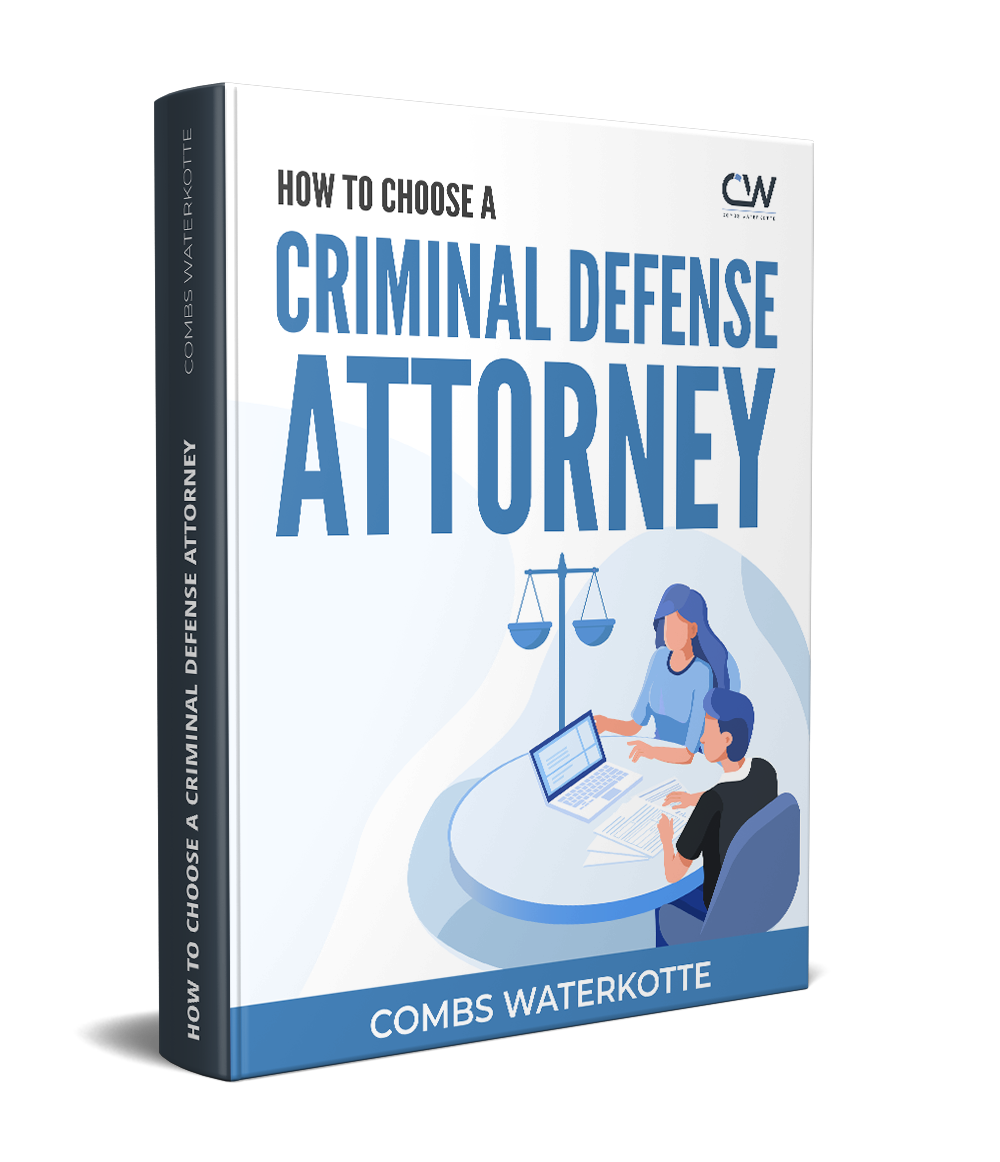
Free book
How to Choose a Criminal Defense Lawyer
Charged with a crime? The lawyer you hire matters. Combs Waterkotte, recognized for top-tier criminal defense in Missouri and Illinois, created this guide to help you find the right attorney. Learn what to look for, key questions to ask, and red flags to avoid.
FAQs About Domestic Violence Charges in Marion County, IL
- Can domestic violence charges be dropped?
Yes. While prosecutors control the case, charges may be dropped if evidence is insufficient, witnesses recant, or the defense undermines credibility. - Is domestic battery always a felony in Illinois?
No. A first-time offense without aggravating factors is usually a misdemeanor, but repeat or aggravated cases are charged as felonies. - What happens if I violate an order of protection?
Breaking an order of protection is its own crime, carrying extra penalties like jail time, fines, or even felony prosecution. - Will a conviction affect my custody rights?
Yes. Convictions are frequently raised in custody disputes and may restrict or eliminate parenting time. - Do I lose my gun rights after a conviction?
Yes. Both federal and state law bar people convicted of domestic violence from owning or possessing firearms.
Speak to an Experienced Marion County, IL Domestic Violence Defense Attorney Today
If you or a loved one has been accused of domestic violence in Marion County, IL, do not wait to get help. The sooner you involve a domestic violence defense attorney in Marion County, IL, the better your chances of protecting your future.
Reach out to Combs Waterkotte at (314) 900-HELP or connect with us online to schedule your free, confidential consultation with a domestic violence defense attorney in Marion County, IL.