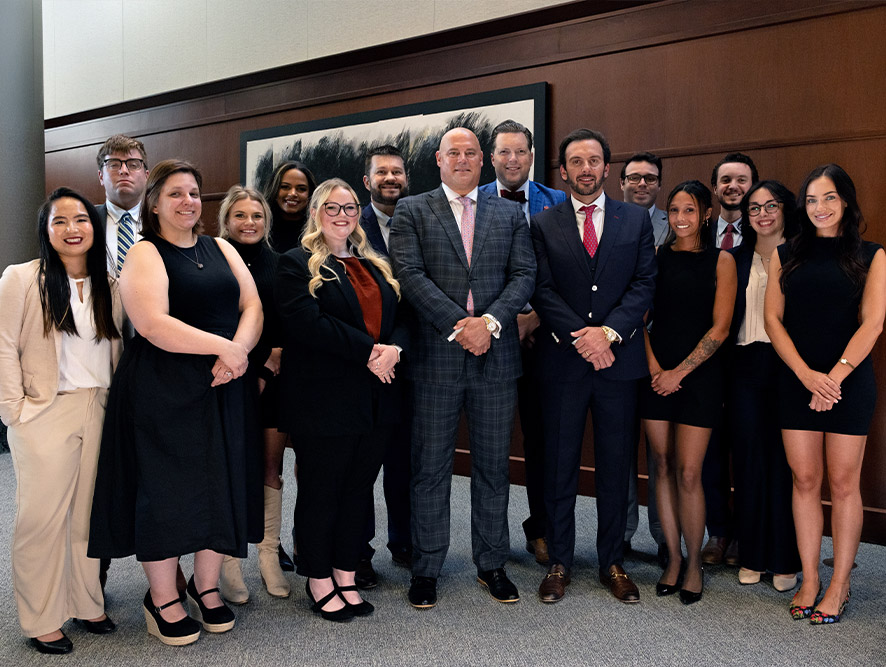
Violent Crimes Lawyer Effingham, IL — facing arrest or an investigation means you need answers and action right away. Our violent crimes lawyers in Effingham, IL represent individuals accused of using or threatening force and work to protect your freedom, record, and future from the start. At Combs Waterkotte, our Effingham, IL criminal defense team acts quickly to begin building your defense as soon as you call.
At a Glance: Violent Crime Cases in Effingham, IL
- What counts as a violent crime in Illinois
- Types of violent crime charges our firm handles
- Penalties and sentencing ranges
- What to expect from prosecutors in these cases
- Defense strategies that work
- What to do if you’re arrested or under investigation
- Why clients choose Combs Waterkotte
Free book
How a Criminal Defense Attorney Can Protect Your Rights and Future
Combs Waterkotte has over 60 years of experience and over 10,000 cases handled. This ebook helps guide you through the criminal defense process and how an experienced, skilled defense attorney can keep your freedoms intact.
What Is Considered a Violent Crime in Illinois?
Illinois law (725 ILCS 120/3) defines violent crime as:
- any felony in which force or threat of force was used
- sex offenses involving exploitation, misconduct, or sexual penetration, including other related crimes listed in 720 ILCS 5
- domestic battery or stalking
- violation of an order of protection (restraining order) or a no-contact order
- any misdemeanor that results in death or great bodily harm
- DUI, reckless homicide, or other vehicle-related offenses that cause injury or death
The label “violent” can also attach when a weapon is used, serious injury occurs, or a protected person (a minor or someone with a disability) is involved.
Illinois law treats violent crime cases as public-safety priorities. This often leads to aggressive bond terms, requests for long prison sentences, and enhancement filings whenever possible.
Before your case even reaches trial, you might be subject to protective orders, travel restrictions, and limitations that disrupt work or family life. Getting a violent crimes lawyer in Effingham, IL involved early increases your chances of protecting your rights and securing the best possible result.
Examples of Violent Crime Charges We Defend in Effingham, IL
- Assault and Aggravated Assault: threatening someone with immediate harm. Becomes aggravated with a weapon, certain locations, or protected victims.
- Battery and Aggravated Battery: knowingly causing harm or offensive contact. It becomes aggravated when there’s serious injury, use of a weapon, or the victim is a protected person.
- Domestic Battery: harm or offensive contact involving a family or household member. These cases often trigger no-contact orders and quick court appearances.
- Robbery and Armed Robbery: taking property by force or threat. The charge becomes armed robbery when a weapon or firearm is used.
- Burglary, Residential Burglary, and Home Invasion (violent variants): illegally entering property with intent to commit a crime, made worse when people are home or injured.
- Sexual Assault / Aggravated Criminal Sexual Assault: sexual acts by force or when a person can’t consent. Aggravated charges apply when weapons, injury, or multiple offenders are involved.
- Kidnapping / Aggravated Kidnapping: unlawfully taking or holding someone by force or deceit, with harsher penalties for ransom demands, injury, or weapons.
- Arson / Aggravated Arson: intentionally setting fire or causing an explosion; aggravated when it injures others or endangers first responders.
- Homicide (Murder / Manslaughter / Reckless Homicide): cases involving intentional or reckless acts that result in death. Each has unique proof requirements and potential defenses.
In every case, prosecutors must prove each element beyond a reasonable doubt. Our strategy begins by holding the prosecution to that standard on every count.
Penalties for Violent Crimes in Illinois
Penalties for violent crimes in Effingham, IL can include years or decades in prison, high fines, and long-term supervision. Sentences vary based on the offense class, aggravating factors, prior convictions, and any mandatory minimums.
Typical Sentencing Ranges
- First-Degree Murder: not part of the standard felony classes; punishable by 20–60 years or life in extreme cases. Probation and early release are not allowed.
- Class X Felony: punishable by 6–30 years in prison, with possible extended terms and limited probation eligibility.
- Class 1 Felony: commonly 4–15 years; extended terms possible depending on facts and priors.
- Class 2 Felony: generally 3–7 years, with probation sometimes available depending on the case.
- Class 3 and Class 4 Felonies: carry shorter prison ranges, with probation eligibility determined by the statute and record.
Collateral Consequences You Shouldn’t Ignore
- Employment and licensing: background checks and professional discipline.
- Housing and education: denials based on felony records or disciplinary findings.
- Firearm rights: permanent bans often imposed after violent felony convictions.
- Immigration status: deportation risk or inadmissibility issues for non-citizens.
- Protective orders and no-contact terms: limits on where you can go and who you can see.
A Effingham, IL violent crimes lawyer can often impact sentencing exposure long before a trial date by challenging enhancements, negotiating charge reductions, or leveraging weaknesses in the State’s case.
How Prosecutors Approach Violent Crime Cases in Effingham, IL
Prosecutors often file the highest plausible charge first, add counts based on a single incident, and stack enhancements (weapon, injury, protected status, location).
They may argue for detention, oppose bond reductions, and resist diversion. During discovery, prosecutors rely heavily on 911 calls, bodycam footage, forensic tests, medical files, phone records, and social media posts. They also push hearsay exceptions at pretrial hearings and try to limit defense evidence through motions in limine.
Understanding their strategy makes a major difference. Our violent crimes defense team in Effingham, IL includes former prosecutors who know how the state builds cases. This experience allows us to anticipate the state’s moves, challenge unreliable evidence, and keep the case focused on the evidence – what can be proved lawfully and credibly to a jury.
How a Violent Crimes Lawyer in Effingham, IL Builds Your Defense
Our violent crime attorneys in Effingham, IL start investigating immediately, challenge unlawful evidence, question faulty IDs, and build a credible alternate narrative based on facts and law. The objective is leverage—achieving a dismissal, reduction, or strong trial position.
- Independent investigation: interview witnesses, secure surveillance video, preserve digital data, and lock down timelines while memories are fresh.
- Identification challenges: examine lineups, lighting, distance, and stress factors; emphasize that eyewitness confidence doesn’t equal reliability.
- Forensic scrutiny: review lab processes, contamination risks, and error margins in DNA, ballistics, or fire analyses.
- Fourth and Fifth Amendment issues: unlawful stops, searches without valid consent, Miranda problems, and coerced or unrecorded statements.
- Intent and degree: show lack of premeditation, absence of specific intent, or facts supporting a lesser-included offense rather than the charged crime.
- Self-defense / defense of others: establish reasonable fear and proportionate response, using physical evidence and witnesses to refute the prosecution’s version.
- Alternative explanations: accident, third-party involvement, or circumstances inconsistent with the State’s theory.
- Negotiation strategy: after gaining leverage, negotiate for reduced charges, limited sentences, or outright dismissals.
Our violent crime lawyers in Effingham, IL focus on achieving the best possible result in every case. Acting quickly gives you more control and more defense options.
What To Do If You’re Arrested or Under Investigation for a Violent Crime in Effingham, IL
- Don’t talk to police without a lawyer. Even “clearing things up” can be used against you later.
- Don’t consent to searches. Always ask to see a warrant; if there isn’t one, clearly state that you do not give consent to search.
- Preserve evidence. Save messages, call logs, photos, clothing, and contact info for potential witnesses.
- Write down details. Record everything you remember—times, places, officer names, badge numbers, and nearby cameras.
- Call a violent crimes lawyer in Effingham, IL immediately so they can protect your rights and direct your next moves.
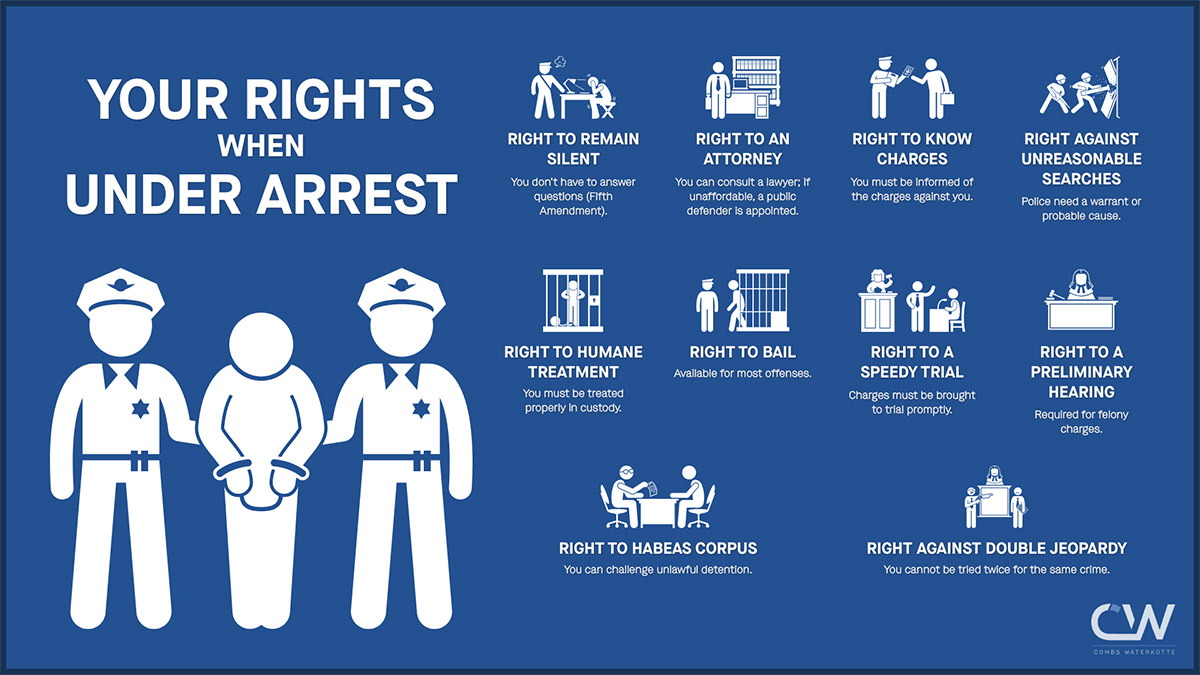
Small choices early on can have big legal consequences. When in doubt, pause and call counsel.
Why Hire Combs Waterkotte for a Violent Crimes Case in Effingham, IL
When your liberty and future are on the line, quick action and proven experience matter most. Combs Waterkotte takes on complex, high-stakes cases and brings clarity and control when things feel chaotic. We win cases other Effingham, IL criminal defense law firms won’t even take.
Our approach is simple: act fast, investigate deeply, and fight intelligently.
- Decades of defense experience handling serious felonies and violent crime cases across Illinois.
- Trial-ready preparation that gives you leverage in court and at the negotiating table.
- Strategic resources like investigators and forensic experts when the facts demand it.
- Clear communication and client-first service so you always know the plan and next steps. We don’t bill by the hour—you’ll have your attorney’s direct cell number and can reach them anytime with questions.
- Relentless advocacy focused on dismissals, reductions, and the best possible outcomes.
Free book
How to Choose a Criminal Defense Lawyer
Charged with a crime? The lawyer you hire matters. Combs Waterkotte, recognized for top-tier criminal defense in Missouri and Illinois, created this guide to help you find the right attorney. Learn what to look for, key questions to ask, and red flags to avoid.
Contact a Violent Crimes Lawyer in Effingham, IL
If you or a loved one are under investigation or charged with a violent crime in Effingham, IL, don’t delay. Getting a violent crimes lawyer in Effingham, IL involved early gives you the best chance to safeguard your rights, freedom, and future.
Contact Combs Waterkotte online or reach us at (314) 900-HELP for a free, confidential consultation with a violent crimes lawyer in Effingham, IL who’s ready to step in immediately. We’ll answer your questions, map your next steps, and start building your defense today.
Frequently Asked Questions About Violent Crime Charges
Can I claim self-defense in a violent crime case?
Yes, if the evidence supports it. Self-defense requires a reasonable belief that force was necessary to prevent imminent harm. Key details include who started the altercation, if a weapon was involved, and whether the level of force used was reasonable. Strong defense evidence makes all the difference.
What if the alleged victim doesn’t want to press charges?
The State can still prosecute. It’s the prosecutor, not the alleged victim, who decides if the case continues. Even without cooperation, the State can use 911 calls, reports, or medical records to build their case. Your attorney’s job is to confront the evidence head-on, not assume the case will simply disappear.
Will I go to prison for a first offense?
Not automatically. It depends on your charge level, any aggravating factors, and your criminal history. Early intervention can open doors to reductions or alternatives, especially when leverage is built through motions and investigation.
Should I speak to detectives if I’m “not a suspect” yet?
Get counsel first. “Informal” conversations are still evidence. Anything you say can be misunderstood, misquoted, or taken out of context. Let your attorney handle communication so nothing you say gets turned into evidence.
Do I need a lawyer if I’m only a witness?
It’s wise. Anyone connected to a criminal event can easily shift from “witness” to “suspect.” A short consult protects you from self-incrimination risks and helps you respond appropriately to subpoenas or interviews.