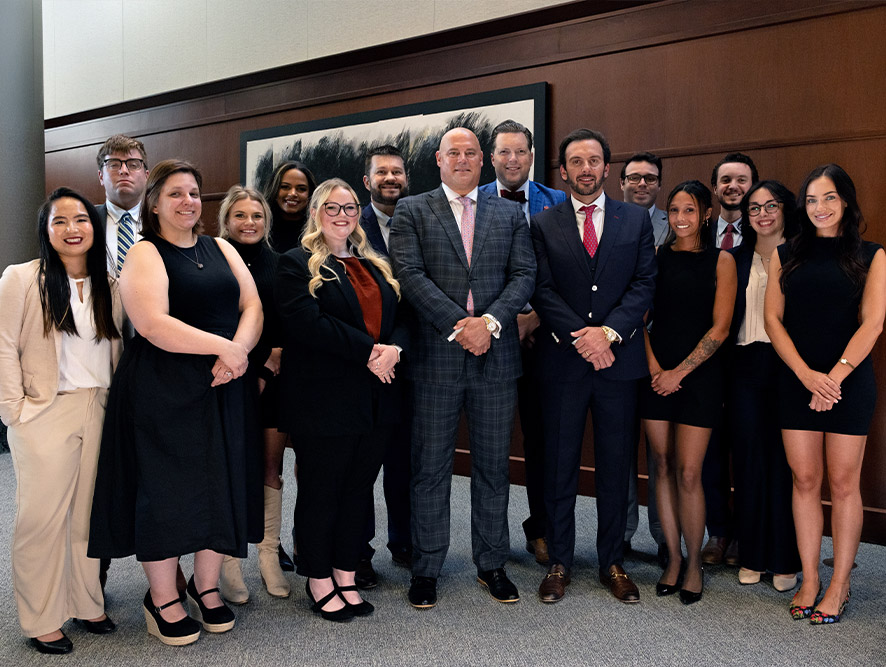
A federal felony lawyer in Pinckneyville, IL defends people charged with serious crimes in U.S. District Court. These are high-stakes cases with complex legal procedures and severe penalties, overseen by the federal government instead of local law enforcement.
If you or someone you love is facing federal charges in Pinckneyville, IL, you need a lawyer who knows how to handle the federal system from day one. From East St. Louis to Carbondale and everywhere in between, Combs Waterkotte helps clients fight back against life-changing allegations, build the strongest possible defense, get the best possible outcome, and help you move on with your life.
Quick Take: What to Expect From This Page on Federal Felony Charges in Pinckneyville, IL
- Federal felonies are major offenses handled by federal prosecutors — not local law enforcement — with serious penalties and complicated legal procedures.
- They’re handled in U.S. District Court, often after an investigation by agencies like the FBI, DEA, IRS, or ATF.
- We’ll cover how federal charges are brought, how bail is decided, how sentencing works — and why having the right legal strategy is crucial.
- We’ll break down key legal defenses, what to expect from a federal lawyer, and how to fight your case in Southern Illinois federal courts.
- If you’ve been charged, you’ll come away with a clear understanding of the process and how to safeguard your future.
Understanding Federal Felonies
A federal felony means a major offense against United States law, not just local or state laws. The federal government handles these prosecutions through the U.S. District Court system. Convictions can lead to long prison sentences — sometimes stretching into decades.
What Turns a State Crime Into a Federal One?
Whether a case is charged federally or not usually depends on these criteria:
- The crime crossed state lines
- The incident occurred on federal land, such as a military base or post office
- It involved a federal agency (like the FBI, DEA, IRS, or ATF)
- The act broke a particular federal law
How Are Federal Felonies Classified
Federal felonies are sorted into five classes:
| Class | Sentencing Range |
|---|---|
| Class A | Life imprisonment or death |
| Class B | 25 years or more |
| Class C | 10 to 25 years |
| Class D | 5 to 10 years |
| Class E | 1 to 5 years |
The source of these classifications is 18 U.S.C. § 3559, though your final sentence will depend on factors like the charge, your past record, and how sentencing guidelines are applied.
Top Federal Felony Charges We Fight in Pinckneyville, IL
These cases vary widely, but every federal felony charge can lead to severe penalties. Here’s a breakdown of typical charges, real-world examples, and what you could face under federal statutes.
| Charge Type | Examples | Maximum Penalty |
|---|---|---|
| Drug Offenses | Trafficking, manufacturing, conspiracy, possession with intent to distribute | 10 years to life (21 U.S.C. §841) |
| White-Collar Crimes | Wire fraud, mail fraud, bank fraud, tax evasion, embezzlement | Up to 30 years (18 U.S.C. §1344) |
| Firearms Offenses | Felon in possession, illegal sale, straw purchase, firearm during a felony | 5–10 years, plus enhancements (18 U.S.C. §922 & §924) |
| Cyber & Internet Crimes | Identity theft, child pornography, hacking, cryptocurrency fraud | 5 to 30 years depending on offense |
| Conspiracy & RICO | Drug conspiracies, racketeering, gang activity | 20 years to life (18 U.S.C. §1962) |
| Immigration Offenses | Alien smuggling, illegal reentry, visa fraud | Up to 10 years (8 U.S.C. §1324 & §1326) |
| Public Corruption | Bribery, theft of federal funds, election fraud | Up to 20 years (18 U.S.C. §201 & §666) |
| Violent Crimes | Kidnapping, carjacking, crimes on federal property | 15 years to life (18 U.S.C. §1201, §2119) |
The Federal Case Process After You’re Charged in Pinckneyville, IL
The federal justice system follows a defined series of steps. Whether you’re already charged or under investigation, knowing the process can make a major difference.
Here’s what usually happens in a federal felony case:
1. Investigation
Federal cases usually start when agencies such as the FBI or IRS investigate suspected crimes. You might not even know you’re being investigated at first. If you receive a target letter or subpoena, take it seriously. It likely means charges are coming.
2. Indictmen
To move forward, federal prosecutors typically bring the case before a grand jury. This group of citizens reviews the evidence in secret and decides whether there’s enough to formally charge you. If they issue an indictment, your case officially starts in federal court.
3. Arrest and Detention Hearing
After the indictment, you’ll be arrested or ordered to appear in court. At your detention hearing, a judge will decide whether you can stay out on bond or must remain in custody. Federal judges are more cautious with bond, weighing public safety and whether you might flee.
4. Pre-Trial Motions and Negotiations
Your defense lawyer can challenge the charges or try to suppress certain evidence before trial. At the same time, the U.S. Attorney may offer a plea deal. Most federal cases don’t make it to trial, but negotiating a good deal requires strong legal strategy.
5. Trial
If no plea agreement is reached, the case proceeds to trial in U.S. District Court. The government’s attorneys come prepared, but they still have to meet a high burden of proof. Your attorney should be equipped with a full defense plan, including expert testimony and aggressive cross-examination.
6. Sentencing
Whether you’re found guilty or plead out, you’ll appear before a judge for sentencing. Sentencing in federal court follows detailed guidelines that can be hard to navigate. A skilled attorney can argue for a lower sentence using factors like cooperation, character evidence, and lack of prior convictions.
7. Appeals (if needed)
If the court made mistakes in your case, your lawyer may file an appeal to seek review. Though complex and time-limited, appeals can sometimes reverse or lessen your conviction.
Will I Go to Prison for a Federal Felony Conviction in Pinckneyville, IL?
A conviction for a federal felony usually results in prison time. This is largely due to strict federal sentencing laws and mandatory minimums that limit a judge’s discretion.
However, not every federal conviction ends in a prison sentence. The outcome depends on:
- The charge — Drug trafficking and gun crimes often involve especially tough sentencing requirements
- Your criminal history — A clean record can help reduce the sentence
- Whether you go to trial or plead guilty — A plea deal may lower your sentence
- How your lawyer builds your case — Strong legal arguments and mitigation can make a difference
Understanding Federal Sentencing Guidelines
The federal guidelines help judges determine how long someone should spend in prison. These guidelines take into account:
- The nature of the offense
- How much financial damage or how many drugs were involved
- Whether a weapon was used
- The defendant’s criminal history
While not technically mandatory, federal judges often stick closely to these rules. A knowledgeable lawyer can fight the numbers and push for a reduced sentence under the guidelines.
Can My Sentence Be Reduced?
Yes, sentence reductions are possible in certain circumstances. There are several potential paths to a reduced sentence:
- Plea agreements with prosecutors
- Cooperation with law enforcement (under Rule 35)
- Mitigating factors, like family responsibilities, mental health, or a clean record
Getting a criminal defense attorney in Pinckneyville, IL on board early can open up more paths forward.
What Does a Federal Felony Lawyer in Pinckneyville, IL Actually Do?
Federal felony lawyers in Pinckneyville, IL represent individuals charged with violating federal law.
Here’s how a skilled Pinckneyville, IL federal felony lawyer helps you fight back in a federal case:
1. Protects You During the Investigation
Investigations by agencies like the FBI or IRS often begin long before formal charges are filed. When federal agents reach out, your attorney can:
- Protect you from saying something damaging by stepping in immediately
- Handle subpoenas or target letters
- Stop charges from being filed in the first place
2. Challenges the Evidence
Defense attorneys use pre-trial motions to:
- Block evidence collected through unlawful means, including wiretaps, invalid warrants, or improper interrogations
- Uncover flaws in digital forensics, surveillance tactics, or informant testimony
- Dismiss or reduce charges before trial even begins
3. Builds a Strategic Defense
Regardless of your decision to plead or go to trial, your lawyer should:
- Dig into the details of the case without relying solely on the government’s version
- Find expert witnesses or forensic specialists
- Identify key defenses (like lack of intent, entrapment, or mistaken identity)
- Prepare for trial — even if it doesn’t go that far
4. Negotiates Plea Deals and Sentencing Outcomes
Most federal cases don’t go to trial — but that doesn’t mean you give up. This is where a skilled defense attorney makes a big difference:
- Fight to get charges lowered or thrown out before trial
- Collaborate with the government to reach a favorable plea agreement
- Advocate for leniency based on your cooperation, history, or personal circumstances
5. Stays With You Through Sentencing and Appeals
Even after a guilty plea or verdict, your lawyer can:
- Advocate at sentencing for alternatives to prison or shorter time
- Guide you through post-conviction motions or appeals processes
- Provide guidance to your loved ones and walk you through what’s ahead
In short, a federal felony lawyer isn’t just a courtroom representative — they’re your lifeline through one of the most complex and stressful experiences you’ll ever face.
How Do I Fight a Federal Felony in Pinckneyville, IL?
The key to fighting a federal felony is moving quickly, remaining silent, and hiring a skilled defense attorney without delay. Federal prosecutors don’t waste time — and they have powerful tools at their disposal. That said, you still have constitutional rights and defense strategies available.
Step 1: Don’t Talk to Agents Without a Lawyer
Have you been contacted by a federal agency like the FBI or DEA? Or received a target letter? Don’t speak with them without a lawyer present. One wrong word could show up later as evidence.
Instead:
- Keep your composure
- Tell them you won’t answer questions without legal representation
- Immediately contact a federal felony attorney in Pinckneyville, IL
Step 2: Understand the Charges and Exposure
Your lawyer will review:
- The official indictment
- The complaint or information used to bring charges
- The evidence (discovery) the government plans to use
From there, you’ll get a clear picture of what you’re facing, and what it will take to beat it or minimize the damage.
Step 3: Develop a Defense Strategy Early
Delays only reduce your chances of a strong defense. In many cases, your best defense begins before formal charges appear. Depending on the case, your lawyer may:
- Submit legal motions to throw out evidence
- Share favorable information with the federal prosecutor
- Negotiate a pre-indictment resolution
Should the case proceed, your defense will be crafted around your exact circumstances — not a cookie-cutter plan.
Step 4: Leverage Local Knowledge
Federal cases in Pinckneyville, IL go through the U.S. District Court in East St. Louis or the one in Benton. That matters.
That’s why it’s critical to hire someone who:
- Knows the local judges, U.S. Attorneys, and court procedures
- Has experience with Southern District of Illinois cases
- Understands how to navigate pre-trial detention, plea negotiations, and sentencing here — not just in theory, but in practice
When it feels like everything’s against you, a strong defense can still change the outcome.
Common Legal Defenses in Federal Felony Cases
While no two cases are the same, experienced lawyers use established legal tactics to defend against serious federal allegations. The key is building a defense that fits the facts of your case, the law, and your personal history — not just following a checklist.
Let’s look at some of the most effective strategies for challenging federal felony allegations:
1. Unlawful Search or Seizure
Evidence gathered through illegal searches — like searches without proper warrants or that exceed legal scope — may be excluded from the case. This is called suppressing evidence, and it can weaken or kill the case entirely.
2. Lack of Intent
Most federal felonies require the government to prove you intended to break the law. If you were unaware or didn’t act purposefully, your attorney may argue lack of intent as a valid defense.
3. Entrapment
Entrapment is a defense used when agents induce you to commit a crime you wouldn’t have committed on your own. It’s not enough to show that officers were involved — the key is showing they crossed the line and created the criminal behavior.
4. Insufficient Evidence
All charges must be supported by solid evidence that convinces a jury beyond a reasonable doubt. If there are gaps in the case — or if witnesses aren’t credible, evidence is weak, or the timeline doesn’t add up — the case may not survive a challenge at trial.
5. Procedural Errors
Prosecutors in federal court must follow very specific legal procedures. Breaking these rules can result in a motion to dismiss or exclude critical evidence.
6. Plea Negotiation and Sentencing Advocacy
Sometimes the smartest strategy isn’t to fight the charges head-on, but to work toward a better outcome. An effective federal defense lawyer may:
- Push for reduced charges
- Argue for sentencing below the guidelines
- Present mitigation evidence about your background, family, or future plans
It’s not only about keeping you out of prison — it’s about preserving your long-term future and reputation.
Will I Get Pretrial Release in a Federal Case?
Yes, although securing bail in federal court is significantly more difficult than in state court. In federal cases, bail is called “pretrial release,” and you don’t automatically get it.
You’ll have a detention hearing instead, where the judge weighs whether to release you or keep you in custody during the case.
What Factors Determine Federal Pretrial Release?
The court’s decision rests on two primary considerations:
- Are you a flight risk?
Are you likely to appear in court when required, or try to evade prosecution? - Are you a danger to the community?
Could releasing you put the public at risk based on your charges or past?
A “yes” to either question usually results in pretrial detention.
How Does an Attorney Improve My Chances of Getting Bail?
Your attorney’s job is to convince the judge that you’re a good candidate for release.
- Have strong ties to the community (job, family, home)
- Have no serious criminal history
- Are not a flight risk
- Are willing to follow release conditions (like GPS monitoring or limited travel)
Sometimes, no matter what your lawyer presents, release is still denied — especially in serious firearm or drug cases where detention is presumed. However, an experienced attorney can fight that presumption and request bond.
Why Combs Waterkotte Is the Right Choice for Federal Felony Defense in Pinckneyville, IL
If you’re dealing with serious federal charges in Pinckneyville, IL, you need a defense team that brings both expertise and drive. Here’s why Combs Waterkotte stands out:
Over 50 Years of Combined Experience & 10,000+ Cases Handled
Our attorneys bring over 60 years of combined legal experience and a proven track record across thousands of cases. That includes serious federal and state felonies, complex investigations, and high‑stakes trials.
Always Available — Even Nights and Weekends
We prioritize open communication and accessibility—available nights, weekends, and even holidays. You won’t get passed off or ignored—we’re here when you need us, and we don’t charge for questions or updates.
A Deep Bench of Investigative and Forensic Resources
We work with skilled investigators, forensic experts, and technical specialists to build comprehensive defences tailored to your case—no matter how complex.
Fearless Trial Attorneys
Combs Waterkotte is trial-ready and unafraid to challenge federal prosecutors. We don’t avoid court—we prepare for it, and we know how to win when it matters most.
Respected Nationwide — Proven in Court
Our lawyers have earned national recognition and top trial honors. Our courtroom results speak for themselves—and our reputation is backed by real success.
Start with a Free Consultation — Never Pay by the Hour
We’ll review your case for free and explain the road ahead. We don’t bill by the hour, so you’ll never be penalized for staying informed.

Federal Felony FAQs
We’ve answered most of these above, but here’s a quick recap of common questions people ask when facing federal charges in Pinckneyville, IL:
What makes a case a federal felony instead of a state case?
If the alleged crime crosses state lines, involves a federal agency, happens on federal property, or breaks U.S. law, it becomes a federal case.
Are federal cases harder to beat?
Yes. Federal prosecutors are often better funded and more thorough than their state counterparts. Still, strategic defense can lead to dismissal, a favorable plea, or even an acquittal.
How long do federal felony cases take?
Federal felony cases typically last many months — sometimes more than a year — based on trial decisions, discovery timelines, and case details.
Will I go to prison if I’m convicted?
Prison is common in federal cases, especially for offenses with mandatory minimums — but sentencing outcomes also depend on case specifics and defense work.
What kind of lawyer do I need for a federal case?
The right lawyer is one with proven experience in federal court, knowledge of U.S. sentencing law, and a track record of success defending felony charges.
Contact a Federal Felony Lawyer in Pinckneyville, IL Today
If you’ve been charged — or think you’re under investigation — don’t wait for things to get worse. Federal charges move fast, and your future may depend on how you respond today.
Our Pinckneyville, IL federal felony lawyers defend clients in Pinckneyville, IL and across Southern Illinois. We can get involved immediately, defend your rights, and start building your defense today.
Reach out now at (314) 900-HELP or fill out our online form to speak with a federal felony lawyer in Pinckneyville, IL for free.