Federal felony lawyers Toledo, OH. A federal felony charge exposes you to some of the most severe criminal penalties under federal law. Federal prosecutors operate with significant authority, backed by vast government resources, and a guilty verdict may result in devastating long-term consequences. Whether you have already been charged or believe you may be under federal investigation, working with experienced Toledo, OH federal felony lawyers is essential to protecting your rights, your freedom, and your future.
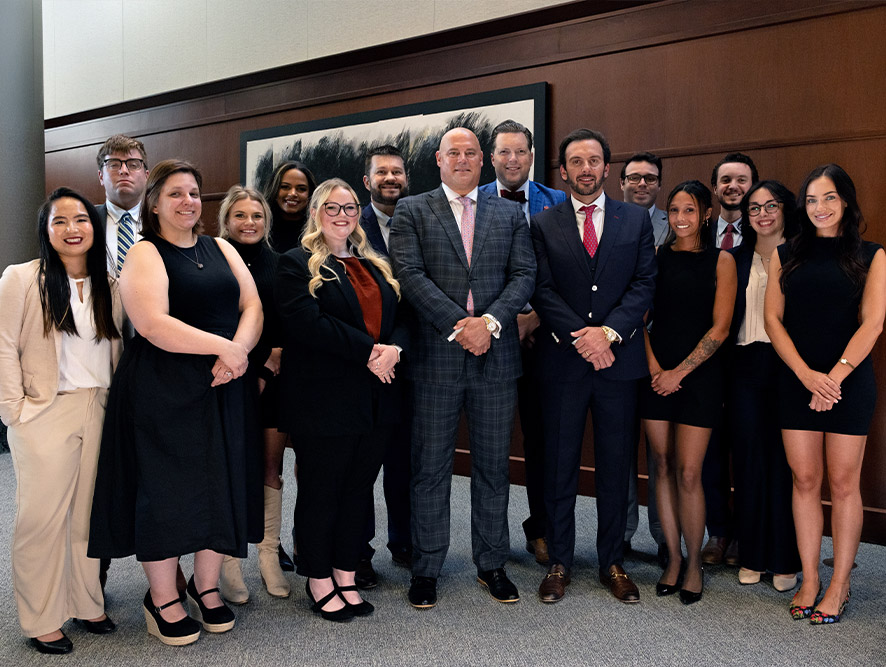
Combs Waterkotte represents individuals accused of federal felony offenses in U.S. District Courts. Our Toledo, OH federal criminal defense lawyers understand how federal cases are built, how prosecutors apply federal statutes, and how high the stakes are for people facing these charges. Our approach blends experienced, assertive, and strategic advocacy with a clear understanding of the stress federal felony cases place on clients and their families.
When you hire our Toledo, OH federal felony lawyers, you hire a firm that treats you as a person, not a case number. Call us at (314) 900-HELP or contact us online to schedule a free and confidential consultation.
View our Guide to Federal Felony Charges.
This page explains:
- How federal felony charges are defined and how they differ from state offenses
- How federal felony investigations and prosecutions typically unfold
- Common types of federal felony charges
- How experienced federal felony lawyers build effective defense strategies
- Potential penalties and long-term consequences of federal felony convictions
- How experienced legal counsel can impact outcomes in federal court
Free book
Facing Federal Criminal Charges? Why They’re Different and How to Win
Combs Waterkotte, a leading federal criminal defense law firm, has handled over 10,000 cases successfully. This ebook guides you through the federal criminal defense process, how federal charges are different, and how to win.
What Is a Federal Felony?
A federal felony involves criminal allegations prosecuted under United States federal law, not state law. Federal felony cases typically arise when alleged conduct falls within federal jurisdiction, including matters involving interstate commerce, federal agencies, federal property, or statutes passed by the U.S. Congress.
What separates federal felonies from many state offenses is both the prosecuting authority and the severity of punishment. Federal felony statutes often include mandatory minimum sentences, steep financial penalties, and long-term repercussions beyond imprisonment. In contrast to many state-level cases, federal judges frequently have little discretion in sentencing after a conviction.
How Federal Felony Cases Differ From State Charges in Toledo, OH
Despite overlapping criminal conduct, state and federal charges are handled in fundamentally different ways. Federal felony prosecutions typically involve greater complexity, extensive documentation, and rigid procedural rules.
Federal felony prosecutions frequently involve:
- Prolonged investigations that can take months or even years before charges are issued
- Grand jury indictments rather than direct charging instruments
- Cases built through investigations led by agencies like the FBI, DEA, ATF, IRS, or Homeland Security
- Rigid procedural rules governing how evidence is collected, disclosed, and challenged
- Sentencing governed by federal guidelines and mandatory minimum penalties
Federal prosecutors often rely on financial records, electronic communications, surveillance, and cooperating witnesses to build their cases. This makes early, detailed analysis of evidence collection, constitutional rights, and legal strategy critical, often long before a case reaches trial.
Federal Felony Charges Our Toledo, OH Defense Attorneys Handle
The scope of federal felony charges is broad, with each charge influencing how investigations, prosecutions, and sentencing unfold. Federal statutes provide the framework prosecutors use to define charges, negotiate pleas, and seek sentencing penalties.
Our Toledo, OH federal felony lawyers handle defense matters involving numerous types of federal charges, including the following:
White Collar & Financial Crimes
Many federal white collar cases are built around alleged fraud or financial misconduct uncovered through documents, financial review, and electronic communications.
- Wire fraud (18 U.S.C. § 1343) — allegations that electronic communications were used to further a fraudulent scheme
- Mail fraud (18 U.S.C. § 1341) — claims involving mailed materials tied to alleged fraudulent conduct
- Bank fraud (18 U.S.C. § 1344) — accusations of deception directed at a financial institution
- Money laundering (18 U.S.C. § 1956, § 1957) — transactions involving alleged criminal proceeds
- Securities and investment fraud — claims that investors were misled through false or deceptive information
The outcome of these cases often depends on how intent and complex transactions are interpreted by prosecutors.
Federal Drug Offenses
Drug prosecutions at the federal level often focus on interstate conduct, volume, organization, or alleged conspiracies.
- Drug distribution/trafficking (21 U.S.C. § 841) — accusations related to producing, distributing, or intending to distribute drugs
- Drug conspiracy (21 U.S.C. § 846) — alleged involvement in a coordinated plan to commit drug offenses
- Importation-related drug offenses (21 U.S.C. § 952, § 960) — alleged importation or related conduct
Drug cases may involve confidential informants, surveillance, wiretaps, and multi-defendant indictments.
Firearms & Weapons Charges
Federal firearms charges may be filed on their own or alongside other federal felony allegations, often with sentence-enhancing consequences.
- Unlawful possession of a firearm (18 U.S.C. § 922) — allegations of possessing a firearm despite a federal prohibition
- Possession of a firearm in furtherance of a felony (18 U.S.C. § 924) — allegations that a firearm was used or carried in connection with another serious crime
- Straw purchase-related allegations (18 U.S.C. § 922) — accusations of buying or transferring a firearm on behalf of someone else
Prosecutors typically focus on possession, awareness, and the alleged relationship between the firearm and the charged conduct.
Sex Crimes & Internet Offenses
Federal sex crime cases often involve aggressive prosecution strategies and extensive reliance on digital and forensic evidence.
- Sexual exploitation of a minor (18 U.S.C. § 2251) — claims related to the alleged production of illegal sexual material involving a minor
- Possession of child pornography (18 U.S.C. § 2252) — accusations of possessing illegal visual material
- Distribution of child pornography (18 U.S.C. § 2252) — allegations that unlawful material was shared or disseminated
- Online enticement or exploitation offenses — claims centered on online communications allegedly directed at minors
Defense strategies commonly focus on how electronic evidence was gathered, how devices were examined, and how online conduct is characterized.
Conspiracy & Multi-Defendant Federal Cases
Federal conspiracy charges are often used to bring multiple people into the same case, even when prosecutors cannot show that each person personally committed every alleged act. In these cases, the government claims that someone became legally responsible by knowingly working with others toward an illegal goal.
- Federal conspiracy (18 U.S.C. § 371) — accusations of intentional involvement in a coordinated plan to violate federal law
- Drug conspiracy (21 U.S.C. § 846) — claims of participation in an organized drug distribution or trafficking scheme
- RICO offenses (18 U.S.C. §§ 1961–1968) — claims that an individual took part in an ongoing criminal organization
Federal conspiracy prosecutions frequently depend on circumstantial evidence, recorded communications, and cooperating witness testimony. When cases rely on inference instead of direct proof, analyzing credibility, intent, and the extent of alleged involvement becomes essential.
Cybercrime, Identity Theft & Computer Offenses
These federal cases commonly involve allegations concerning computers, internet activity, or digital data subject to federal jurisdiction.
- Computer fraud or unauthorized access (18 U.S.C. § 1030) — allegations that a person accessed protected computers without permission
- Identity theft (18 U.S.C. § 1028) — accusations of misusing personal identification belonging to another
- Aggravated identity theft (18 U.S.C. § 1028A) — additional identity theft allegations attached to another federal charge
Defense strategies frequently focus on how digital evidence was gathered, analyzed, and interpreted by investigators.
Federal Tax Crimes
Most federal tax felony cases center on allegations of deliberate misconduct, not routine filing errors or legitimate disagreements over tax obligations.
- Tax evasion (26 U.S.C. § 7201) — accusations involving intentional efforts to evade tax obligations
- Filing false returns or statements (26 U.S.C. § 7206) — allegations involving deliberate misstatements or omissions on tax documents
These cases often involve lengthy IRS investigations, detailed review of financial records, and attempts by prosecutors to reconstruct income, expenses, and transactions over time.
- Health care fraud (18 U.S.C. § 1347) — accusations of improperly billing or receiving payments from Medicare or Medicaid
- False statements to the government (18 U.S.C. § 1001) — allegations of giving incorrect or misleading information to federal agencies
- Kickback-related allegations (42 U.S.C. § 1320a-7b) — allegations that improper financial incentives were exchanged for referrals
These cases demand close examination of documentation, evaluation of intent, and understanding of intricate federal program requirements.
Federal Violent Crimes & Interstate Offenses
Violent or serious offenses may be prosecuted federally when they involve interstate commerce, cross state boundaries, or fall under federal statutes.
- Hobbs Act robbery (18 U.S.C. § 1951) — accusations of robbery or extortion that allegedly affected interstate business or commerce
- Federal kidnapping (18 U.S.C. § 1201) — accusations of kidnapping tied to crossing state lines or federal jurisdiction
These cases often carry severe penalties and may involve mandatory minimum sentences or sentencing enhancements depending on the specific facts and charges involved.
Obstruction, False Statements & “Process Crimes”
Federal cases often include charges based on how someone responded during an investigation, even when the underlying accusations are still being challenged. Such charges can dramatically increase sentencing exposure.
- Obstruction of justice (18 U.S.C. § 1503, § 1512) — accusations that actions were taken to obstruct an investigation or court process
- False statements (18 U.S.C. § 1001) — accusations of providing inaccurate information during a federal inquiry
These charges are common in federal investigations and can arise quickly, which is why early legal guidance is critical when dealing with federal agents or inquiries.
How Toledo, OH Federal Felony Lawyers Build a Defense
Federal felony cases require a methodical and strategic defense process. Our federal felony defense lawyers in Toledo, OH prioritize a complete understanding of the government’s case before deciding on a defense strategy.
Preparing a federal felony defense often involves:
- Examining the indictment and the statutes alleged to apply
- Analyzing investigative techniques for constitutional violations
- Seeking suppression of improperly obtained evidence
- Evaluating sentencing exposure under federal guidelines
- Developing strategies for negotiations, pretrial motions, or trial
Every federal case is different. Our goal is to build a defense strategy that reflects the facts of your specific case, the applicable law, and the long-term interests of the client.
Federal Felony Classifications Under Federal Law
Under the federal system, felonies are organized into classifications tied to the maximum statutory penalties. The framework for these classifications appears in Title 18 of the United States Code, which organizes federal offenses by severity.
Felony offenses under federal law fall into five classes, with Class A representing the highest severity and Class E the lowest.
- Class A felonies — offenses punishable by life imprisonment or, in the most severe cases, the death penalty
- Class B felonies — offenses subject to sentences of at least twenty-five years
- Class C felonies — offenses subject to sentences ranging from ten to under twenty-five years
- Class D felonies — offenses punishable by a maximum sentence of five years or more, but less than ten years
- Class E felonies — felonies punishable by prison terms greater than one year but under five years
Felony class provides a framework for punishment, but sentencing in federal court involves additional considerations. Actual sentences depend on the statute involved, mandatory minimum requirements, and the federal sentencing guidelines, which consider conduct and criminal history.
Potential Penalties for Federal Felony Convictions in Toledo, OH
A conviction for a federal felony can have wide-ranging effects that go far beyond the sentence imposed. The specific penalties depend on the charge involved and the facts of the case, but may include:
- Lengthy periods of incarceration in federal prison
- Significant fines and mandatory repayment of funds
- Post-release supervision following incarceration
- Restrictions on firearms possession and other legal rights
- Significant and enduring impacts on work prospects, licenses, and public standing
Federal sentencing rules allow limited flexibility, making early involvement by an experienced Toledo, OH federal felony lawyer critical to limiting potential consequences.

Free book
How to Choose a Criminal Defense Lawyer
Charged with a crime? The lawyer you hire matters. Combs Waterkotte, recognized for top-tier criminal defense in Missouri and Southern Illinois, created this guide to help you find the right attorney. Learn what to look for, key questions to ask, and red flags to avoid.
Why Clients Trust Combs Waterkotte’s Toledo, OH Federal Felony Lawyers
In federal felony cases, it is critical to work with attorneys who know federal law, federal procedures, and how to defend clients against aggressive federal prosecutors.
Combs Waterkotte earns client trust by offering:
- Concentrated experience defending federal felony charges
- Individualized and strategic case planning
- Straightforward and transparent communication at every stage
- Availability at all hours to discuss your case
- Dedicated advocacy that balances empathy with determination
- A legal team that values people over paperwork
We know how much is on the line, which is why every federal felony case receives our full attention.
Speak With Our Toledo, OH Federal Felony Lawyers Today
When federal felony charges are pending or an investigation is suspected, it is critical not to delay seeking legal counsel. The sooner you understand your legal options, the better positioned you are to protect your future.
You can call (314) 900-HELP or contact Combs Waterkotte online to speak privately with federal felony lawyers ready to advocate for you.