

What to Do if You’ve Received a Federal Target Letter
If you get a target letter you already have a leg up on building a more favorable defense for yourself. Time is of the essence here, and the prosecutor may not have investigated the case thoroughly enough at this stage, thus giving you more (possible) wiggle room to negotiate, obtain early discovery, inspect evidence, or persuade the prosecution to drop the charges against you. Hiring a good federal criminal defense attorney is of utmost importance during this critical time.
Key Points to Remember When You’ve Been Sent a Federal Target Letter:
- Hire an experienced criminal defense lawyer specializing in federal crimes,
- Immediately start building your defense,
- Do Not discuss your case with ANYONE until you speak with a qualified attorney,
- Keep any and all items that could be considered as evidence in the case,
- Never tamper with evidence or you could be charged with obstruction of justice,
- Always tell your attorney the truth so they have the best chance on correctly advising you.
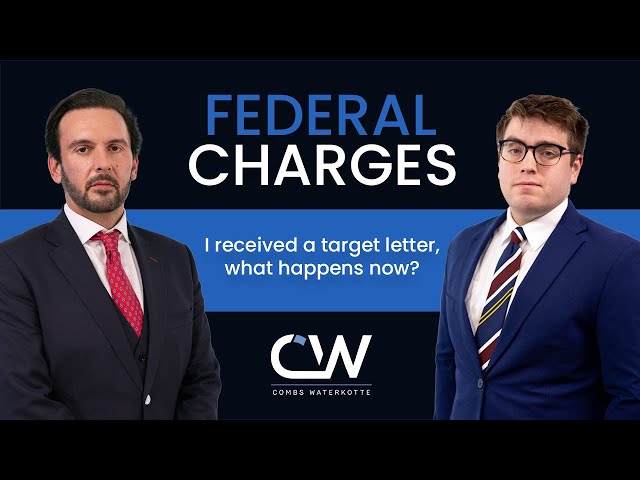
Chris Combs and Andrew Russek, members of the leading criminal defense firm Combs Waterkotte, talk about next steps after receiving a target letter.
What is a Federal Target Letter?
A target letter is a letter sent by federal prosecutors to individuals who the federal government believes have committed crimes up for criminal prosecution. Often, this letter is the first sign that you are under investigation and therefore a “target,” with substantial evidence against you, according to the Justice Manual. Even though this may seem dire, most people the federal government indicts never receive target letters, so if you’ve gotten one it’s important to deal with it immediately, as the window of time to compromise before a grand jury gets involved is limited. It is never advised to disregard or ignore a target letter and it is not possible to have one dismissed by a lawyer.
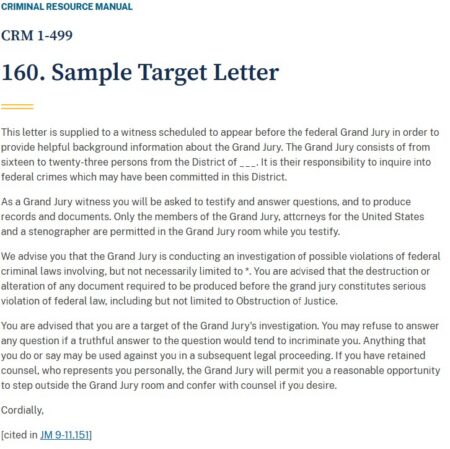
What Does a Target Letter Tell Me?
The target letter you receive will notify you of your designation as a “target,” as defined by the above manual as “a putative defendant against whom there is substantial evidence,” and confirms your status in a grand jury investigation. The truth of the matter is this-the government thinks you have committed a crime and that they have enough evidence to nail you with it.
In addition, the letter will outline the crime(s) you are suspected of committing. It also advises of your right to remain silent, as described by the Fifth Amendment, and court-appointed counsel information. Sometimes the letter will caution you against destroying, deleting, or altering any evidence you may have because such acts may constitute obstruction of justice charges.
Often the letter will suggest you reach out directly to the prosecutor to discuss the allegations but do not be fooled into doing this. Remember anything you say, can and will, be used against you.
Does Receiving a Target Letter Mean I’m Going to Jail?
Receiving a target letter does not automatically mean you are going to jail or that you will get indicted because it is not a charge or conviction. However, it is in your best interest to immediately hire an experienced federal criminal defense attorney to explore your options and secure the most positive court outcome. Generally, you will be formally accused of a crime by the U.S. Department of Justice (indicted),and a grand jury will conduct a preliminary evaluation of the case to determine if it is worthy of a trial.
What Not to Do if you Receive a Target Letter
Even though receiving a target letter is scary and unsettling, there are certain suggestions to follow to make the experience less intimidating. Number one being, remain calm. Do not let your fear and anxiety get the best of you or you could do or say something to hinder your case. This is a common mistake people make when they immediately defend or explain themselves. Even though it seems counterintuitive to not speak out against the allegations, if not done properly with an experienced federal criminal defense lawyer, your words may come back to bite you.
The best course of action you can take is swift action with hired counsel, preserving any and all documents, emails, texts, pictures, or records, and not discussing the case with anyone-including friends and family members. Your federal criminal defense attorney can contact the prosecutor on your behalf to determine if you really are a target, or just a subject or witness. They can also advise you of your options and rights, thus protecting you and possibly preventing an indictment at all.
Beware of Law Tactics While Dealing with Federal Target Letters
Because you are involved in a federal case, law enforcement officers have boundless techniques to investigate you, such as tapping your phone, searching your home or work, or recruiting informants who may even be people close to you. Remember-never tell anyone to lie about a case or dispose of evidence or you could be charged with obstruction.
Hire a Federal Criminal Defense Attorney to Explain Your Federal Target Letter
When you call us, one of our federal criminal defense attorneys will provide a free, no-obligation consultation, no matter what the nature of your charges. Our clients and their rights and freedom matter to us. Whether you’re innocent of the charges or the evidence is stacked against you, we’ll give you the dedicated, aggressive and compassionate legal representation you are entitled to. Call a criminal defense attorney today at (314) 900-HELP or contact us online so we can start working for you.
Can Federal Charges be Reduced or Dismissed?