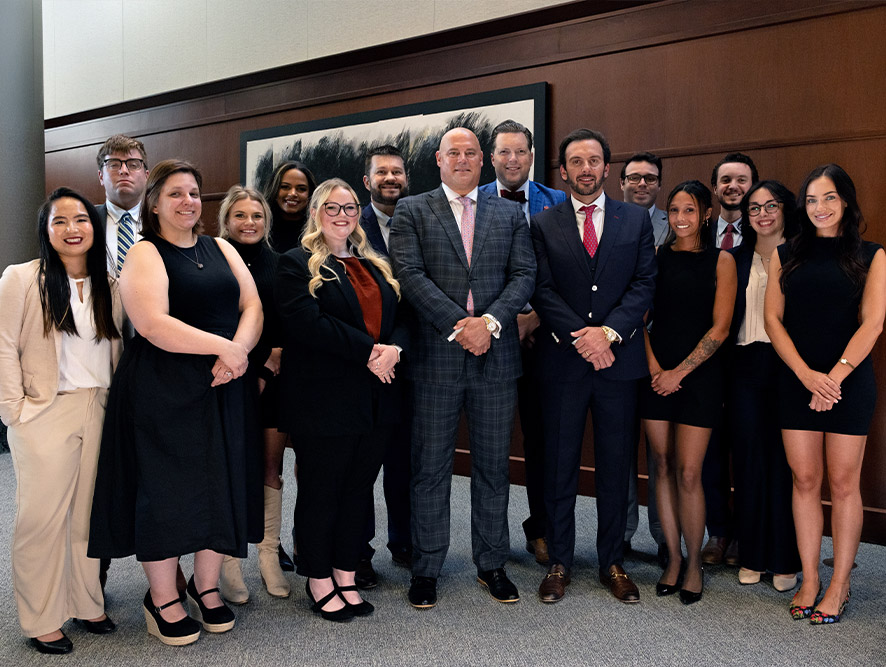
A federal felony lawyer in Washington County, IL defends people charged with serious crimes in U.S. District Court. These cases are handled by the federal government — not local police or state prosecutors — and they come with high stakes, complicated rules, and long prison sentences.
Facing federal charges in Washington County, IL? It’s critical to have a defense attorney who knows how federal cases work from day one. From East St. Louis to Carbondale and everywhere in between, Combs Waterkotte fights hard to defend your rights, reduce your exposure, and help you move forward after a federal charge.
Here’s What You’ll Learn About Federal Felony Charges in Washington County, IL
- These are high-level crimes prosecuted by the federal government, often leading to long sentences and strict federal rules.
- U.S. District Court handles these cases, usually following investigations by agencies such as the FBI, DEA, or IRS.
- You’ll see how charges are filed, bail works, and sentencing decisions are made — and why the right defense strategy matters from day one.
- We’ll break down key legal defenses, what to expect from a federal lawyer, and how to fight your case in Southern Illinois federal courts.
- If you’ve been charged, you’ll come away with a clear understanding of the process and how to safeguard your future.
Understanding Federal Felonies
A federal felony means a major offense against United States law, not just local or state laws. They’re prosecuted by the U.S. government in District Court, not by local or county authorities. If convicted, the penalties can include years or even decades in prison.
How a Crime Becomes a Federal Case
A case becomes federal — not state — based on several factors like the following:
- The crime crossed state lines
- It happened on federal property (like a post office or military base)
- Federal agents played a role in the case, including agencies like the FBI, DEA, IRS, or ATF
- It involved an offense listed under federal criminal statutes
Federal Felony Classification: What You Should Know
Federal felonies are sorted into five classes:
| Class | Sentencing Range |
|---|---|
| Class A | Life imprisonment or death |
| Class B | 25 years or more |
| Class C | 10 to 25 years |
| Class D | 5 to 10 years |
| Class E | 1 to 5 years |
These classifications come from 18 U.S.C. § 3559, but your actual sentence depends on the details of the case — including the charge, your criminal history, and whether other federal sentencing guidelines apply.
Federal Felony Charges We Commonly Handle in Washington County, IL
These cases vary widely, but every federal felony charge can lead to severe penalties. Here are some of the most common offenses — along with examples and potential penalties under federal law:
| Charge Type | Examples | Maximum Penalty |
|---|---|---|
| Drug Offenses | Trafficking, manufacturing, conspiracy, possession with intent to distribute | 10 years to life (21 U.S.C. §841) |
| White-Collar Crimes | Wire fraud, mail fraud, bank fraud, tax evasion, embezzlement | Up to 30 years (18 U.S.C. §1344) |
| Firearms Offenses | Felon in possession, illegal sale, straw purchase, firearm during a felony | 5–10 years, plus enhancements (18 U.S.C. §922 & §924) |
| Cyber & Internet Crimes | Identity theft, child pornography, hacking, cryptocurrency fraud | 5 to 30 years depending on offense |
| Conspiracy & RICO | Drug conspiracies, racketeering, gang activity | 20 years to life (18 U.S.C. §1962) |
| Immigration Offenses | Alien smuggling, illegal reentry, visa fraud | Up to 10 years (8 U.S.C. §1324 & §1326) |
| Public Corruption | Bribery, theft of federal funds, election fraud | Up to 20 years (18 U.S.C. §201 & §666) |
| Violent Crimes | Kidnapping, carjacking, crimes on federal property | 15 years to life (18 U.S.C. §1201, §2119) |
What to Expect After Being Charged With a Federal Felony in Washington County, IL
The federal justice system follows a defined series of steps. Whether you’re already charged or under investigation, knowing the process can make a major difference.
Below is a general overview of how a federal felony case progresses:
1. Investigation
Federal cases usually start when agencies such as the FBI or IRS investigate suspected crimes. Sometimes, people don’t realize they’re under investigation until late in the process. A target letter or subpoena is a major red flag — it usually signals that prosecution is likely.
2. Indictmen
To move forward, federal prosecutors typically bring the case before a grand jury. They secretly review the government’s evidence and vote on whether formal charges are warranted. If they agree, you’ll be indicted — meaning the case officially begins.
3. Arrest and Detention Hearing
Following indictment, authorities will arrest you or issue a court order to appear. The judge will decide at your detention hearing if you can be released or must stay in jail. Bond is harder to get in federal court, where the focus is on risk of flight and community danger.
4. Pre-Trial Motions and Negotiations
Your lawyer can file motions to suppress evidence or challenge the charges. At the same time, the U.S. Attorney may offer a plea deal. Most federal cases don’t make it to trial, but negotiating a good deal requires strong legal strategy.
5. Trial
If no plea agreement is reached, the case proceeds to trial in U.S. District Court. Prosecutors in federal court are thorough, but they must still prove guilt beyond a reasonable doubt. Your attorney should be equipped with a full defense plan, including expert testimony and aggressive cross-examination.
6. Sentencing
After a conviction or guilty plea, the next step is a formal sentencing hearing. The federal sentencing system is tough and full of technical rules. A skilled attorney can argue for a lower sentence using factors like cooperation, character evidence, and lack of prior convictions.
7. Appeals (if needed)
When legal errors occur at trial or sentencing, your attorney can appeal to a federal appellate court. Appellate cases are difficult but can lead to new outcomes or reduced sentences if successful.
Will I Go to Prison for a Federal Felony Conviction in Washington County, IL?
In most cases, a federal felony conviction leads to incarceration. This is largely due to strict federal sentencing laws and mandatory minimums that limit a judge’s discretion.
However, not every federal conviction ends in a prison sentence. Several things influence the final sentence, including:
- The charge — Certain offenses come with longer mandatory minimums, such as firearms or drug charges
- Your criminal history — A clean record can help reduce the sentence
- Whether you go to trial or plead guilty — Pleading guilty may lead to reduced time behind bars
- How your lawyer builds your case — An effective defense strategy and strong mitigation can reduce the sentence
Understanding Federal Sentencing Guidelines
Judges in federal court rely on the Sentencing Guidelines to determine the appropriate prison term. Sentencing decisions are based on things like:
- The type of offense
- How much financial damage or how many drugs were involved
- Whether the crime involved a gun or other weapon
- Your prior criminal record
Judges don’t have to follow the guidelines exactly, but they usually do. It’s crucial to work with a lawyer who can push for a downward variance and question how the guidelines apply.
Can My Sentence Be Reduced?
Yes — in some cases. Sentences can be lowered through:
- Plea agreements with prosecutors
- Cooperation with law enforcement (under Rule 35)
- Mitigating factors, like family responsibilities, mental health, or a clean record
The sooner you involve a criminal defense attorney in Washington County, IL, the more options you may have.
What Does a Federal Felony Lawyer in Washington County, IL Actually Do?
A federal felony lawyer defends people in Washington County, IL who are accused of breaking U.S. law.
Here’s how a skilled Washington County, IL federal felony lawyer helps you fight back in a federal case:
1. Protects You During the Investigation
The FBI, DEA, IRS, and similar agencies often build cases quietly before charges surface. If you’re contacted by agents, your lawyer can:
- Step in before you speak to law enforcement
- Handle subpoenas or target letters
- Try to resolve the investigation before charges are ever filed
2. Challenges the Evidence
Your lawyer can file pre-trial motions to:
- Block evidence collected through unlawful means, including wiretaps, invalid warrants, or improper interrogations
- Challenge the credibility of surveillance data, tech analysis, or government informants
- Seek to have charges dropped or minimized early in the process
3. Builds a Strategic Defense
Whether you’re fighting the charges or considering a plea, your lawyer’s job is to:
- Conduct an independent investigation of the facts
- Locate professionals who can provide expert testimony or analysis
- Identify key defenses (like lack of intent, entrapment, or mistaken identity)
- Prepare for trial — even if it doesn’t go that far
4. Negotiates Plea Deals and Sentencing Outcomes
Most federal cases don’t go to trial — but that doesn’t mean you give up. That’s why legal strategy still matters:
- Negotiate for lesser charges or outright dismissal
- Work with prosecutors on plea deals with less exposure
- Advocate for leniency based on your cooperation, history, or personal circumstances
5. Stays With You Through Sentencing and Appeals
Your attorney doesn’t stop working after a conviction:
- Fight for reduced or alternative sentencing options
- Guide you through post-conviction motions or appeals processes
- Support your family and explain next steps
Ultimately, your federal felony lawyer does far more than argue in court — they guide you through one of life’s toughest challenges.
How Do I Fight a Federal Felony in Washington County, IL?
To fight federal charges, you need to move fast, avoid speaking to agents, and get a qualified lawyer on your side ASAP. These cases move fast, and the government has more time, money, and tools than the average defendant. Still, you have legal protections and paths to fight back.
Step 1: Don’t Talk to Agents Without a Lawyer
Have you been contacted by a federal agency like the FBI or DEA? Or received a target letter? Don’t speak with them without a lawyer present. One wrong word could show up later as evidence.
Instead:
- Keep your composure
- Politely decline to answer questions
- Get in touch with a defense lawyer in Washington County, IL as soon as possible
Step 2: Understand the Charges and Exposure
Your lawyer will review:
- The formal indictment
- Any charging documents
- What evidence federal prosecutors intend to present
That gives you a better understanding of what’s at stake — and how to push back.
Step 3: Develop a Defense Strategy Early
The longer you wait, the fewer tools you’ll have. In many cases, your best defense begins before formal charges appear. Depending on the case, your lawyer may:
- Submit legal motions to throw out evidence
- Submit evidence that proves your innocence to the government
- Work toward a resolution before charges are filed
If the case goes forward, your defense plan will be tailored to your specific charges and situation, not a one-size-fits-all script.
Step 4: Leverage Local Knowledge
Federal cases in Washington County, IL go through the U.S. District Court in East St. Louis or the one in Benton. That matters.
You want a lawyer who:
- Knows the local judges, U.S. Attorneys, and court procedures
- Has experience with Southern District of Illinois cases
- Can manage bond hearings, plea talks, and sentencing strategies specific to this region
When it feels like everything’s against you, a strong defense can still change the outcome.
Defense Strategies Against Federal Felony Charges
Federal felony cases vary widely, but defense attorneys rely on tested strategies to push back against charges. The key is building a defense that fits the facts of your case, the law, and your personal history — not just following a checklist.
Below are common defense approaches attorneys use to fight federal felony cases:
1. Unlawful Search or Seizure
Evidence gathered through illegal searches — like searches without proper warrants or that exceed legal scope — may be excluded from the case. It’s called suppressing evidence — and it can make the entire prosecution fall apart.
2. Lack of Intent
Federal prosecutors must usually show that you meant to commit the crime. Lack of willfulness or accidental involvement can be a major defense if proven.
3. Entrapment
Entrapment happens when federal agents pressure someone into committing a crime they otherwise wouldn’t have done. To succeed, you must show the agents caused the criminal action — not just observed it.
4. Insufficient Evidence
In a federal trial, the burden is on the prosecution to prove each part of the crime beyond a reasonable doubt. Lack of convincing proof or credibility issues can cause the charges to collapse.
5. Procedural Errors
Prosecutors in federal court must follow very specific legal procedures. If the prosecution violates those rules — by withholding evidence, violating deadlines, or interfering with a fair trial — your attorney may be able to file a motion to dismiss or suppress key parts of the case.
6. Plea Negotiation and Sentencing Advocacy
In some situations, the best legal strategy is focusing on damage control rather than winning outright. An effective federal defense lawyer may:
- Push for reduced charges
- Argue for sentencing below the guidelines
- Present mitigation evidence about your background, family, or future plans
The objective goes beyond avoiding incarceration — it’s also about preserving your future.
Can You Be Released on Bail in Federal Court?
Yes, although securing bail in federal court is significantly more difficult than in state court. This process is known as “pretrial release,” and it’s not something you’re automatically entitled to.
You’ll have a detention hearing instead, where the judge weighs whether to release you or keep you in custody during the case.
What Does the Judge Look At?
The court’s decision rests on two primary considerations:
- Are you a flight risk?
Are you likely to appear in court when required, or try to evade prosecution? - Are you a danger to the community?
Could releasing you put the public at risk based on your charges or past?
If the court finds you either risky or dangerous, you’ll likely be held until trial.
How Does an Attorney Improve My Chances of Getting Bail?
To help you get released, your lawyer can provide proof that you’re not a risk.
- Have strong ties to the community (job, family, home)
- Have no serious criminal history
- Are not a flight risk
- Are willing to follow release conditions (like GPS monitoring or limited travel)
Sometimes, no matter what your lawyer presents, release is still denied — especially in serious firearm or drug cases where detention is presumed. Still, your lawyer can try to overcome that presumption and argue for your release.
Why Combs Waterkotte Is the Right Choice for Federal Felony Defense in Washington County, IL
When facing federal felony charges in Washington County, IL, you deserve a team that pairs deep experience with unwavering dedication. Here’s why we’re the go-to federal defense firm in Washington County, IL:
More Than 50 Years of Experience and 10,000+ Cases Represented
Our attorneys bring over 60 years of combined legal experience and a proven track record across thousands of cases. That covers major felony cases at both the federal and state level—including high-stakes trials and in-depth investigations.
Client‑Centered Approach, 24/7 Access
We prioritize open communication and accessibility—available nights, weekends, and even holidays. Our clients talk to their legal team directly—and they never get billed just for checking in.
A Deep Bench of Investigative and Forensic Resources
No matter how serious the charge, we bring in outside experts, analysts, and investigators to build a strategic defense.
Not Afraid to Take Your Case to Court
Combs Waterkotte is trial-ready and unafraid to challenge federal prosecutors. When it’s in your best interest, we go to court and pursue “not guilty” verdicts—even in cases many firms consider unwinnable.
Real Results, Real Recognition
Our lawyers have earned national recognition and top trial honors. With a long history of case dismissals and favorable outcomes, our approach is both strategic and client-focused.
Start with a Free Consultation — Never Pay by the Hour
We offer a free case evaluation to understand your situation and plan next steps. Our fee structure isn’t hourly—so you can call us anytime with questions without worrying about extra charges.

Federal Felony FAQs
We’ve answered most of these above, but here’s a quick recap of common questions people ask when facing federal charges in Washington County, IL:
What makes a case a federal felony instead of a state case?
A criminal case becomes federal if it involves interstate activity, federal jurisdiction, federal property, or U.S. law enforcement agencies.
Are federal cases harder to beat?
They can be — because the federal government has more investigative power. But with skilled representation, strong outcomes are still possible.
How long do federal felony cases take?
Most take several months to over a year, depending on the complexity, whether you go to trial, and how quickly evidence is shared.
Will I go to prison if I’m convicted?
Many federal felonies carry mandatory prison time, but sentencing can vary depending on the charge, your history, and how your lawyer handles the case.
What kind of lawyer do I need for a federal case?
Federal charges require a seasoned defense lawyer who knows how to navigate U.S. District Court, understands sentencing guidelines, and can fight complex cases.
Contact a Federal Felony Lawyer in Washington County, IL Today
Facing charges or even just being investigated? The sooner you respond, the better your chances of protecting your future. Federal charges move fast, and your future may depend on how you respond today.
Our Washington County, IL federal felony lawyers defend clients in Washington County, IL and across Southern Illinois. We can get involved immediately, defend your rights, and start building your defense today.
Reach out now at (314) 900-HELP or fill out our online form to speak with a federal felony lawyer in Washington County, IL for free.